

Maddy summaryHR 5110, the Protecting Hunting Heritage and Education Act, amends the Elementary and Secondary Education Act of 1965 to clarify that federal education funds cannot be used for certain weapons - but this restriction does not apply to archery, hunting, or other shooting sports training programs. The bill directly affects schools and educational programs seeking to use federal funds for these specific activities, such as archery clubs or hunting safety education. It adds an explicit exception to the existing prohibition, allowing funds to support "educational instruction or enrichment activities" in these sports under authorized programs. This change removes ambiguity about funding eligibility for such educational initiatives in K-12 schools.
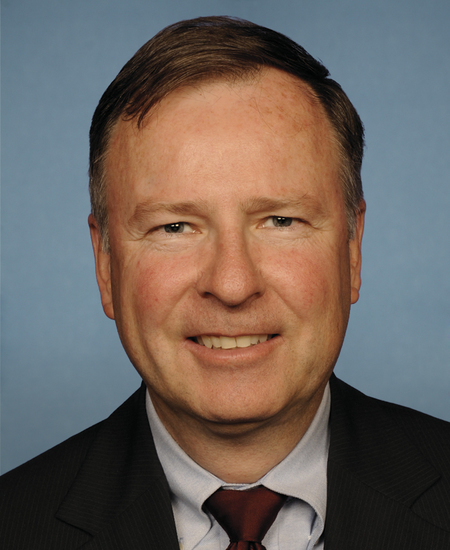
Rep. Doug Lamborn
Sponsored bills
Maddy summaryThis bill repeals the 2020 Horseracing Integrity and Safety Act and creates a new Racehorse Health and Safety Organization (RHSO) to establish uniform safety and medication standards for Thoroughbred, Standardbred, and Quarter Horse racing. The RHSO will develop breed-specific rules through committees of industry and regulatory experts, requiring states to maintain breed-specific databases tracking horse health, safety, and injury information. It establishes an interstate compact framework where only participating states may allow interstate wagering on covered races, while creating disciplinary procedures for violations including bans, fines, and changes to race results. These provisions directly affect owners, trainers, breeders, jockeys, racetracks, veterinarians, and other industry personnel involved in covered horseracing. The bill takes effect in stages, with key provisions beginning 90 days after the interstate compact is formed.
Maddy summaryHR 5641, the Pay Our Troops Act, ensures military personnel and their support staff continue receiving pay during fiscal year 2024 if Congress fails to pass regular budget appropriations. It appropriates existing Treasury funds to cover pay and allowances for active-duty troops, reserve components, and civilian employees or contractors supporting military operations. The bill automatically terminates on January 1, 2025, or earlier if Congress enacts a regular budget or continuing resolution. This provision directly affects service members, Department of Defense staff, and Coast Guard personnel (when not under the Navy) during budget implementation gaps.
Maddy summaryHR 5654, the "Hot Showers Act," directs the Secretary of Energy to withdraw a specific proposed rule on water heater energy efficiency standards. The bill mandates the withdrawal of the "Energy Conservation Program: Energy Conservation Standards for Consumer Water Heaters" rule (88 Fed. Reg. 49058, July 28, 2023), and prohibits the Department of Energy from finalizing, implementing, or enforcing that rule or any substantially similar rule. This action directly affects the Department of Energy and manufacturers of consumer water heaters by halting the proposed efficiency standards. The bill is procedural, focusing solely on withdrawing the rule without creating new policy.
Maddy summaryHR 5636, the "Protect Children’s Innocence Act," prohibits federal criminal penalties for performing gender-affirming medical care on minors under specific circumstances. It defines prohibited care as surgeries (like hysterectomy or mastectomy), puberty blockers, and hormone therapies at supraphysiologic doses, with exceptions for medical emergencies, intersex conditions, or life-threatening illnesses. The law only applies when the care involves interstate commerce (e.g., payments, communications, or travel across state lines). Minors receiving such care cannot be prosecuted, but they may sue providers for civil damages. The bill directly affects minors under 18, healthcare providers, and families seeking gender-affirming medical treatment.
Maddy summaryHR 5577, the FACE Act Repeal Act of 2023, would repeal a federal law (Section 248 of Title 18, U.S. Code) that made it a crime to block access to abortion clinics or threaten clinic staff. This repeal would remove criminal penalties for obstructing access to clinics, affecting abortion providers, clinic staff, and individuals attempting to access or block clinic entrances. The bill specifically targets the repeal of this prohibition, applying to prosecutions pending or initiated after the law's enactment. It does not change other abortion-related laws or create new policies.
Maddy summaryHR 4831, the Fair Pay for Federal Firefighters Act, increases pay for wildland firefighters employed by the Forest Service or Department of the Interior during fiscal years 2024-2025. It establishes special pay rates (ranging from 1.5% to 42% above standard General Schedule rates, depending on grade) that replace regular pay for these workers. The bill also creates a new "incident response premium pay" provision, entitling eligible firefighters to 450% of their hourly rate for each day deployed on qualifying wildfires or fire-related incidents, capped at $9,000 annually per employee. This premium pay is excluded from calculations for benefits like leave accruals, overtime, or retirement. The bill directly affects federal wildland firefighters whose duties focus on forest, range, or wildland fires (not structural fires).
Maddy summaryHR 5438, the Nuclear Forensics Authority Realignment Act, establishes a new National Nuclear Forensics Center within the National Nuclear Security Administration (NNSA) to coordinate federal efforts in analyzing nuclear materials to trace attacks or terrorism. The bill repeals the previous Nuclear Forensics and Attribution Act and updates references in the Homeland Security Act to align with the new NNSA center. It requires the NNSA Administrator to develop a plan within one year to expand university programs for building nuclear forensics expertise. This reorganization directly affects NNSA, federal agencies handling nuclear security, and the technical capabilities used to investigate nuclear incidents.
Maddy summaryThe Life.Gov Act (HR 5406) requires the U.S. Department of Health and Human Services to create a federal website called life.gov within one year of enactment. The website will provide pregnant and postpartum women with locally tailored resources - such as health services, financial assistance, and mental health support - via zip code searches, multilingual access, and user feedback tools. States must submit resource recommendations meeting strict criteria (e.g., no abortion providers, 3+ years of service), and the website cannot list "prohibited entities" (defined as abortion providers or supporters). The Secretary must report to Congress within 180 days on website usage, user feedback, and gaps in resources, using existing HHS funding.
Maddy summaryHR 5411 blocks the Department of Energy from finalizing, implementing, or enforcing a proposed energy efficiency rule for residential clothes washers. The bill specifically targets the "Energy Conservation Program: Energy Conservation Standards for Residential Clothes Washers" rule (proposed in March 2023). This legislation prevents the rule from moving forward, meaning manufacturers would not be required to meet the new efficiency standards for clothes washers under this specific regulation. The bill directly affects the Department of Energy's regulatory process for appliance energy standards.