

Maddy summaryThe Federal Judgeship Act of 2024 adds new federal district judgeships across multiple courts, primarily in California, Florida, Texas, and other states with growing caseloads. It authorizes specific numbers of additional judges for districts including the Central and Northern Districts of California, the Middle District of Florida, and the Western District of Texas, with appointments to take effect in 2025, 2027, 2029, and 2031. The bill also permanently converts certain temporary judgeships to permanent positions and adds circuit judges to the Ninth Circuit Court of Appeals in 2027 and 2031. These changes directly affect federal court operations by increasing judicial capacity in specific geographic regions. The legislation focuses on adjusting court staffing levels to address case volume without altering substantive legal procedures or policies.
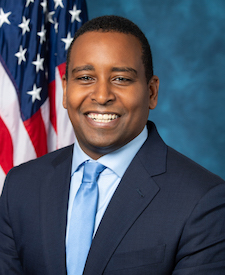
Rep. Joe Neguse
Sponsored bills
Maddy summaryHR 7577, the CHEERS Act, creates a new tax deduction for restaurants, bars, and entertainment venues by expanding eligibility under the energy efficiency tax code (Section 179D). It defines "qualified energy-efficient draft property" as stainless steel or aluminum containers and tap equipment used for alcohol distribution in these businesses, treating them as eligible for the existing energy efficiency tax deduction. This change applies to equipment placed in service after the bill's enactment date, directly benefiting hospitality businesses that own or lease such equipment. The provision modifies existing tax code language without creating new tax rates or altering other regulations.
Maddy summaryThis bill aligns the application deadline for disaster unemployment assistance with the deadline for other disaster aid under the same law. It requires that individuals applying for unemployment help after a major disaster must submit applications by the same date as those seeking general household assistance. The President may still accept late applications if applicants have good cause and submit before the assistance period ends for that disaster. The law directly affects people applying for unemployment aid following major disasters. It only applies to funding appropriated after the bill becomes law.
Maddy summaryHR 7102, the Native American Entrepreneurial Opportunity Act, establishes an Office of Native American Affairs within the Small Business Administration (SBA) to better support Native-owned businesses. The office, led by a specially appointed Assistant Administrator with cultural expertise, directly serves small business owners who are members of Indian Tribes or Native Hawaiian Organizations by providing training, counseling, capital access, and contracting assistance. Key provisions require the office to collaborate with tribes, connect businesses to SBA programs, and report annually to Congress on services delivered. The office is set to terminate seven years after the bill’s enactment, with no new funding authorized for implementation.
Maddy summaryThis bill amends the Fair Credit Reporting Act to protect Native Americans from credit report damage related to certain medical debts. It defines "Native American's medical debt" as debt from health care authorized by the Indian Health Service (IHS) or wrongly charged by the Department of Health and Human Services (HHS), including debts HHS has wrongfully billed. The bill requires credit bureaus to automatically exclude from credit reports: (1) medical debt under one year old, and (2) fully paid or settled debt previously marked as delinquent. It also creates a dispute process where Native Americans can submit proof of HHS liability to have such debts removed from their reports. The changes apply to Native Americans as defined under federal law and take effect 90 days after enactment.
Maddy summaryHR 6195, the Wildland Firefighter Fair Pay Act, modifies federal pay rules for wildland firefighters and related personnel employed by the Forest Service, Department of the Interior, and National Weather Service. It establishes that premium pay earned during wildfire suppression activities (excluding prescribed fires) will be disregarded when calculating total pay for certain pay limits, preventing these employees from exceeding the Executive Schedule Level II pay cap. The bill requires the Secretaries of Agriculture, Interior, and Commerce to submit a hiring plan by March 2024 to ensure sufficient staffing without triggering pay caps. The changes take effect in January 2024 for most provisions and October 2023 for premium pay adjustments.
Maddy summaryHR 6203 extends funding for the Emergency Food Assistance Program (EFAP) through fiscal year 2028, increasing annual commodity funding to $500 million per year for 2024-2028. It raises storage and distribution funding from $100 million to $200 million annually and creates new delivery options for geographically isolated states (Hawaii, Alaska, Puerto Rico, Northern Mariana Islands, U.S. Virgin Islands, and Guam), including allowing them to order through the Department of Defense Fresh Fruit and Vegetable Program. The bill also permits these states to use up to 20% of allocated funds to directly purchase locally grown food. Finally, it allows the Secretary to consider factors like product variety and transportation distance when awarding contracts for fresh produce packages, while maintaining nutritional goals.
Maddy summaryHR 7361, the Flowers for Fallen Heroes Act of 2024, requires the American Battle Monuments Commission to establish a low-cost program allowing the public to order flowers for military gravesites at Commission-managed cemeteries. The bill mandates the Commission to partner with third-party florists (without excess fees) and create a user-friendly website and phone system for ordering by one year after enactment. It also authorizes credit card and electronic payment processing for these orders, with customers responsible for any third-party processing fees, and requires annual reports to Congress detailing program implementation, including order data and florist engagement. This bill directly affects the public seeking to honor fallen service members and the Commission’s operations at 25 overseas military cemeteries.
Maddy summaryThis symbolic resolution (HRES 1026) recognizes Black History Month and honors the 94 African-American recipients of the Congressional Medal of Honor for their military bravery, heroism, and valor. It does not create new laws or policies but formally acknowledges their contributions, referencing historical context like Sergeant William Harvey Carney’s 1863 actions and the 1993 study revealing racial discrimination in Medal of Honor awards during WWII. The resolution specifically calls for the House to recognize Black History Month and honor these 94 service members. It is a non-binding expression of support with no concrete policy changes.
Maddy summaryThis non-binding resolution designates April 5, 2024, as "Barth Syndrome Awareness Day" to raise public awareness about a rare genetic disorder primarily affecting males. It formally supports efforts to improve diagnosis, advance research, and develop treatments for Barth syndrome, which has fewer than 150 diagnosed cases in the U.S. and causes life-threatening heart, muscle, and immune complications. The resolution does not create new laws or funding but recognizes the need for better access to specialized care and regulatory pathways for ultrarare diseases. This symbolic action aims to benefit the small patient community and support the Barth Syndrome Foundation's awareness initiatives.