

Maddy summaryThe PTO Act establishes a standard for paid annual leave, requiring most employers to provide employees with 1 hour of paid leave for every 25 hours worked, up to a maximum of 80 hours per 12-month period. It directly affects private sector employees and certain government workers, including those at the Government Accountability Office, Library of Congress, and federal agencies covered under the Congressional Accountability Act. The bill prohibits employers from interfering with employees' use of leave for any reason, requires clear notice of leave policies, and protects employees from retaliation for taking leave. It includes enforcement mechanisms through the Department of Labor, allowing employees to file complaints or lawsuits for violations of their leave rights. The Act takes effect 180 days after enactment, with specific provisions for collective bargaining agreements.
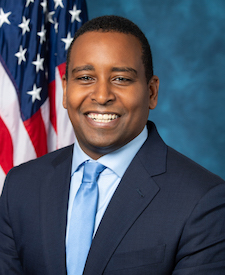
Rep. Joe Neguse
Sponsored bills
Maddy summaryThe Fair Representation Act would require states to use ranked choice voting for elections of Senators and Representatives, allowing voters to rank candidates in order of preference rather than selecting just one candidate. It would mandate multi-member districts for states with six or more representatives (with 3-5 representatives per district) and establish nonpartisan redistricting criteria prioritizing population equality, voting rights protections, and minimizing partisan gerrymandering. The bill would provide federal funding to help states implement these changes, with requirements applying to elections held in 2026 or later for Senators and after the 2030 census for Representatives. This legislation aims to create more representative congressional elections by reducing the impact of gerrymandering and expanding voter choice.
Maddy summaryThis bill adds approximately 6,817 acres of land within Routt National Forest to the existing Sarvis Creek Wilderness area. It directly affects the Routt National Forest by designating this specific parcel as wilderness under the Colorado Wilderness Act of 1993. The key mechanism is amending the 1993 law to include the newly defined "Sarvis Creek Wilderness Addition," as shown on a map dated February 26, 2024. The bill preserves tribal treaty rights and allows traditional tribal uses and fire/insect management under existing wilderness rules, but these are administrative provisions rather than the primary policy change.
Maddy summaryThe GO Ag Act (HR 7731) creates a federal grant program to fund new agricultural education programs in secondary schools. It provides competitive grants of up to $100,000 per applicant for 5 years, requiring schools to demonstrate how programs will serve all students - including special populations - and align with existing career education standards. Grants cover curriculum development, equipment, and materials but cannot fund programs already operating or prepare students exclusively for one employer. The bill authorizes $5 million through fiscal year 2027 to support these new initiatives.
Maddy summaryThis bill (HR 7723) amends campaign finance law to prevent political campaigns from automatically charging donors for recurring contributions without explicit permission. It requires campaigns to obtain active, affirmative consent (like checking a box) before setting up recurring donations - preventing donors from being charged simply by not unchecking a pre-checked box. Campaigns must provide clear receipts showing future charges and include easy cancellation instructions in all communications. The law directly affects federal election campaigns, independent expenditure groups, and electioneering communication funders by changing how they solicit and manage recurring donations.
Maddy summaryHR 7698 establishes a new Office of Civic Bridgebuilding within the Corporation for National and Community Service to support programs reducing polarization and improving social cohesion. It authorizes $25 million annually (2025-2027) for competitive grants to nonprofits, community groups, and educational institutions to fund projects addressing local needs like healthcare gaps or environmental concerns through research-backed methods. Grantees must demonstrate how projects engage diverse communities, ensure participant safety (especially for marginalized groups), and use standardized metrics to track effectiveness. The Office will oversee grants, support training, and maintain a public research base on civic bridgebuilding best practices.
Maddy summaryThe Expand the Behavioral Health Workforce Now Act requires the U.S. Department of Health and Human Services to issue guidance to states within 12 months of enactment. This guidance must detail strategies for states to improve mental health and substance use disorder provider education, training, recruitment, and retention through Medicaid and CHIP programs. It specifically encourages states to use existing authorities like Medicaid waivers and program flexibilities to expand workforce capacity, with a focus on rural and underserved communities. The bill directly affects states administering Medicaid and CHIP by providing a framework to address provider shortages in critical care areas.
Maddy summaryThis bill prohibits the interstate transport, sale, breeding, or possession of captive American mink raised for fur production (including parts or offspring), directly affecting mink fur farmers and the fur industry. It includes a limited exception for entities covered under the Lacey Act and establishes a buy-out program where the government may purchase mink farms. The buy-out amount is based on the farmer's average mink count over three years and the farm's infrastructure value. Funding for the buy-out depends on available appropriations. The bill does not apply to mink not raised for fur or to certain wildlife management activities.
Maddy summaryHR 7634, the Plastic Pellet Free Waters Act, prohibits plastic pellets and pre-production plastic materials from being discharged into water through wastewater, spills, or runoff from specific facilities. It directly affects plastic polymer production facilities, plastic molding and forming facilities, and any point source (like packaging or transport operations) handling plastic pellets. The bill requires the EPA to issue a final rule within 60 days of enactment banning these discharges and updating all relevant wastewater, stormwater, and performance standards in permits and regulations. This creates a legal requirement for facilities to prevent plastic pellet pollution in waterways, targeting a major source of ocean plastic pollution.
Maddy summaryHR 7629, the Protect Our Letter Carriers Act of 2024, allocates $1.4 billion annually (2025-2029) to the U.S. Postal Service for high-security collection boxes and replacing physical universal mailbox keys with electronic versions, directly affecting USPS operations and letter carriers. It requires the Attorney General to appoint specialized prosecutors in each district to coordinate investigations and prosecutions of postal-related crimes, such as assaults on carriers or mail theft. The bill also mandates the U.S. Sentencing Commission to adjust guidelines so that assaults or robberies against postal employees are treated with the same severity as assaults against law enforcement officers. These provisions aim to enhance safety through infrastructure upgrades, improved prosecution, and stricter sentencing for crimes targeting postal workers.