

Maddy summaryThe Healthy Watersheds, Healthy Communities Act of 2023 requires at least 50% of federal funds for watershed projects to support "multibenefit works of improvement" that provide two or more public benefits including water conservation, improved fish/wildlife habitat, flood reduction, or water quality enhancement. The bill defines these projects to include activities like protecting natural features, enhancing fish passage, or improving instream flow, while establishing specific cost-sharing requirements and environmental considerations. Local organizations, including states, tribes, soil conservation districts, rural communities, and irrigation districts, would be the primary beneficiaries of this funding. The legislation aims to shift watershed management toward integrated solutions that address multiple environmental and community challenges simultaneously. It establishes clear definitions and requirements for what qualifies as a multibenefit project under the Watershed Protection and Flood Prevention Act.
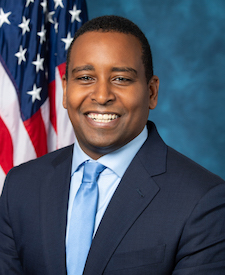
Rep. Joe Neguse
Sponsored bills
Maddy summaryThe Farm and Food Cybersecurity Act of 2024 requires the U.S. Department of Agriculture to conduct biennial studies assessing cyber threats and vulnerabilities across the entire food supply chain - including farmers, processors, distributors, and retailers - and submit reports to Congress detailing risks to food safety, public health, and national security. It also mandates annual cross-sector simulations with agencies like Homeland Security and Health and Human Services to test emergency responses to food-related cyber incidents, involving government and private sector stakeholders. The bill authorizes $1 million annually (2024-2028) to fund these studies and simulations, aiming to identify gaps and improve coordination. These requirements directly affect federal agencies, state/local governments, and food industry entities responsible for food production, distribution, and security.
Maddy summaryHR 7056, the Access to Family Building Act, establishes federal rights for individuals to access assisted reproductive technology (ART) like IVF without unreasonable restrictions, directly affecting patients seeking fertility treatments and health care providers offering ART services. The bill prohibits states from imposing limitations on ART that are more burdensome than those for comparable medical procedures, fail to advance safety, or unduly restrict access, while allowing health and safety regulations that are necessary and least restrictive. It creates federal enforcement mechanisms, including lawsuits by the Attorney General or affected individuals to challenge violating state laws, and preempts conflicting state regulations. The bill explicitly preserves state authority over health/safety regulations and does not alter existing state insurance coverage laws for ART.
Maddy summaryHRES 882 is a non-binding resolution passed by the U.S. House of Representatives on November 21, 2023, declaring support and gratitude to food banks, food pantries, and community-based organizations addressing food insecurity. It recognizes these groups' work in serving over 5 billion meals annually, rescuing wasted food (nearly 118 billion pounds yearly), and supporting vulnerable populations including 44.2 million people in food-insecure households in 2022. The resolution specifically acknowledges their role in providing emergency aid, nutrition education, and disaster response, while highlighting that 55% of food-insecure households did not access federal nutrition programs. It does not create new policies or funding but formally commends these organizations' contributions to reducing food insecurity and improving community health.
Maddy summaryThe Stronger Communities through Better Transit Act establishes a new federal grant program to improve public transportation service. It provides funding to urban areas, states, and Indian tribes to cover up to 50% of public transit operating costs (up to 80% in persistent poverty areas and 100% for Indian tribes), with requirements to report on service frequency, access to jobs, and conduct community surveys. The program mandates that a majority of funds must benefit underserved communities and areas of persistent poverty, defined as census tracts with high poverty rates or minority populations. Recipients must maintain their transit funding levels and report on improvements in access to essential services. The bill authorizes $20 billion annually for fiscal years 2024-2027.
Maddy summary# Summary of "Protecting Communities from Plastics Act" (Title II) This comprehensive legislation addresses the environmental, health, and environmental justice impacts of plastics production and use. Key provisions include: ## Environmental Justice Protections - Requires environmental justice assessments for permits of "covered facilities" (plastics manufacturing facilities) - Mandates consultation with "fenceline communities" (communities near facilities) including: * Prompt notification in multiple languages * Public hearings with translation services * Community benefit agreements - Establishes a 45-day waiting period before approving permits after public hearings ## Regulatory Requirements - Amends Clean Air Act to establish new source performance standards for plastics facilities - Requires continuous monitoring of air emissions (benzene, nitrogen oxides, etc.) - Amends Clean Water Act to prohibit discharge of plastic pellets in wastewater - Requires financial assurance for facility closure and emergency response - Prohibits new facility permits within 5 miles of community buildings (schools, hospitals, etc.) ## Research and Monitoring - Requires study of microplastics in food (including fish, meat, fruits, vegetables) - Mandates research on microplastics in human bodies (urine, breastmilk, stool) - Establishes a pilot program to test technologies for microplastic removal - Requires inventory of plastics manufacturing and distribution ## Additional Provisions - Temporary permitting moratorium on new plastics facilities (during "temporary pause period") - Requires listing of discarded polyvinyl chloride as hazardous waste - Limits National Recycling Strategy to exclude chemical recycling technologies - Creates grants to reduce single-use plastics in agricultural packaging - Requires biodegradable alternatives to plastic weed barriers The legislation aims to address the disproportionate environmental and health impacts of plastics production on vulnerable communities while establishing comprehensive regulatory frameworks for plastics manufacturing and disposal.
Maddy summaryThis bill creates a new program to provide financial assistance to struggling rural health care facilities, including hospitals, clinics, and long-term care centers in designated rural areas. Facilities may use existing USDA funds to refinance loans, upgrade telehealth technology or equipment, or cover operating costs and reserves - provided the aid preserves local health services and improves the facility's financial health. It includes a waiver allowing facilities in persistent poverty areas (20%+ poverty for 30+ years) or distressed communities to bypass standard eligibility requirements. The program applies to rural areas defined as having ≤50,000 residents not adjacent to larger cities.
Maddy summaryThe Protecting Farmers from Drought Act of 2023 modifies eligibility for prevented planting insurance in counties with severe, recurring drought. It replaces the current "1-in-4 rule" (requiring crop planting in at least one of the past four years) with a "1-in-5 rule" for counties experiencing extreme drought (D3 or worse) for three consecutive years, as documented by the U.S. Drought Monitor. This change eases qualification for insurance when drought prevents planting by extending the required planting history window from four to five years. The bill directly affects farmers in designated drought-affected counties by making insurance access more attainable during prolonged dry periods.
Study on Improving Lands Act This bill requires the Department of Agriculture to (1) direct a study on the state of soil health on federal lands that determines impacts such as grazing, wildfire, recreation, and invasive species; and (2) create a database of the information collected during the study.
Maddy summaryHR 5970, the SNAP Tribal Food Sovereignty Act of 2023, allows federally recognized tribes to manage their Supplemental Nutrition Assistance Program (SNAP) benefits locally through contracts or compacts with the USDA. Tribes must request this option via a tribal resolution, replacing the current federal administration of SNAP for tribal members. The agreements would follow the same rules as existing tribal self-determination contracts under the Indian Self-Determination Act. This change aims to support tribal self-governance over nutrition assistance programs.