

Maddy summaryHR 7234, the NACIE Improvement Act, requires the National Advisory Council on Indian Education (NACIE) to include at least one Tribal College or University president in its membership within 180 days of enactment. The bill mandates that NACIE submit its annual report to the Education and Interior Secretaries by June 30 each year, ensuring these departments consider the report when preparing federal budget proposals. This directly affects Tribal Colleges by guaranteeing their representation on NACIE and influences how federal education and tribal funding decisions are shaped through formal budget review processes. The bill does not change funding levels but establishes a procedural requirement for tribal input into federal education budget planning.
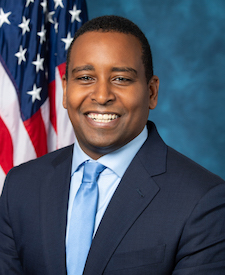
Rep. Joe Neguse
Sponsored bills
Maddy summaryHR 7205, the Rocky Mountain Judgeship Act, adds three new federal district court judgeships: two for the Colorado district and one for the Idaho district. The bill requires the President to appoint these judges with Senate confirmation, increasing judicial capacity in those courts. It also updates the staffing table in federal law to reflect the new numbers (Colorado: 9 judges, Idaho: 3 judges). This is a procedural bill focused solely on adjusting court staffing levels, not on changing legal policies or affecting specific individuals or cases.
Maddy summaryThe Credit for Caring Act of 2024 creates a new federal tax credit for family caregivers. It allows eligible caregivers to claim a credit equal to 30% of qualified caregiving expenses (like home modifications, medical supplies, or respite care) exceeding $2,000 per year, capped at $5,000 annually. To qualify, caregivers must earn over $7,500 in income and provide care for a relative (like a spouse or parent) certified by a healthcare provider as needing long-term care for at least 180 days. The credit phases out for higher earners, with a $75,000 income threshold for single filers and $150,000 for joint returns.
Maddy summaryHR 7170, the Victims' VOICES Act, amends federal restitution law to require courts to reimburse specific expenses for individuals who assume a victim's legal rights (such as family members or advocates). It mandates that defendants pay for lost income, childcare, transportation, and related costs directly tied to attending court proceedings, participating in investigations, or accompanying victims to necessary medical care, therapy, or rehabilitation. The bill focuses on concrete reimbursement for out-of-pocket expenses incurred during legal and medical processes, rather than creating new programs. This change directly affects those stepping into a victim's role during criminal cases, ensuring they are financially supported for essential participation.
Maddy summaryHR 7127, the FAIR Act, establishes pay adjustments for federal employees in 2025. It increases base pay by 4% for most federal workers under statutory pay systems and for "prevailing rate" employees (like those in specific geographic areas), while raising locality pay rates by 3.4%. The bill directly affects all federal employees receiving pay under these systems, as it modifies their 2025 salary calculations. These changes are based on statutory formulas under Title 5 of the U.S. Code, with no new policy mechanisms beyond the specified percentage increases. The adjustments apply to pay rates in effect as of the end of fiscal year 2024.
Maddy summaryThe SWIMS Act of 2024 bans the captivity of orcas, beluga whales, false killer whales, and pilot whales for public display in the United States. It prohibits exporting, importing, or taking these animals for display - except for relocation to a sanctuary meeting specific welfare standards or release into the wild. The bill also makes it illegal to breed these species for public display. This directly affects marine parks and aquariums that currently display these animals, preventing them from acquiring new animals for exhibits or breeding them for that purpose.
Maddy summaryHR 6873 requires the Department of Veterans Affairs (VA) to include suicide rate data for former Reserve members who were never activated for active duty in its annual National Veteran Suicide Prevention Report. Specifically, the bill directs the VA Secretary (with Defense Department consultation) to add "covered Reserves" statistics - defined as former Reserve members who never served in active military service - to each report. This change addresses a gap noted in VA reports since 2020, which previously excluded data on this group despite 538 suicides among them in 2018. The bill does not alter benefits or services but mandates expanded data collection for transparency in suicide prevention reporting.
Maddy summaryHR 7108, the Expanding Access to Mental Health Services in Schools Act of 2024, authorizes federal grants to help high-need public schools hire and retain mental health staff. It targets schools that meet specific criteria: being in the top 15% of need (based on student poverty or other metrics) and failing to meet minimum staffing ratios for counselors, psychologists, or social workers. Grants fund recruitment (through salary stipends or loan repayment), retention (via professional development or incentives), and evidence-based mental health services, with grantees required to contribute 25% matching funds and report annually on provider numbers, demographics, and student-to-provider ratios. The program runs through 2029 and requires all services to comply with privacy laws like FERPA.
Maddy summary# Summary of the Clean Electricity and Transmission Acceleration Act of 2023 This comprehensive legislation establishes significant reforms across environmental policy, energy infrastructure, and community engagement frameworks. Key provisions include: 1. **Environmental Justice Framework**: - Creates an Office of Environmental Justice and External Civil Rights at EPA - Establishes a White House Environmental Justice Interagency Council - Prohibits disparate impact discrimination under Title VI of the Civil Rights Act - Requires community impact reports for Federal actions affecting environmental justice communities 2. **NEPA Reforms**: - Mandates 90-day public comment periods for environmental justice communities - Requires translation of documents into languages spoken by 5%+ of affected communities - Requires assessment of cumulative impacts, including historical pollution - Requires climate change impact assessments using social cost of carbon - Establishes searchable digital archives of NEPA documents 3. **Community Engagement Requirements**: - Creates "Senior Community Engagement Officers" and "Tribal Community Engagement Officers" at all federal agencies - Requires community benefits agreements for major projects - Establishes grants for capacity building in environmental justice communities - Creates an E-NEPA permitting portal for public access to documents 4. **Energy Policy Provisions**: - Includes reforms for FERC (Federal Energy Regulatory Commission) environmental justice liaison - Establishes requirements for intervenor funding at FERC - Contains provisions for transmission planning and infrastructure 5. **Tribal Consultation**: - Strengthens tribal consultation requirements for projects affecting tribal lands - Requires government-to-government relationships with tribal nations The legislation represents a significant shift toward integrating environmental justice considerations throughout the federal permitting and review process, with specific requirements for meaningful community engagement, transparency, and consideration of cumulative impacts on vulnerable populations. It also establishes new funding mechanisms and administrative structures to support these environmental justice goals.
Maddy summaryHR 6525, the Wildfire Resilient Communities Act, allocates $30 billion in federal funding to reduce wildfire risks on public lands. It requires agencies like the Forest Service and National Park Service to prioritize hazardous fuels reduction projects - such as clearing flammable vegetation - near at-risk communities, high-value watersheds, or areas with high wildfire potential. The bill also adds $3 billion for community wildfire defense grants (2027-2031) and establishes a County Stewardship Fund, directing 25% of federal contract receipts to counties for local wildfire resilience efforts. These provisions directly affect communities in wildfire-prone areas, federal land managers, and local governments receiving funds.