

Public Servants Protection and Fairness Act of 2021 This bill establishes an alternative formula to calculate Social Security retirement benefits for those who receive pensions for certain non-covered employment. (The existing formula is known as the windfall elimination provision.) The alternative formula adjusts an individual's total lifetime earnings based on the proportion of covered earnings (i.e., earnings subject to Social Security payroll taxes). It applies to individuals who (1) first become eligible for benefits after 2022, (2) have earnings from non-covered service performed after 1977, and (3) have less than 30 years of coverage (i.e., years in which a beneficiary is considered to have contributed a substantial amount into the Social Security trust funds). Beneficiaries receive the higher benefit amount as calculated under the alternative method or the existing formula. In addition, the bill provides rebates for certain beneficiaries currently impacted by the existing formula. The Social Security Administration must include non-covered earnings in Social Security account statements, and the Government Accountability Office must study the availability of certain information related to retirement plans maintained by state and local governments.
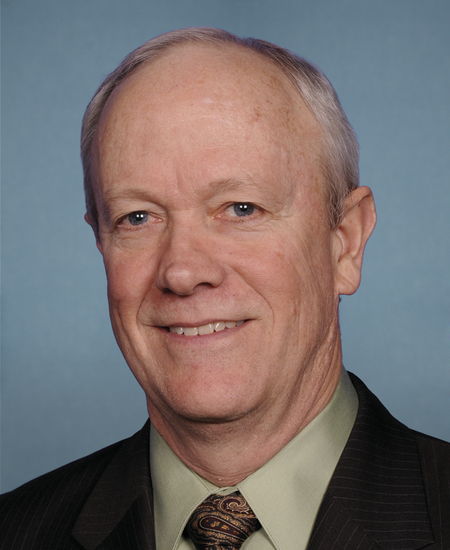
Rep. Jerry McNerney
Sponsored bills
Willie O'Ree Congressional Gold Medal Act This bill provides for the award of a Congressional Gold Medal to Willie O'Ree or, if unavailable, to a member of his family, in recognition of his contributions and commitment to hockey, inclusion, and recreational opportunity.
End Oil and Gas Tax Subsidies Act of 2021 This bill limits or repeals certain fossil fuel oil and gas subsidies for oil companies. Specifically, it increases to seven years the amortization period for geological and geophysical expenditures; repeals the tax credits for producing oil and gas from marginal wells and for enhanced oil recovery; repeals the tax deduction for the intangible drilling and development costs of oil and gas wells; repeals percentage depletion; repeals the tax deduction for tertiary injectant expenses; repeals the passive loss exception for working interests in oil and gas property; denies the tax deduction for income attributable to domestic production activities for oil and gas activities; prohibits the use of the last-in, first-out (LIFO) accounting method by major integrated oil companies; limits the foreign tax credit for dual capacity taxpayers (i.e., taxpayers who are subject to a levy of a foreign country or U.S. possession and receive specific economic benefits from such country or possession); and expands the definition of crude oil for purposes of the excise tax on petroleum and petroleum products to include any oil derived from a bitumen or bituminous mixture (tar sands), and any oil derived from kerogen-bearing sources (oil shale).
Emmett Till and Mamie Till-Mobley Congressional Gold Medal Act of 2021 This bill provides for the posthumous presentation of a Congressional Gold Medal in commemoration of Emmett Till and Mamie Till-Mobley. After the award the medal shall be given to the National Museum of African American History and Culture.
No Honor for Treason Act This bill prohibits the provision of military honors at the funeral or burial of any person who has been convicted of a felony committed on January 6, 2021, in or on the U.S. Capitol buildings and grounds.
This resolution recognizes the disparity between wages paid to men and women, and its impact on women, families, and the nation and reaffirms Congress' commitment to supporting equal pay and to narrowing the gender wage gap.
This joint resolution eliminates the deadline for the ratification of the Equal Rights Amendment, which prohibits discrimination based on sex. The amendment was proposed to the states in House Joint Resolution 208 of the 92nd Congress, as agreed to in the Senate on March 22, 1972. The amendment shall be part of the Constitution whenever ratified by the legislatures of three-fourths of the states.
Safe Step Act This bill requires a group health plan to establish an exception to medication step-therapy protocol in specified cases. A medication step-therapy protocol establishes a specific sequence in which prescription drugs are covered by a group health plan or a health insurance issuer. A request for such an exception to the protocol must be granted if (1) an otherwise required treatment has been ineffective, (2) such treatment is expected to be ineffective and delaying effective treatment would lead to irreversible consequences, (3) such treatment will cause or is likely to cause an adverse reaction to the individual, (4) such treatment is expected to prevent the individual from performing daily activities or occupational responsibilities, (5) the individual is stable based on the prescription drugs already selected, or (6) there are other circumstances as determined by the Employee Benefits Security Administration. The bill requires a group health plan to implement and make readily available a clear process for an individual to request an exception to the protocol, including required information and criteria for granting an exception. The bill further specifies timelines under which plans must respond to such requests.
Ethan's Law This bill establishes a framework to regulate the storage of firearms on residential premises at the federal, state, and tribal levels. At the federal level, the bill establishes statutory requirements for firearms on residential premises to be safely stored if a minor is likely to gain access without permission or if a resident is ineligible to possess a firearm. An individual who violates the requirements is subject to criminal penalties. A firearm stored in violation of the requirements is subject to seizure and forfeiture. At the state and tribal levels, the bill requires the Department of Justice to award grants to implement functionally identical requirements for the safe storage of firearms.
Closing the Loophole on Interstate Firearm Sales Act This bill restricts the sale or transfer of shotguns and rifles across state lines. Specifically, it prohibits a licensed gun dealer, manufacturer, importer, or collector from selling or transferring a rifle or shotgun to an out-of-state resident. Current law allows such sales or transfers if both parties meet in person to conduct the transaction and if the transaction complies with the laws of both states.