Smoke Planning and Research Act of 2021 This bill requires the Environmental Protection Agency (EPA) to research and mitigate the impacts of smoke emissions from wildland fires. Specifically, the EPA must establish (1) four Centers of Excellence for Wildfire Smoke at institutions of higher education, and (2) a grant program to support community mitigation efforts.
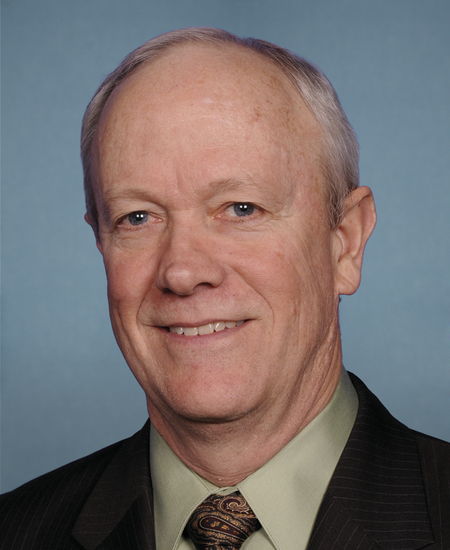
Rep. Jerry McNerney
Sponsored bills
Water Conservation Rebate Tax Parity Act This bill expands the tax exclusions for energy conservation subsidies to include subsidies provided (directly or indirectly) (1) by a public utility for the purchase or installation of any water conservation or efficiency measure; (2) by a storm water management provider for the purchase or installation of any storm water management measure; or (3) by a state or local government to a resident of such state or locality for the purchase or installation of any wastewater management measure, but only if such measure concerns the taxpayer's principal residence.
Averting Loss of Life and Injury by Expediting SIVs Act of 2021 or the Allies Act of 2021 This bill increases the number of special immigrant visas available to qualified Afghan nationals who worked for the U.S. government or the North Atlantic Treaty Organization (NATO) missions in Afghanistan. The bill also relaxes certain qualifications for such visas. Specifically, this bill makes available an additional 8,000 visas for principal aliens under this special visa program, to be available until all such visas have been issued. (The numerical limitations in this program apply only to the principal alien who applies for the visa, not to any accompanying spouse or child.) Under this bill, an alien may qualify based on a credible basis for concern about the possibility of an ongoing serious threat in Afghanistan due to their work with the U.S. government or a NATO mission, where currently the alien must have experienced such a threat. The bill also eliminates a requirement for each applicant to submit a credible sworn statement describing that threat. Furthermore, for an applicant qualifying for a visa by performing duties for U.S. military personnel stationed with a NATO mission, this bill eliminates a requirement that the duties performed qualify as sensitive and trusted duties. If an alien submits a visa application that included an accompanying spouse or child but the alien passes away before the application is granted, the surviving spouse or child shall remain eligible to receive a visa under that application. Currently, a surviving spouse or child retains eligibility only if the application was approved before the alien passed away.
Universal School Meals Program Act of 2021 This bill revises requirements under the food and nutrition programs of the Department of Agriculture, such as the school lunch and breakfast programs. For example, the bill permanently provides free meals to all school children regardless of income. The bill increases the reimbursement rate for school food authorities participating in the food and nutrition programs. The bill also prohibits school food authorities from (1) physically segregating or otherwise discriminating against any child participating in the free breakfast program, or (2) overtly identifying a child participating in the program with a special token or announcement. Additionally, the bill expands the summer food service program by making all children eligible for participation in the program. Further, the bill revises eligibility determinations for measuring poverty to include runaway or homeless youth, foster children, migratory children, and children participating in specified programs (e.g., Head Start).
PFAS Action Act of 2021 This bill establishes requirements and incentives to limit the use of perfluoroalkyl and polyfluoroalkyl substances, commonly referred to as PFAS, and remediate PFAS in the environment. PFAS are man-made and may have adverse human health effects. A variety of products contain PFAS, such as nonstick cookware or weatherproof clothing. The bill directs the Environmental Protection Agency (EPA) to designate the PFAS perfluorooctanoic acid (PFOA) and perfluorooctanesulfonic acid (PFOS) as a hazardous substances under the Comprehensive Environmental Response, Compensation, and Liability Act of 1980, thereby requiring remediation of releases of those PFAS into the environment. Within five years, the EPA must determine whether the remaining PFAS should be designated as hazardous substances. The EPA must publish human health water quality criteria under the Clean Water Act for each measurable PFAS and class of such substances and establish standards to limit discharges of PFAS from industrial sources into waters of the United States. In addition, the EPA must issue a national primary drinking water regulation for PFAS that, at a minimum, includes standards for PFOA and PFOS. Among other requirements, the EPA must also issue a final rule adding PFOA and PFOS to the list of hazardous air pollutants, test all PFAS for toxicity to human health, and regulate the disposal of materials containing PFAS. The EPA must also require PFAS manufacturers to submit analytical reference standards for PFAS. The EPA and states may use those standards for (1) the development of information, protocols, and methodologies, and (2) activities relating to the implementation of enforcement of requirements. Finally, the bill provides incentives to address PFAS, such as grants to help community water systems treat water contaminated by PFAS and grants to schools for testing and filtrating PFAS from drinking water.

Cyber Sense Act of 2021 This bill requires the Department of Energy to establish a voluntary Cyber Sense program to test the cybersecurity of products and technologies intended for use in the bulk-power system. The bulk-power system includes facilities and control systems necessary for operating an interconnected electric energy transmission network.
Consumer Protection and Recovery Act This bill authorizes the Federal Trade Commission (FTC) to seek monetary relief in federal court from businesses that engage in unlawful commercial practices such as false advertising, consumer fraud, and anticompetitive conduct. Specifically, the FTC may seek restitution in these cases for losses, rescission or reformation of contracts, refund of money, return of property, or disgorgement of unjust enrichment. On April 22, 2021, the Supreme Court held in AMG Capital Management, LLC v. Federal Trade Commission that the Federal Trade Commission Act does not authorize the FTC to seek, or a court to award, such relief.
Preserving Home and Office Numbers in Emergencies Act of 2021 or the PHONE Act of 2021 This bill restricts the reassignment of a telephone number assigned to a subscriber for the provision of fixed wireline voice service. Specifically, for up to one year after a major disaster has been declared, a number may not be reassigned except at the request of the subscriber. At the request of a subscriber, this prohibition must be extended for an additional year. Further, a subscriber may cancel service without a cancellation fee and resubscribe with the same number and no fee if the subscriber is located in a disaster area and the residence where the number is located is inaccessible or uninhabitable.
Enhancing Grid Security through Public-Private Partnerships Act This bill directs the Department of Energy (DOE) to implement a program to facilitate and encourage public-private partnerships in order to address and mitigate the physical security and cybersecurity risks of electric utilities. In carrying out the program, DOE must take into consideration different sizes of electric utilities and the regions that such utilities serve, prioritize electric utilities with fewer available resources due to size or region, and utilize and leverage existing DOE programs.
Comprehensive Paid Leave for Federal Employees Act This bill provides paid family and medical leave to federal employees. Currently, federal employees are entitled to 12 weeks of administrative leave for one or more of the following reasons: (1) the birth of a child, (2) the adoption or foster care of a child, (3) the care of an immediate family member with a serious health condition, (4) inability to work due to a serious health condition, and (5) exigencies relating to an immediate family member's active duty service in the Armed Forces. However, of these reasons, employees are entitled to paid administrative leave only in connection with the birth, adoption, or foster care of a child (i.e., parental leave). The bill provides 12 weeks of paid administrative leave for any of these reasons, and specifies that this leave is in addition to any annual or sick leave to which employees are entitled.