Robert Parris Moses Congressional Gold Medal Act This bill provides for the award of a Congressional Gold Medal posthumously to Robert Parris Moses in recognition of his achievements and contributions to American education and civil rights.
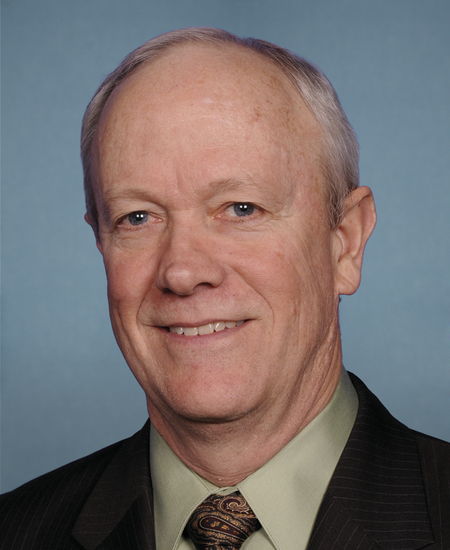
Rep. Jerry McNerney
Sponsored bills
Environmental Justice Air Quality Monitoring Act of 2022 This bill requires the Environmental Protection Agency to implement a pilot program to award, on a competitive basis, grants or contracts to state, local, and tribal air agencies to carry out specified projects for hyperlocal air quality monitoring systems in environmental justice communities (i.e., communities with significant representation of communities of color, low income communities, or tribal and indigenous communities that experience, or are at risk of experiencing, higher or more adverse human health or environmental effects). A project carried out using a grant or contract awarded under the pilot program may not exceed five years in duration.
This resolution supports the goals and ideals of National Engineers Week to increase understanding of, and interest in, engineering and technology careers. The resolution recognizes that engineering education is a critical component of STEM (science, technology, engineering, and mathematics) education.
This resolution extends collective bargaining rights prescribed in the Congressional Accountability Act of 1995 to employees of the House of Representatives.
Designates the facility of the United States Postal Service located at 120 4th Street in Petaluma, California, as the "Lynn C. Woolsey Post Office Building."
Keeping School Meals Flexible Act This bill extends authority through June 30, 2023, for the Department of Agriculture (USDA) to waive certain requirements for the school meal programs to address COVID-19. The bill extends the authority for USDA to issue a single waiver of child nutrition program requirements to all states under the National School Lunch Program for purposes of providing meals and snacks with appropriate safety measures with respect to COVID-19; grant waivers of requirements to allow non-congregate feeding in the Child and Adult Care Food Program for purposes of providing meals and snacks with appropriate safety measures with respect to COVID-19; and grant waivers related to the nutritional content of meals served in child nutrition programs if it determines the waiver is necessary to provide meals and snacks, and there is a food supply chain disruption due to COVID-19.
Algorithmic Accountability Act of 2022 This bill requires certain businesses that use automated decision systems to make critical decisions to study and report about the impact of those systems on consumers. Critical decisions include those that have a significant effect on a consumer's life such as the cost or availability of health care, housing, educational opportunities, or financial services. The Federal Trade Commission (FTC), in consultation with relevant stakeholders, must issue regulations to implement the bill. The bill provides for enforcement by the FTC and specified state officials. Further, the bill establishes a Bureau of Technology to advise the FTC about the technological aspects of its functions.
Pell Grant Sustainability Act This bill requires the Department of Education to calculate the maximum award amount for Pell Grants for award year 2022-2023 and each subsequent award year by indexing the award amount to the rate of inflation.
This resolution recognizes the cultural and historical significance of the Lunar New Year. The resolution expresses, in observance of this Lunar New Year, the Year of the Tiger, the deepest respect of the House of Representatives for Asian Americans and all individuals throughout the world who celebrate this significant occasion. The resolution wishes Asian Americans and all individuals who observe this holiday a happy and prosperous new year.
Leading Infrastructure For Tomorrow’s America Act or the LIFT America Act This bill establishes several programs and incentives to modernize the nation's communications, drinking water, energy, transportation, health care, and other related infrastructure. For example, the bill provides incentives to make broadband internet more accessible and affordable. It also establishes grants to implement next generation 9-1-1 services. In addition, it supports drinking water programs, including the drinking water state revolving fund program. Further, it provides grants to treat perfluoroalkyl or polyfluoroalkyl substances (commonly referred to as PFAS) in drinking water and to replace lead service lines. The bill establishes a variety of programs to support clean energy infrastructure and address climate change, including efforts to (1) modernize the electric grid and make it more resilient, efficient, and secure; (2) increase energy efficiency in buildings; and (3) support renewable energy infrastructure. Further, it provides incentives for vehicle infrastructure, such as incentives to develop infrastructure for electric vehicles and grants to reduce air pollution at ports by electrifying port infrastructure. Additionally, the bill establishes grants and programs for health care infrastructure, including by providing support for the Centers for Disease Control and Prevention, laboratories, and state, local, tribal, and territorial health departments. Finally, the bill reauthorizes grant programs to remediate brownfield sites (i.e., sites contaminated with hazardous substances) through FY2026.