

Maddy summaryHRES 1034 is a non-binding resolution supporting Mathematics and Statistics Awareness Month, observed each April. It recognizes math and statistics as foundational to STEM fields, innovation in areas like medicine and cybersecurity, and daily life applications. The resolution urges the House to celebrate these disciplines, highlight their importance to U.S. economic prosperity, and acknowledge ongoing efforts to increase diversity in math and statistics education and careers. It does not create new laws or programs but formally endorses the annual observance.
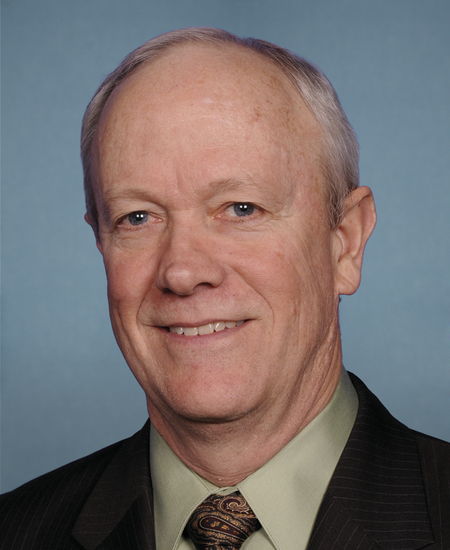
Rep. Jerry McNerney
Sponsored bills
Ensuring Lasting Smiles Act This bill requires private health insurance plans to cover diagnosis and treatment of congenital anomalies and birth defects, such as reconstructive services and items. Coverage must include services and items that functionally improve, repair, or restore any body part that is medically necessary for normal bodily functions or appearance, as determined by the treating physician. Coverage limits and cost-sharing requirements for such services and items may not be more restrictive than those applicable to all medical and surgical benefits under the plan.
This resolution recognizes the accomplishments and example of Cesar Estrada Chavez. The resolution also encourages the people of the United States to commemorate his legacy and to always remember his rallying cry, "Si, se puede!" (which means "Yes, we can!").
This resolution expresses the sense of the House of Representatives that prior to introducing U.S. Armed Forces into hostilities, the House should also determine whether such introduction is for the purpose of a just cause, such as stopping a genocide or ethnic cleansing; whether the proposed action will be in response, and will be proportional, to the underlying just cause, and will be undertaken with the intent to reestablish peace; whether the presumed benefits of the proposed action outweigh the harm done; whether there is a reasonable probability that the proposed action will succeed; and whether all alternatives to military action have been exhausted.
Emmett Till Antilynching Act This bill makes lynching a federal hate crime offense. Specifically, the bill imposes criminal penalties—a fine, a prison term of up to 30 years, or both—on an individual who conspires to commit a hate crime offense that results in death or serious bodily injury or that includes kidnapping or an attempt to kidnap, aggravated sexual abuse or an attempt to commit aggravated sexual abuse, or an attempt to kill.
This resolution supports the goals and ideals of National Women's History Month and recognizes the women and organizations that continue to promote the teaching of women's history.
Getting Involved in Researching, Learning, and Studying of Science, Technology, Engineering, and Mathematics Act or the GIRLS STEM Act This bill authorizes the Department of Education to provide grants to local educational agencies serving underrepresented or low-income students to enable elementary and secondary schools to implement a program to (1) encourage the interest of female students in careers requiring science, mathematics, engineering, or technology (STEM) skills; and (2) prepare female students to pursue credentials needed to pursue a career in a STEM field.
Forced Arbitration Injustice Repeal Act of 2022 or the FAIR Act of 2022 This bill prohibits a predispute arbitration agreement from being valid or enforceable if it requires arbitration of an employment, consumer, antitrust, or civil rights dispute.
Designates the facility of the United States Postal Service located at 14011 Clarkdale Avenue in Norwalk, California, as the "Esteban E. Torres Post Office Building."
Dr. Lorna Breen Health Care Provider Protection Act This bill establishes grants and requires other activities to improve mental and behavioral health among health care providers. Specifically, the Department of Health and Human Services (HHS) must award grants to hospitals, medical professional associations, and other health care entities for programs to promote mental health and resiliency among health care providers. In addition, HHS may award grants for relevant mental and behavioral health training for health care students, residents, or professionals. Additionally, HHS must conduct a campaign to (1) encourage health care providers to seek support and treatment for mental and behavioral health concerns, and (2) disseminate best practices to prevent suicide and improve mental health and resiliency among health care providers. HHS must also study and develop policy recommendations on improving mental and behavioral health among health care providers, removing barriers to accessing care and treatment, and identifying strategies to promote resiliency. Furthermore, the Government Accountability Office must report on the extent to which relevant federal grant programs address the prevalence and severity of mental health conditions and substance use disorders among health care providers.