This resolution celebrates the 50th anniversary of the Federal Pell Grant program and expresses support for the designation of National Federal Pell Grant Day.
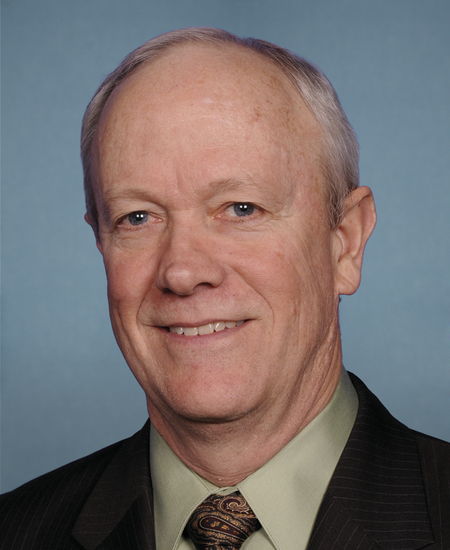
Rep. Jerry McNerney
Sponsored bills
This resolution supports the goals and ideals of World Wi-Fi Day to recognize and celebrate the significant role that Wi-Fi plays in cities and communities around the world and to increase understanding of how Wi-Fi is helping to bridge the digital divide. The resolution also recognizes the Wi-Fi industry's efforts in delivering innovation, socioeconomic benefits, and opportunities to the American public and around the world.
This resolution recognizes the historical significance to the nation of Juneteenth Independence Day (commemorating the end of slavery in the United States).
Water Data Act This bill requires federal departments and agencies involved in water resources management to jointly develop and implement a National Water Data Framework and establish an interagency council, advisory committee, and grant program. Specifically, the bill requires the departments to jointly develop and implement a National Water Data Framework for integrating, sharing, and using water data to support water resources management and access. The departments must (1) develop and adopt common national standards for water data, (2) integrate water data and tools through common approaches to data infrastructure and platforms, and (3) harmonize and align water data policies and programs. The bill further requires these departments to establish an interagency Water Data Council to support the development and implementation of the framework. The bill also requires the Department of the Interior to establish an Advisory Committee on Water Information to advise Interior, the departments, and the council on the framework. The advisory committee members must include those involved in water-related activities across different sectors (e.g., state and local governments, Indian Tribes, water agencies, private sector entities, and nonprofit organizations). Finally, the bill requires Interior to establish a Water Data Grant Program in coordination with the council for nonfederal entities to carry out the purposes of this bill.
Recovering America’s Wildlife Act of 2022 This bill provides funding for the conservation or restoration of wildlife and plant species of greatest conservation need, including endangered or threatened species, and establishes related requirements. TITLE I--WILDLIFE CONSERVATION AND RESTORATION (Sec. 101) This title establishes and funds a subaccount of the Wildlife Conservation and Restoration Account, which was established under the Pittman-Robertson Wildlife Restoration Act. The subaccount must be used to support efforts of states, territories, or the District of Columbia to recover and manage wildlife and plant species of greatest conservation need. The Department of the Interior must use a portion of the funding from the subaccount for grants to state fish and wildlife departments, the District of Columbia fish and wildlife department, fish and wildlife departments of territories, nonprofit organizations, or regional associations of fish and wildlife departments. The grants must be used for innovative recovery efforts for species of greatest conservation need, species listed as endangered or threatened species, or the habitats of such species. Funding for the subaccount must supplement existing funds available to the states from funds distributed under the Dingell-Johnson Sport Fish Restoration Act and the Wildlife Conservation and Restoration Account. Recipients of the funding from the subaccount must match federal funds as specified by the title. The Government Accountability Office must study and report on the progress of states, territories, the District of Columbia, and Indian tribes in protecting species of greatest conservation need, endangered species, and threatened species. TITLE II--TRIBAL WILDLIFE CONSERVATION AND RESTORATION (Sec. 201) This title establishes and funds a Tribal Wildlife Conservation and Restoration Account to support Indian tribes' efforts to recover and manage wildlife and plant species of greatest conservation need. Indian tribes are not required to provide matching funds. TITLE III--ENDANGERED SPECIES RECOVERY AND HABITAT CONSERVATION LEGACY FUND (Sec. 301) This title establishes and funds through FY2026 the Endangered Species Recovery and Habitat Conservation Legacy Fund. The U.S. Fish and Wildlife Service must use the fund to (1) implement an Endangered Species Recovery Grant Program; (2) address its interagency consultation responsibilities under the Endangered Species Act of 1973; (3) work with nonfederal entities to conserve wildlife habitat and at-risk species, threatened or endangered species, or species proposed to be listed as threatened or endangered species; or (4) address the development and permitting of voluntary conservation agreements under such act. Amounts made available under the fund must supplement other federal amounts made available to carry out such activities. The President must annually submit to Congress, together with the annual budget of the United States, a list of threatened species and endangered species for which recovery plans will be developed or implemented with amounts from the Endangered Species Recovery and Habitat Conservation Legacy Fund. TITLE IV--REPORT (Sec. 401) Interior must also report on information concerning the amount of grants and contracts that were awarded or are allocated under this bill to Historically Black Colleges and Universities, Hispanic-serving educational institutions, tribally controlled colleges and universities, minority-serving educational institutions, minority-owned business enterprises, women-owned business enterprises, and community-based organizations that are principally administered by, operated by, or serving minority communities.

Military Spouse Hiring Act This bill expands the Work Opportunity Tax Credit (WOTC) to include the hiring of a qualified military spouse. (The WOTC permits employers who hire individuals who are members of a targeted group such as qualified veterans, ex-felons, or long-term unemployment recipients to claim a tax credit equal to a portion of the wages paid to those individuals.) A qualified military spouse is any individual who is certified by the designated local agency as being (as of the hiring date) a spouse of a member of the Armed Forces.
Protecting Our Kids Act This bill makes various changes to federal firearms laws, including to establish new criminal offenses and to expand the types of weapons and devices that are subject to regulation. Among the changes, the bill generally prohibits the sale or transfer of certain semiautomatic firearms to individuals who are under 21 years of age; establishes new federal criminal offenses for gun trafficking and related conduct; establishes a federal statutory framework to regulate ghost guns (i.e., guns without serial numbers); establishes a framework to regulate the storage of firearms on residential premises at the federal, state, and tribal levels; subjects bump stocks to regulation under federal firearms laws; generally prohibits the import, sale, manufacture, transfer, and possession of large capacity ammunition feeding devices; and requires the Department of Justice to report on the demographic data of persons who are determined to be ineligible to purchase a firearm based on a background check performed by the national instant criminal background check system.
This resolution condemns in the strongest terms the great replacement theory, which it describes as a white supremacist conspiracy theory that has been used to falsely justify racially motivated, violent acts of terrorism domestically and internationally.
This joint resolution directs the President to remove U.S. Armed Forces from hostilities against the Houthis in Yemen within 30 days of the enactment of this joint resolution unless Congress authorizes a later withdrawal date, issues a declaration of war, or specifically authorizes the use of the Armed Forces. Prohibited activities include sharing intelligence or providing logistical support to enable offensive strikes by the coalition led by Saudi Arabia. This joint resolution shall not affect any military operations directed at Al Qaeda or associated forces.
Affordability is Access Act This bill establishes several requirements relating to health insurance coverage of, and access to, over-the-counter contraceptives. Specifically, the bill requires the Department of Health and Human Services, the Department of Labor, and the Department of the Treasury to specify that private health insurance plans must cover over-the-counter contraceptives that are approved by the Food and Drug Administration (FDA), even without a prescription. Under current law, private health insurance plans (with some exceptions) must cover FDA-approved prescription contraceptives, without cost-sharing requirements. The bill also prohibits retailers from interfering with an individual's access to oral contraceptives that are meant for routine, daily use and are FDA-approved for use without a prescription.