

Expedited Federal Permitting for California Act This bill expands a Department of Transportation (DOT) program that allows up to two states to approve environmental reviews for certain transportation projects under state laws and regulations instead of under the National Environmental Policy Act of 1969 (NEPA). Specifically, the bill makes permanent a pilot program that allows DOT to approve a state to participate in a program to conduct environmental reviews and approve permits for certain transportation projects if DOT (with the concurrence of the Council on Environmental Quality) determines that the state laws and regulations are at least as stringent as the federal NEPA requirements. The bill also expands project eligibility for the program to include certain federally funded airport and port development projects.
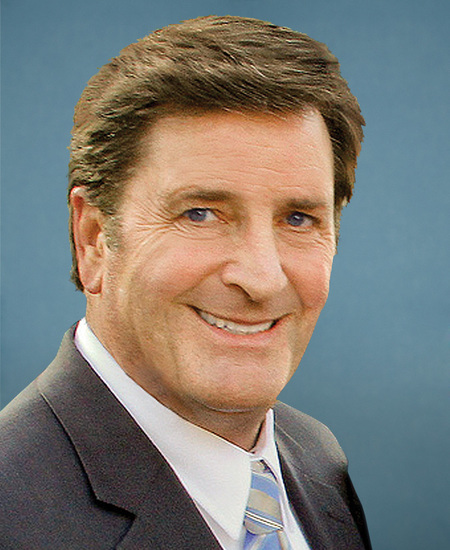
Rep. John Garamendi
Sponsored bills
Maddy summaryThis bill establishes new federal requirements for employers to prevent heat-related illness and injury among workers. It mandates that employers provide safe work environments by implementing specific measures, including access to cool water, scheduled rest breaks in shaded areas, employer-paid cooling equipment, and training for employees and supervisors on recognizing heat illness symptoms. The Secretary of Labor must create these standards within one year, requiring employers in high-heat occupations (like construction, agriculture, and outdoor labor) to adopt engineering controls, administrative schedules, and health protocols. Key provisions include ensuring hydration, rest, and language-accessible training, while preserving existing safety protections and allowing for updates as scientific evidence evolves.
Maddy summaryHR 4942 extends and modifies the Conrad State 30 program, which allows states to sponsor foreign medical graduates to work in medically underserved areas in exchange for a commitment to practice for three years. The bill directly affects foreign medical graduates seeking to work in the U.S., states that sponsor them, and health facilities in underserved communities. Key provisions include creating mechanisms for physicians to change employers or states if they face issues with their current employment, adding requirements for employment agreements (including prohibitions on non-compete clauses), and establishing exceptions to the three-year work requirement under certain circumstances. The bill also creates a process for states to recapture waiver slots when physicians leave their employment and requires annual reporting on the program's usage. These changes aim to improve physician retention in underserved areas by providing more flexibility and protections for foreign medical graduates.
Maddy summaryThis bill amends the Child Nutrition Act to require school food service training programs to be scheduled during regular paid work hours whenever possible. If training must occur outside work hours, schools must compensate staff for attending, explain the necessity, and not penalize staff for missing it. Training must also be offered in-person with hands-on components when appropriate. The law directly affects school food service workers and their employers, mandating specific scheduling and compensation practices for required training.
Maddy summaryHR 4893, the Scientific Integrity Act, requires federal agencies that fund, conduct, or oversee scientific research to adopt policies preventing political interference in science. The bill mandates these agencies to prohibit suppression or distortion of research findings, establish Scientific Integrity Officers to enforce policies, and implement training and reporting systems. It directly affects scientists and engineers employed by or contracted with covered agencies (like the EPA or NIH), ensuring their work remains free from political pressure. Key mechanisms include annual public reporting on misconduct complaints, whistleblower protections, and requiring scientific conclusions to be based on evidence, not ideology.
Maddy summaryHR 4889, the Raise the Wage Act of 2023, would gradually increase the federal minimum wage for most workers to $15.50 per hour by 2027, with specific annual targets: $9.50 starting in 2023, rising to $11.00 after one year, $12.50 after two years, and $15.50 after four years. It would also phase out the separate lower minimum wage for tipped employees (starting at $6.00/hour) by aligning their pay with the regular minimum wage by 2028, while requiring employers to let workers keep all tips. The bill includes similar phased increases for workers under 20 and transitions toward fairer wages for workers with disabilities under special certificates, which would sunset after 2028. Future annual increases after 2028 would tie the minimum wage to the median hourly wage of all workers.
Maddy summaryHR 4157, the "Not Just a Number Act," requires the Department of Veterans Affairs (VA) to produce annual reports on veteran suicide rates and their connection to VA healthcare and benefits. The reports must break down suicide rates by age, gender, and race, and examine how engagement with VA services (like Vet Centers, healthcare enrollment, benefits claims, and housing loans) correlates with suicide trends. The bill also mandates a VA toolkit for state/local coroners to improve veteran suicide death reporting, and a study on creating a dedicated VA suicide prevention office. These measures aim to standardize data collection and identify effective prevention strategies, directly affecting VA operations, congressional oversight, and veteran care systems.
Maddy summaryHR 4663, the Federal Mechanical Insulation Act, defines "mechanical insulation" (insulation around pipes and equipment in federal buildings) as an eligible energy efficiency measure. It requires federal agencies to include mechanical insulation in their required energy and water evaluations, specifically mandating that evaluations identify this insulation as a potential efficiency measure. The bill specifies that such insulation must meet minimum standards under Reference Standard 90.1 to qualify. This change directly affects federal building managers and contractors by formally recognizing mechanical insulation as a standard efficiency option in compliance with existing energy conservation laws.
Maddy summaryHR 4740, the Streamline Pentagon Budgeting Act of 2023, removes specific reporting requirements for the Department of Defense and related agencies. It repeals sections requiring reports on unfunded priorities (10 U.S.C. § 222a, 222b), military construction project reporting (Military Construction Authorization Act for FY2018), and nuclear security administration reporting (Atomic Energy Defense Act § 4716). This bill directly affects Pentagon budget offices, military construction planners, and the National Nuclear Security Administration by eliminating these administrative obligations. The change simplifies budgeting processes without altering funding levels or policy decisions.
Maddy summaryThis bill amends the Child Nutrition Act to extend liability protections for food and pet supply donations. It adds definitions for "pet," "emotional support animal," and "pet supply" to the Act, clarifying that donations of pet food or supplies for pets, service animals, or emotional support animals are covered. The key provision (Section 22(c)(4)) shields donors and nonprofits from civil/criminal liability when donating such items in good faith for direct distribution to animals. It directly affects pet food donors, animal welfare nonprofits, and local governments distributing pet supplies. The bill does not create new programs but modifies existing donation rules to include pet-related items.