

This bill directs the Federal Emergency Management Agency (FEMA) to establish a grant program to modify, upgrade, and construct fire and emergency medical services (EMS) department facilities. Grant recipients may use funds received to build, rebuild, or renovate fire and EMS department facilities; upgrade existing facilities to install exhaust emission control systems, install backup power systems, upgrade or replace environmental control systems (such as HVAC systems), remove or remediate mold, and construct or modify living quarters for use by male and female personnel; and upgrade fire and EMS stations or build new stations. The bill sets forth provisions regarding (1) grant fund allocations between career and volunteer fire and EMS departments, and (2) prevailing rate of wage and a requirement for using materials produced domestically for public contracts.
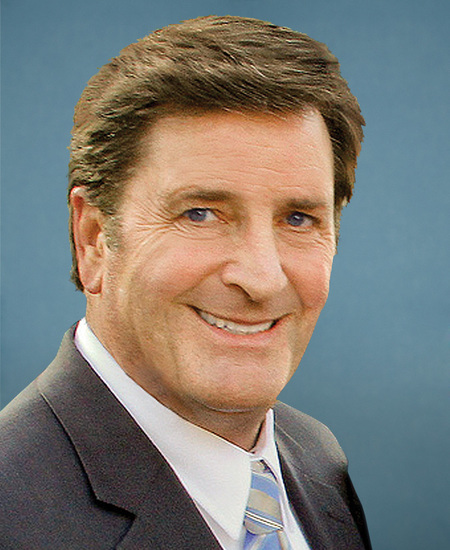
Rep. John Garamendi
Sponsored bills
Made in America Act of 2021 This bill requires that materials used in carrying out federal infrastructure aid programs are made in the United States. The term produced in the United States means, in the case of iron or steel products, that all manufacturing processes for the iron or steel product, from the initial melting stage through the application of coatings, occurred in the United States; manufactured products, that the product was manufactured in the United States and that the cost of the components of the manufactured product that are mined, produced, or manufactured in the United States is greater than 50% of the total cost of all components of the manufactured product; and construction materials, that all manufacturing processes for the construction material occurred in the United States. The Department of Commerce must (1) issue uniform standards that define the term all manufacturing processes for purposes of this bill, and (2) take into consideration and seek to maximize the jobs benefited or created in the production of the construction material. The bill requires that all steel, iron, manufactured products, non-ferrous metals, plastic, concrete and aggregates, glass (including optical glass), lumber, and drywall used in these programs be produced in the United States. Includes within infrastructure addressed by this bill federal-aid highways, railroads, public transportation, civil aviation, drinking water, and stormwater.
Securing America's Pharmaceutical Supply Chain Act This bill allows an executive agency to purchase a drug approved or licensed by the Food and Drug Administration only if the drug is over 50% sourced, manufactured, and assembled in the United States. This requirement may be waived (1) if the drug is not available in sufficient quantity or quality as over 50% sourced, manufactured, and assembled in the United States; or (2) during an emergency. The U.S. Trade Representative (USTR) shall modify U.S. product coverage under all free trade agreements and the World Trade Organization Agreement on Government Procurement to exclude coverage of essential medicines and medical countermeasures. Subsequent to such modifications, the USTR shall make any necessary corresponding modifications of existing waivers and notify the Office of Management and Budget.
State and Local General Sales Tax Protection Act This bill restricts the source of revenue for airport spending to local fuel excise taxes. Under current Federal Aviation Administration policy, state and local governments must also use general sales taxes collected on aviation fuel for airport spending.
Disaster Learning and Life Saving Act of 2021 This bill establishes within the executive branch a National Disaster Safety Board to study the underlying causes of disaster-related fatalities and property damage nationwide and make policy recommendations, and authorizes appropriations for the board through FY2025. Specifically, the board shall review and establish the facts, circumstances, and cause or probable cause of the loss of life, human injury, and economic injury due to a natural hazard with 10 or more fatalities. The board shall initiate a review of an incident by monitoring the situation and assessing available facts to determine the appropriate review response without interfering in any ongoing lifesaving and life sustaining efforts underway by other entities; disseminate best practices to develop disaster investigation and review capacity within state, tribal, and local governments; and establish an office to review and make recommendations to mitigate and prevent the loss of life, or human or economic injury, for vulnerable populations. The Government Accountability Office shall audit the programs and expenditures of the board at least once every two years. The bill defines natural hazard to mean a major disaster that is naturally occurring, to include any naturally occurring heat wave, storms, or wildfires, and to exclude a technological disaster.
United States Army Rangers Veterans of World War II Congressional Gold Medal Act This bill provides for the award of a single Congressional Gold Medal to the U.S. Army Rangers Veterans of World War II in recognition of their dedicated service during World War II.
Veteran Education Empowerment Act This bill reauthorizes through FY2029 and otherwise revises a Department of Education (ED) grant program for student veteran centers. Specifically, ED must make grants to institutions of higher education (IHEs) or consortia of IHEs to establish, maintain, improve, or operate a student veteran center. A student veteran center is a dedicated space on a campus that provides students who are veterans or members of the Armed Forces with (1) a lounge or meeting space for themselves, their spouses or partners, their children, and veterans in the community; and (2) a centralized office for student veteran services that serves as a single point of contact to coordinate comprehensive support services for student veterans.
John Lewis Every Child Deserves a Family Act This bill prohibits discrimination on the basis of sexual orientation, gender identity, marital status, or religion in the provision of child welfare programs and services by entities receiving federal funding. The Department of Health and Human Services (HHS) must provide technical assistance to help states follow this requirement, including (1) guidance for bringing state laws into compliance, (2) developing training to increase cultural competency related to social identity, and (3) training for judges and attorneys involved in child welfare cases, among other supports. Additionally, HHS must establish the National Resource Center on Safety, Well-Being, Placement Stability, and Permanency for LGBTQ Children and Youth Involved with Child Welfare Services to provide training, technical assistance, and guidance to applicable state and local agencies and service providers. Further, the Religious Freedom Restoration Act may not be the basis for challenging the application or enforcement of this bill. The Government Accountability Office must study and report on states' compliance with the requirements of the bill no later than three years after enactment.
Stop Child Hunger Act of 2021 This bill establishes a permanent program and provides funds for electronic benefit transfer (EBT) cards to cover meals for children during extended school closures. Specifically, the Department of Agriculture must establish a program to provide EBT cards to cover meals for children who are enrolled in the National School Lunch Program or School Breakfast Program when a school is closed, operating remotely, or a combination of both for a period of five days or more. Cards may be used to purchase food from approved retailers under the Supplemental Nutrition Assistance Program.
Healthcare for Our Troops Act This bill addresses TRICARE Reserve Select coverage and eligibility for Selected Reserve members of the Ready Reserve and their families. Among other elements, the bill provides eligibility for TRICARE Reserve Select to Selected Reserve members of the Ready Reserve who are eligible for or enrolled in the Federal Employees Health Benefits Program.