

Maddy summaryHR 1510, the Improving Access to Nutrition Act of 2023, removes work requirements for Supplemental Nutrition Assistance Program (SNAP) recipients. It directly affects approximately 6.1 million people, including many Black, Hispanic, and Native American households disproportionately impacted by food insecurity (with rates 2-4x higher than White households), as well as families with children and individuals with health barriers to employment. The bill amends the Food and Nutrition Act by striking provisions requiring work for SNAP eligibility and related administrative requirements. This change aims to prevent vulnerable households from losing critical food assistance during the pandemic and beyond.
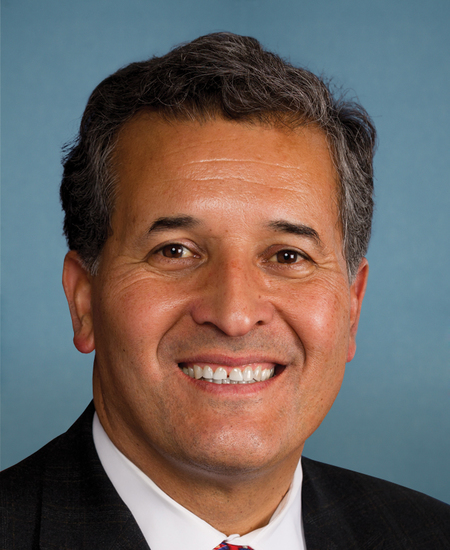
Rep. Juan Vargas
Sponsored bills
Maddy summaryThe Stop Corporate Capture Act requires agencies to disclose conflicts of interest when industry-funded studies or research are submitted for rulemaking consideration. It mandates that such studies be made publicly available and requires agencies to assess the social equity impacts of proposed rules. The bill creates an Office of the Public Advocate to help improve public participation in rulemaking, particularly for historically excluded groups. These provisions aim to increase transparency in regulatory decision-making and ensure rulemaking considers broader public interests beyond corporate interests.
Maddy summaryHR 1511 amends Section 249 of the Immigration and Nationality Act to change eligibility criteria for certain immigration provisions. The bill replaces outdated language about entry dates (prior to July 1, 1924, or January 1, 1972) with a requirement that applicants must have been long-term residents of the United States for at least seven years before applying. This change would directly affect individuals seeking immigration status under the amended provisions who meet the new residency timeline. The bill is procedural in nature, updating the legal definition of qualifying residency without creating new benefits or restrictions. (Note: The bill's title incorrectly references the "Immigration Act of 1929," which never existed; the actual law amended is part of the 1952 Immigration and Nationality Act.)
This resolution supports the goals of a feminist foreign policy (i.e., a foreign policy that requires analysis of and challenges to power structures and inequalities that are based on systems of discrimination). The resolution also supports the adoption of policies that promote gender equity and the participation of women and girls in public life.
This resolution expresses the sense that the federal government should adopt a global health solidarity strategy to end medically avertable deaths and respond to the full burden of disease in poor countries; the federal government should use laws and diplomatic influence to stop ongoing economic harms to the global South; and it is the duty of the federal government to issue reparations, including for slavery and colonialism.
Philippine Human Rights Act This bill imposes limitations on providing assistance to the police or military of the Philippines. No federal funds may be used to provide such assistance until the Philippines government has taken certain actions, including (1) investigating and successfully prosecuting members of its military and police forces who have violated human rights; (2) withdrawing the military from domestic policing activities; and (3) establishing that it effectively protects the rights of journalists, civil society activists, and certain other groups. The President shall also direct U.S. representatives at multilateral development banks to vote against providing loans to the police or military of the Philippines.
Maddy summaryThis bill amends U.S. financial sanctions law to require the Treasury Secretary to specifically consider whether foreign banks knowingly provide banking services (including personal accounts) to entities designated under the Taylor Force Act, which targets groups that murder U.S. citizens. It directs Treasury to designate as "of primary money laundering concern" foreign banks that facilitate terrorism payments, particularly those using U.S. correspondent accounts. The law adds two new factors for Treasury to evaluate: (1) whether a bank knowingly serves entities listed in the Taylor Force Act regulations, and (2) whether the bank’s accounts or transactions help fund acts of terrorism. This directly affects foreign financial institutions operating in the U.S. financial system that may inadvertently or intentionally support terrorist organizations.
Equal Citizenship for Children Act of 2023 This bill expands the application of automatic acquisition of citizenship for certain children born outside of the United States. Specifically, the bill provides citizenship retroactively to such a child who, while under the age of 18, (1) resided in the United States as a lawful permanent resident (or had a pending application for such status), and (2) was in the legal custody of the child's citizen parent. It also eliminates the physical custody requirement for the automatic acquisition of citizenship. The bill applies to a child meeting these requirements who was born after noon on January 9, 1941, but who turned 18 prior to February 27, 2001 (the effective date of the Child Citizenship Act of 2000).
Maddy summaryHR 1369, the "Peace on the Korean Peninsula Act," directs the U.S. State Department to review restrictions on Americans traveling to North Korea, particularly for humanitarian reasons like family reunions (affecting approximately 100,000 Americans with relatives there). It also requires the State Department to create a diplomatic roadmap for ending the Korean War through formal negotiations with North and South Korea, including establishing liaison offices. The bill mandates reports to Congress within 180 days detailing these reviews and strategies, without changing existing military deployments or U.S. policy on North Korea's nuclear program. It focuses on diplomatic engagement to replace the 1953 armistice with a permanent peace agreement.
Maddy summaryThis bill requires airlines to train flight crews and maintenance staff on identifying and responding to cabin smoke/fume incidents, implement a standardized reporting system for such events, and install real-time air quality monitors to detect dangerous contaminants like carbon monoxide. It directly affects airline crews, maintenance technicians, and passengers by mandating new safety protocols and equipment on commercial flights. Key provisions include annual training on fume sources and health impacts, detailed incident reports covering flight details and symptoms, and public databases of reported events (with personal information redacted). The law also mandates aircraft manufacturers to include monitoring procedures in flight manuals and requires the FAA to investigate incidents involving health symptoms. These changes aim to improve cabin air safety through better detection, reporting, and response systems.