

Maddy summaryThis bill protects living organ donors from insurance discrimination by prohibiting life, disability, and long-term care insurers from denying coverage, raising premiums, or altering policy terms solely because someone donated an organ while alive. It also updates the Family and Medical Leave Act to include recovery from organ donation surgery as a qualifying health condition, allowing donors to take protected leave for this purpose. Additionally, the bill requires the Health and Human Services Secretary to update public educational materials about living donation benefits, risks, and insurance protections within six months of enactment. These changes directly affect living organ donors, insurers, employers, and healthcare systems by ensuring fair access to insurance and workplace leave.
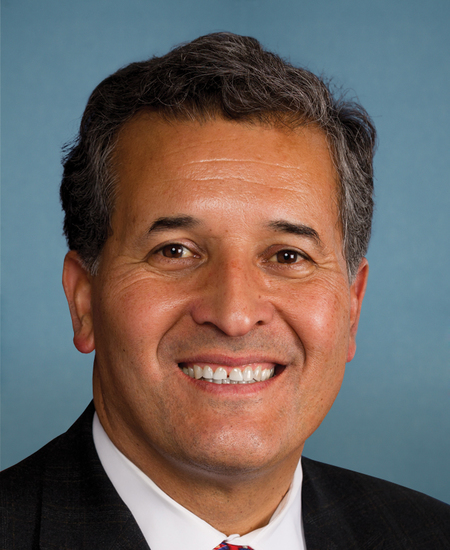
Rep. Juan Vargas
Sponsored bills
Maddy summaryHR 2904, the Anti-Racism in Public Health Act of 2023, establishes a National Center on Antiracism and Health within the CDC. The center will declare racism a public health crisis, conduct research on how structural racism affects health outcomes, and develop data systems to track health disparities across race, ethnicity, gender, and other factors. It will fund regional centers in minority communities, create public health interventions, and require CDC to report annually on antiracist efforts. This bill directly affects public health agencies, researchers, and communities of color by mandating systemic analysis of racial inequities in healthcare and public health policy.
This concurrent resolution calls upon Serbia to bring individuals who are responsible for the sexual war crimes against Vasfije Krasniqi Goodman in Kosovo during the 1999 war to justice and to cease the glorification and protection of individuals involved. The concurrent resolution also condemns the use of rape and other gender-based violence in war, calls upon Kosovo to prioritize and expedite prosecution of rape and sexual assault cases from the 1999 war, and calls on the United States to uphold and strengthen commitments to counter and prevent the practice of gender-based violence.
Maddy summaryThe Election Mail Act (HR 2987) establishes new requirements for handling mail-in ballots in federal elections to improve reliability and accessibility. It requires the Postal Service to process absentee ballots on the same day received, place postmarks indicating mailing dates on ballot envelopes, and treat election mail as first-class mail with free postage for completed ballots. The bill also mandates states to use intelligent mail barcodes on return envelopes, affix specific tags for ballot visibility, and adopt a uniform 7-day deadline for accepting mailed ballots postmarked on or before election day. These changes apply to federal elections, with most provisions taking effect for the 2024 election cycle. The bill includes additional provisions for the Postal Service to consult with Indian Tribes about voting barriers on tribal lands.
Raise the Age Act of 2023 This bill establishes new restrictions on the sale or transfer of certain semiautomatic firearms to individuals under 21 years of age. Specifically, this bill makes it unlawful for a licensed gun dealer, importer, manufacturer, or collector to sell or deliver a semiautomatic center-fire rifle or semiautomatic center-fire shotgun that has (or has the capacity to accept) an ammunition feeding device with a capacity of more than five rounds to an individual who the licensee knows or has reasonable cause to believe is under age 21. The prohibition does not apply if the individual under age 21 is a full-time law enforcement officer or active-duty member of the Armed Forces. The bill also requires the Federal Bureau of Investigation to report on the operation of its public access line, including a description of information sharing protocols and recommendations for improving such protocols.
Maddy summaryHR 2915, the Farm Workforce Support Act of 2023, requires the Comptroller General to study the H-2A visa program and submit a report to specific congressional committees within two years. The report must examine how the program affects hiring (including impacts on domestic and guest workers), challenges in providing housing for guest workers, wage rate effects on employer recruitment, economic impacts of lost wages for guest worker families, and compliance with working condition guarantees. This bill does not create new policy but mandates a detailed analysis of the existing H-2A program's operations and impacts. The study will directly inform Congress on the program's current functioning and potential issues.
Maddy summaryHR 2835, the Multilingual Financial Literacy Act, requires the Financial Literacy and Education Commission to study how language barriers affect financial health - including access to education, credit scores, and homebuying for people with limited English proficiency. The bill mandates that the Commission’s website and toll-free phone line provide resources and assistance in the 8 most commonly spoken U.S. languages (per Census data), with the Treasury Department covering translation costs. Within 12 months, the Commission must issue a report with policy recommendations to improve language access in financial services and detail costs for implementing these changes. The law also requires annual reports analyzing financial literacy needs and disparities across demographics like language preference, race, and income.
Community Finance Language Inclusion Act of 2023 This bill allows the Community Development Financial Institutions Fund to provide outreach and resources for non-English speaking individuals or individuals with limited English proficiency. The fund provides monetary awards and technical assistance to qualifying financial institutions to increase access to capital in underserved communities.
Maddy summaryHR 2823, the Filipino Veterans Family Reunification Act of 2023, exempts certain family members of eligible Filipino veterans from U.S. immigrant visa caps. It allows children or spouses of veterans to obtain visas without being counted against annual limits, directly affecting families seeking to reunite with veterans who served in the U.S. military during WWII or under specific naturalization provisions. The bill amends immigration law to include veterans naturalized under the 1990 Immigration Act (Section 405) or the 1940 Act (as amended in 1942). This creates a direct pathway for reunification by removing a key barrier to family immigration for these veterans' relatives.
Maddy summaryThe Water Affordability, Transparency, Equity, and Reliability Act of 2023 establishes a new trust fund funded by increasing the corporate tax rate from 21% to 24.5% to support water infrastructure and affordability programs. It allocates funds to clean water programs (42%), safe drinking water funding (42.5%), household water wells (1%), colonias assistance (0.5%), Indian health services (3%), and water operator job training (0.5%). The bill requires the EPA to conduct a study and submit a report on water affordability, discrimination in water services, public participation in regionalization, and data collection related to service disconnections. It includes specific provisions for colonias, household water wells, and job training programs for water system operators to improve water access and equity.