

Maddy summaryHRES 1003 is a symbolic resolution recognizing the contributions of Vietnamese Americans. It acknowledges that approximately 800,000 Vietnamese refugees resettled in the U.S. after the Vietnam War and that over 1.7 million Vietnamese Americans now live in the U.S., forming the fourth largest Asian American group. The resolution highlights their achievements in fields like business, education, the military, and public service, as well as their support for democracy and cultural diversity. As a non-binding resolution, it has no legal effect or direct impact on policy or individuals.
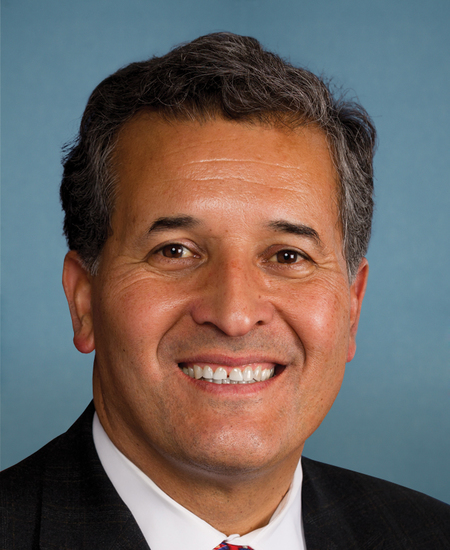
Rep. Juan Vargas
Sponsored bills
Maddy summaryHRES 1002 is a symbolic House resolution recognizing the cultural and historical significance of Lunar New Year (celebrated as the Year of the Dragon in 2024). It acknowledges the holiday's 4,000-year history in China, its celebration across Asia (including Seollal and Tết), and its significance to Asian Americans and others in the U.S. The resolution expresses respect for those observing the holiday and wishes them a happy new year, but it does not create new laws, policies, or funding. As a ceremonial resolution, it has no direct effect on legislation or constituents.
Maddy summaryThis bill authorizes $1.5 billion annually from 2024 to 2028 for the HOME Investment Partnership Program, which funds affordable housing initiatives by state and local governments. It also allocates an additional $500 million annually for the same period specifically to build or rehabilitate childcare facilities within housing projects supported by the program. The funding directly supports local housing authorities in developing and maintaining affordable housing with integrated childcare services.
Maddy summaryThis bill requires Medicaid, the Children’s Health Insurance Program (CHIP), and private health plans to cover human milk fortifier - a nutritional supplement made from donor breast milk - at no cost for eligible premature infants. It directly affects infants under one year old who were born at 34 weeks or less gestation, have a birth weight under 1,800 grams, or have specific medical conditions requiring this fortifier, as determined by a qualified healthcare provider. The law mandates coverage without deductibles, copays, or cost-sharing starting January 1, 2025, for all these programs. This policy change ensures families of premature infants cannot face out-of-pocket costs for this critical nutrition support.
Maddy summaryHR 7155 establishes the Abraham Accords Bureau within the FDA to strengthen U.S. healthcare supply chains. The bureau, headquartered at the FDA, will create lists of essential medical products primarily made in "covered countries" (nations with documented religious freedom violations or human rights issues) and identify facilities in Abraham Accords countries (like the UAE and Bahrain) that could support U.S. medical needs. It will facilitate FDA consultations with these countries on manufacturing standards, share regulatory information, and provide technical assistance to help shift production away from covered countries. The bureau must report to Congress within three years on progress in diversifying supply chains and improving FDA coordination with Abraham Accords nations.
Maddy summaryThe Credit for Caring Act of 2024 creates a new federal tax credit for family caregivers. It allows eligible caregivers to claim a credit equal to 30% of qualified caregiving expenses (like home modifications, medical supplies, or respite care) exceeding $2,000 per year, capped at $5,000 annually. To qualify, caregivers must earn over $7,500 in income and provide care for a relative (like a spouse or parent) certified by a healthcare provider as needing long-term care for at least 180 days. The credit phases out for higher earners, with a $75,000 income threshold for single filers and $150,000 for joint returns.
Maddy summaryThis bill amends the McKinney-Vento Homeless Assistance Act to allow federal funding through the Emergency Solutions Grant Program to cover "safe parking" initiatives. It defines "safe parking" as providing homeless individuals living in vehicles (including RVs) with overnight parking alongside re-housing and supportive services to transition to stable housing. The key change makes safe parking programs eligible for federal grant funding that previously did not cover this specific activity. This directly affects homeless individuals residing in vehicles and the service providers operating these programs.
Maddy summaryHR 7127, the FAIR Act, establishes pay adjustments for federal employees in 2025. It increases base pay by 4% for most federal workers under statutory pay systems and for "prevailing rate" employees (like those in specific geographic areas), while raising locality pay rates by 3.4%. The bill directly affects all federal employees receiving pay under these systems, as it modifies their 2025 salary calculations. These changes are based on statutory formulas under Title 5 of the U.S. Code, with no new policy mechanisms beyond the specified percentage increases. The adjustments apply to pay rates in effect as of the end of fiscal year 2024.
Maddy summaryThe ACCESS Act of 2024 creates a federal grant program to help clinics and health care providers expand abortion and reproductive health services in states where abortion is legal (outside of life or health exceptions). It authorizes $200 million annually for fiscal years 2024-2028 to fund specific capacity-building activities, including facility expansions, hiring clinical staff, telehealth services, and culturally appropriate patient resources. Priority is given to providers in states experiencing the highest increases in out-of-state patients seeking abortion care. The bill directly supports health care entities serving patients who travel across state lines for services, aiming to reduce wait times and improve access for vulnerable communities.
Maddy summaryThe HOME Investment Partnerships Reauthorization and Improvement Act of 2024 reauthorizes and updates the HOME Investment Partnerships Program, which provides federal funds to states and local governments to develop affordable housing. The bill increases annual funding from $5 billion in 2024 to $6.08 billion in 2028, modifies eligibility requirements for participating jurisdictions, and eliminates a deadline for committing funds. It reforms homeownership resale restrictions, establishes a home loan guarantee program with $2 billion in initial funding (increasing with inflation), and enhances protections for tenants in small-scale affordable housing (defined as housing with no more than 4 rental units). These changes aim to make the program more flexible and effective in creating and preserving affordable housing options for low- and moderate-income households.