

Maddy summaryHR 6033, the SPEAK Act of 2024, creates a task force within the Department of Health and Human Services to address telehealth barriers for patients with limited English proficiency (LEP). The task force - comprising healthcare providers, tech vendors, language services, and patient advocates - will assess current obstacles and develop best practices for improving access to telehealth platforms, video interpretation, and digital patient portals. Within 90 days of each annual report, the Secretary must publish a public website sharing these best practices, including guidance on integrating interpreters and making telehealth instructions accessible. The bill directly affects LEP patients and healthcare providers who serve them, aiming to make digital health tools more usable through concrete, evidence-based recommendations.
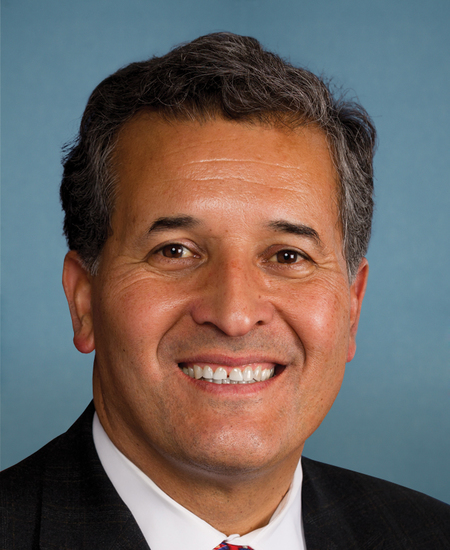
Rep. Juan Vargas
Sponsored bills
Maddy summaryHRES 1448 is a non-binding House resolution stating that the House believes every person has the right to emergency health care, including abortion care, during medical emergencies. It specifically addresses concerns that abortion restrictions force medical providers to choose between treating patients in life-threatening situations or risking criminal charges. The resolution highlights that such restrictions disproportionately harm Black, Indigenous, people of color, immigrants, low-income individuals, and LGBTQI+ patients. It does not change existing laws but expresses congressional support for ensuring access to emergency care without legal barriers. The resolution was introduced by multiple House members and referred to the Energy and Commerce Committee.
Maddy summaryHRES 1447 is a non-binding resolution expressing support for designating the week of September 22-28, 2024, as "Gold Star Families Remembrance Week." It directly honors families who lost loved ones while serving in the U.S. military (referred to as "Gold Star Families") and families of veterans. The resolution encourages Americans to observe the week by performing community service and celebrating the sacrifices of fallen service members, without creating new laws or obligations. It aligns with existing recognition of Gold Star Mother’s Day (the last Sunday in September) but expands the focus to all affected families.
Maddy summaryThis bill creates a federal grant program to fund supportive services for residents in affordable housing properties. It provides 5-year competitive grants to non-profit organizations or tribes managing properties assisted by programs like the low-income housing tax credit or Section 8 housing. Grantees must use at least 25% of funds for staff salaries/benefits and can cover services including health access, education, financial literacy, aging-in-place support, and disability services - though residents cannot be required to accept these services. The program targets residents of qualifying affordable housing properties, focusing on improving health, economic stability, and community integration.
Maddy summaryHRES 1437 is a ceremonial resolution designating the week beginning September 9, 2024, as "National Hispanic-Serving Institutions Week." It recognizes Hispanic-serving institutions (HSIs) - colleges and universities with at least 25% Hispanic enrollment - and their role in educating low-income students, advancing economic mobility, and serving 31.7% of all undergraduate students. The resolution calls for the public and organizations to observe this week with ceremonies and activities during Hispanic Heritage Month. It does not create new laws, allocate funding, or change existing policies - it is purely a symbolic gesture of recognition.
Maddy summaryThis bill designates the U.S. Postal Service facility at 130 South Patterson Avenue in Santa Barbara, California, as the "Brigadier General Frederick R. Lopez Post Office Building." It updates all official U.S. government references to the building to reflect this new name, with no policy changes or funding impacts.
Maddy summaryHRES 1432 designates September 10, 2024, as "National Firearm Suicide Prevention Day" to raise public awareness about firearm suicides and promote safe storage practices. The resolution encourages healthcare professionals to discuss safe firearm storage with patients and supports the day's goals of reducing firearm suicides through education. It directly affects the general public and healthcare providers by highlighting evidence that safe storage lowers suicide risk, referencing statistics like 54.6% of U.S. suicides in 2022 involving firearms. The bill is symbolic, with no new legal requirements, and aligns with existing awareness efforts like Firearm Suicide Prevention Day.
Maddy summaryHRES 1436 is a symbolic resolution (not a law) introduced in the U.S. House of Representatives. It recognizes suicide as a preventable public health crisis by citing statistics from the CDC, VA, and SAMHSA showing rising suicide rates across age groups, including veterans and adolescents. The resolution formally supports designating September as "National Suicide Prevention Month" and September 10, 2024, as "World Suicide Prevention Day." It does not create new policies, allocate funding, or directly affect any individuals - its purpose is solely to express congressional support for suicide prevention awareness and efforts.
Maddy summaryThis bill creates a new program to provide emergency grants to farm worker organizations during covered disasters. It directly affects migrant and seasonal farm workers who lose income or cannot work due to events like hurricanes, wildfires, pandemics, or extreme weather. The grants fund immediate relief (including direct cash or aid), building community resilience, infrastructure support, and emergency services. Funds remain available until spent, and the program requires consultation with eligible organizations, defined as farm worker groups or qualified nonprofits with relevant experience.
Maddy summaryThis bill would allow states to skip in-person interviews for SNAP (food stamp) benefit renewals if applicants agree to waive the interview and have already proven they qualify for continued benefits. It also requires states to offer phone or virtual interview options when interviews are still needed for renewal. The change directly affects SNAP recipients who may face fewer in-person requirements and state agencies administering the program. The policy aims to reduce paperwork burdens without altering eligibility rules for food assistance.