

Maddy summaryThis resolution (HRES 1558) is a symbolic House of Representatives measure supporting October as "National Domestic Violence Awareness Month." It does not create new laws or allocate funding but formally expresses the House's support for raising awareness about domestic violence and its impacts, and urges continued backing for existing programs that address domestic violence. The resolution cites statistics on domestic violence prevalence (e.g., 24 people per minute affected by intimate partner violence) to underscore the importance of the observance. It directly affects public awareness efforts but does not change policies or directly impact individuals.
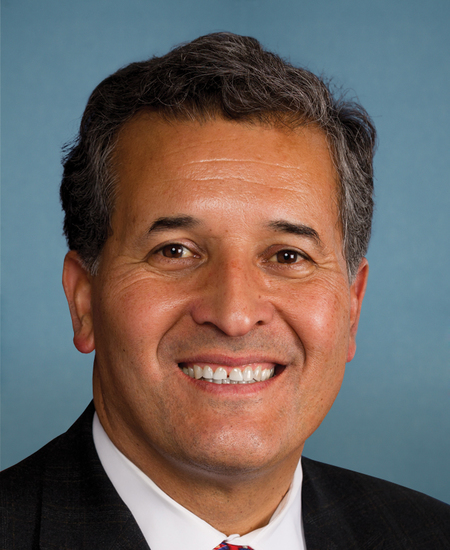
Rep. Juan Vargas
Sponsored bills
Maddy summaryThis bill modifies how disability benefits are treated for homeless disabled veterans seeking housing assistance. It excludes certain disability payments (under Chapter 11 or 15 of Title 38, U.S. Code) from income calculations when determining eligibility for HUD-assisted housing programs, including the supported housing program under Section 8(o)(19) and housing on Department property. Specifically, it ensures these benefits are not counted toward income for housing eligibility, though they still count for "adjusted income" definitions. The bill directly affects disabled veterans applying for HUD housing assistance who receive these specific disability benefits. It makes a concrete change to income calculation rules without altering benefit amounts or creating new funding.
Maddy summaryHRES 1555 is a symbolic House resolution condemning the spread of false claims and malicious rumors about disaster response efforts, which have led to credible threats against FEMA personnel and disrupted aid for survivors. It specifically references incidents after Hurricanes Helene and Milton, including a pause in North Carolina door-to-door assistance due to safety threats and antisemitic targeting of officials. The resolution formally condemns those spreading disinformation for political gain and commits Congress to supporting FEMA’s efforts to combat misinformation and promote accurate recovery information. As a non-binding resolution, it does not create new laws but expresses congressional support for protecting disaster response workers and ensuring survivors receive timely aid.
Maddy summaryThe VA Employee Fairness Act of 2024 modifies collective bargaining rules for employees of the Veterans Health Administration (VHA). It removes existing subsections (b), (c), and (d) from the law governing VHA employee bargaining and renumbers the remaining provision. This change streamlines the collective bargaining framework but does not alter the Secretary of Veterans Affairs' existing authorities over incentive pay and expedited hiring. The bill directly affects VHA employees by changing how their collective bargaining rights are structured under federal law. The law remains neutral, focusing solely on procedural adjustments to the existing bargaining framework.
Maddy summaryHRES 1545 is a non-binding resolution designating October 15, 2024, as a day to honor Hispanic cultural heritage and the contributions of Hispanic individuals in the legal profession and judiciary. It recognizes Hispanic representation in law, citing statistics such as 5.9% of U.S. lawyers/judges identifying as Hispanic and historical milestones like the first Hispanic federal judge appointed in 1961. The resolution celebrates Hispanic legal trailblazers, including Justice Sonia Sotomayor, and aims to raise awareness about ongoing efforts to increase Hispanic representation in legal roles. It does not create new laws or policies but serves as a symbolic acknowledgment of progress and goals toward reflecting the Hispanic population in the legal field.
Maddy summaryHRES 1544 designates September 22, 2024, as "National Hispanic Nurses Day" and formally recognizes the National Association of Hispanic Nurses (NAHN) as the leading organization representing Hispanic nurses. The resolution acknowledges Hispanic nurses' contributions to healthcare equity, cultural competence, and reducing disparities in underserved communities. It has no binding policy changes or funding implications - it serves as symbolic recognition to honor their work and NAHN's advocacy role. This is a ceremonial resolution, not a law with enforceable provisions.
Maddy summaryHRES 1537 is a non-binding House resolution condemning Hamas' October 7, 2023, attacks on Israel, which killed over 1,200 people and took 251 hostages, including 7 Americans still held captive. It calls on Hamas to immediately surrender, cease attacks, and release all hostages unconditionally, while reaffirming Israel's right to self-defense. The resolution also urges international organizations to condemn Hamas' actions and address the global surge in antisemitism following the attacks. As a symbolic statement, it does not create new laws or alter policy but expresses congressional position. The bill specifically references the ongoing captivity of seven U.S. citizens: Edan Alexander, Itay Chen, Sagui Dekel-Chen, Gadi Haggai, Judith Weinstein Haggai, Omer Neutra, and Keith Siegel.
Maddy summaryThe National Food as Medicine Program Act of 2024 creates a federal grant program to help states implement or expand initiatives that provide medically prescribed, nutrient-rich food (like fresh produce or tailored meals) to address chronic health conditions and food insecurity. States must partner with healthcare providers and community organizations to offer these interventions, using locally-sourced, sustainably produced food grown through regenerative or organic methods. The program requires states to evaluate outcomes like reduced hospital visits and improved health metrics, with reports submitted to the federal government after three years. It directly affects state Medicaid programs and healthcare providers participating in these initiatives.
Maddy summaryHRES 1525 is a non-binding resolution calling for the U.S. government to address policies contributing to forced migration and displacement. It urges reforms such as overhauling economic sanctions, investing in developing countries to reduce poverty and instability, and reforming trade agreements to protect workers. The resolution also calls for expanding legal immigration pathways, improving asylum processing, and creating a roadmap to citizenship for immigrants living in the U.S. As a resolution, it does not create new laws but sets policy priorities for future legislative action.
Maddy summaryHR 9894, the Cool Roof Rebate Act of 2024, creates a federal program offering rebates to eligible low-income households for installing cool roofs that reflect sunlight. Households qualify if they live in single/multi-family homes, earn under 200% of their zip code’s median income, and reside in areas ranked in the top 25% for heat vulnerability by the CDC. Rebates pay $0.25 to $0.75 per square foot based on roof type (low-sloped or steep-sloped) and meeting specific sunlight-reflecting standards, with funding set at $25 million annually from 2025 through 2029. The program requires participants to report on their roof replacement details and the products used, with a final report due to Congress after its 2029 end date.