

Maddy summaryThis bill prohibits U.S. Immigration and Customs Enforcement (ICE) from using federal funds to detain or transport U.S. citizens during civil immigration enforcement actions. It directly affects ICE operations by blocking funding for any activity that would hold or move citizens outside the U.S. under immigration laws. The key mechanism is a specific funding restriction in the bill text, stating no funds may be used for detaining or transporting citizens. This applies to all civil immigration enforcement activities defined under the Immigration and Nationality Act. The bill does not create new enforcement powers but limits how existing funds can be spent.
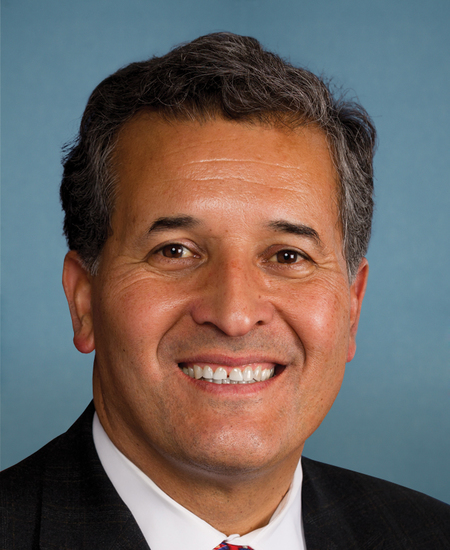
Rep. Juan Vargas
Sponsored bills
Maddy summaryThis bill establishes federal worker heat protection standards to prevent heat-related illness and injury. It requires employers to provide a workplace free from heat stress hazards, including access to cool water, scheduled rest breaks, shaded cooling areas, and training on heat illness symptoms. The Secretary of Labor must create these standards within one year, incorporating evidence-based practices like engineering controls (e.g., ventilation), administrative measures (e.g., adjusted schedules), and employer-paid personal protective equipment. The law directly affects all employers in high-heat work environments - such as construction, agriculture, and manufacturing - and strengthens whistleblower protections for workers reporting safety violations.
Maddy summaryThe Child Care for Working Families Act creates a federal program to provide affordable, high-quality child care for working families with children under age 6. It would provide direct child care assistance through certificates or grants to parents, with no copayment required for families at or below 85% of state median income. The program requires states to implement quality standards for child care providers, including a tiered quality system and minimum wage requirements for staff (at least a living wage equivalent to elementary educators). The bill appropriates $20 billion for the program over five years, with additional funding for quality improvement initiatives and universal preschool services.
Maddy summaryHR 4382 authorizes the U.S. Mint to produce commemorative coins for the 2028 Los Angeles Olympics/Paralympics and 2034 Salt Lake City Winter Olympics/Paralympics. It specifies gold, silver, and half-dollar coin designs with defined mintage limits (e.g., up to 100,000 $5 gold coins for each event), all bearing inscriptions like "2028" or "2034" and standard coin features. A surcharge ($5-$50 per coin) is added to sales, with all funds directed to the respective Olympic committees to support event hosting and legacy programs like youth sports. The bill ensures no net cost to the government by requiring surcharge revenues to cover all design, production, and marketing expenses before funds are disbursed.
Maddy summaryThis bill establishes two new programs to address water quality issues in the Tijuana River and New River watersheds, which flow from Mexico into California. It requires the Environmental Protection Agency to develop action plans for pollution prevention, including projects to manage wastewater, stormwater, debris, sediment, and contaminants that flow across the border. The bill authorizes $50 million annually from 2026-2036 for these programs, with funding to support projects that improve water quality, protect public health, and enhance natural habitats in affected communities. The programs will coordinate with Mexican and U.S. agencies, including the International Boundary and Water Commission, to implement projects addressing transboundary flows that impact coastal communities in Imperial Beach, San Diego, Calexico, and the Imperial Valley.
Maddy summaryHR 4281, the Bunker Buster Act of 2025, authorizes the U.S. President to provide military support to Israel to prepare for potential strikes against Iran’s underground nuclear facilities. It enables construction of infrastructure in Israel for heavy ordnance (like the Massive Ordnance Penetrator), storage of such munitions, training for Israeli personnel, and joint research to enhance capabilities for destroying underground targets. The bill requires specific certifications to transfer munitions to Israel, including evidence of Iran’s noncompliance with nuclear safeguards and a dual-control system requiring U.S. presidential approval. It explicitly states the bill does not authorize military action against Iran. The legislation focuses on readiness, not actual strikes, and directly affects U.S.-Israel military coordination.
Maddy summaryHR 4274, the Remittance Expense Minimization and Integrity for Transfers Act (REMIT Act of 2025), requires the Treasury Secretary to certify to Congress before imposing any excise tax or fee on money transmitting businesses. This applies to both licensed services and informal transfer systems (IVTS), such as those used by diaspora communities. The certification must confirm the tax/fee won’t increase money laundering risks or impose undue burdens on businesses. The bill responds to findings that current regulations have pushed users toward unregulated IVTS, which criminal groups exploit for money laundering and terrorist financing. It aims to prevent new fees from inadvertently worsening financial crime while protecting legitimate remittance flows.
Maddy summaryThis bill expands the requirement for federal firearm licensees (FFLs) to report multiple firearm sales. It modifies existing law to require reporting on all firearms, not just handguns (pistols or revolvers), when a single transaction involves two or more firearms. This change directly affects FFLs who sell multiple firearms at once, such as in dealer-to-dealer transfers or large retail sales. The key mechanism is updating the legal definition in the statute to include every type of firearm, streamlining the reporting process under current federal law.
Maddy summaryHRES 561 is a symbolic resolution honoring Father Stan, a human rights activist who died in Indian custody on July 5, 2021. It urges the Indian government to conduct an independent investigation into his arrest, imprisonment, and death, which occurred after he was charged with sedition and incarcerated for advocating for Adivasi land rights. The resolution also calls for addressing the misuse of antiterror laws against activists and reaffirms support for freedom of expression as a fundamental human right. It directly affects India’s government by requesting accountability for the circumstances surrounding Father Stan’s death, which forensic reports linked to fabricated evidence. The resolution does not create new laws but expresses the U.S. House’s position on human rights protections.
Maddy summaryHRES 550 is a non-binding House resolution recognizing June 2025 as LGBTQIA+ Pride Month. It formally encourages all U.S. citizens to celebrate Pride Month to learn about LGBTQIA+ history, including the Stonewall Inn and Compton's Cafeteria uprisings. The resolution affirms that LGBTQIA+ rights are human rights and emphasizes the ongoing struggle for equality. It has no legal effect but serves as a symbolic statement of support for the LGBTQIA+ community and its history.