

Future of Local News Act This bill establishes the Future of Local News Committee to examine, report on, and make recommendations related to the state of local news and the ability of local news to meet the information needs of the people of the United States. The duties of the committee include (1) examining the implications of the loss of local newspapers, digital news outlets, and broadcasting outlets; (2) assessing the impact of the COVID-19 (i.e., coronavirus disease 2019) pandemic and whether the Paycheck Protection Program has had beneficial effects on local news organizations; and (3) assessing and examining existing and potential means of supporting local news production. The committee must recommend mechanisms that the federal government can create and implement to support the production of local news, such as the possible creation of a new national endowment for local journalism or the reform and expansion of the Corporation for Public Broadcasting.
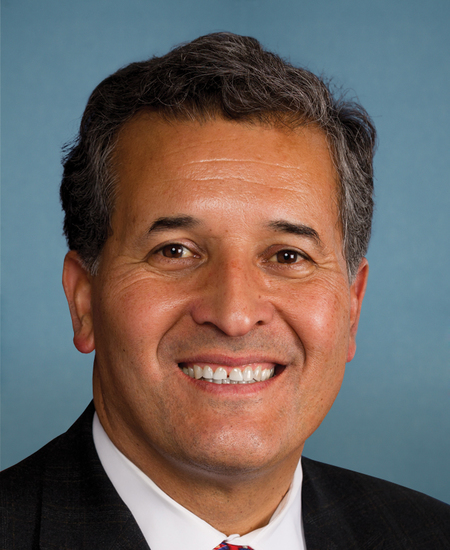
Rep. Juan Vargas
Sponsored bills
Enhance Access To SNAP Act of 2021 or the EATS Act of 20 21 This bill expands eligibility for the Supplemental Nutrition Assistance Program to students attending institutions of higher education.
Improving Access to Nutrition Act of 20 21 This bill repeals certain work requirements for the Supplemental Nutrition Assistance Program (SNAP, formerly known as the food stamp program). The requirements apply to able-bodied adults who are ages 18-49 and have no dependent children. Individuals who do not meet certain work requirements are generally prohibited from receiving more than 3 months of SNAP benefits over a 36-month period. Under current law, some of the work requirements under SNAP are temporarily suspended due to COVID-19 (i.e., coronavirus disease 2019).
Pursuing Equity in Mental Health Act This bill establishes and expands programs to address racial and ethnic disparities in mental health. Specifically, the Department of Health and Human Services (HHS) must award grants to establish interprofessional behavioral health care teams in areas with a high proportion of racial and ethnic minority groups. In addition, HHS may award grants to incorporate best practices and competencies to address mental health disparities in curricula for training social workers, psychologists, and other behavioral health professionals. HHS must also promote behavioral and mental health and reduce stigma associated with mental health conditions and substance use disorder through outreach to racial and ethnic minority groups. HHS must consult with appropriate advocacy groups and behavioral health organizations to develop a strategy for this outreach. The bill also (1) reauthorizes the minority fellowship program to support the education of mental health professionals who provide services to racial and ethnic minorities, and (2) requires studies on mental health disparities and the effects of social media use on adolescents.
Mental Health Services for Students Act of 2021 This bill provides specific statutory authority for the Project AWARE (Advancing Wellness and Resiliency in Education) State Educational Agency Grant Program that is administered by the Substance Abuse and Mental Health Services Administration. The program supports school-based mental health services, including screening, treatment, and outreach programs.
Suicide Training and Awareness Nationally Delivered for Universal Prevention Act of 20 21 or the STANDUP Act of 2021 This bill requires state, tribal, and local educational agencies that receive grant funding for priority mental-health needs, including through the Project AWARE State Education Agency Grant Program, to establish and implement evidence-based suicide awareness and prevention training policies. In addition, the Substance Abuse and Mental Health Services Administration, in coordination with the Department of Education and Bureau of Indian Education, must provide educational agencies with best practices for these trainings.
Bias In Automobile Stops Act of 2021 or the BIAS Act of 202 1 This bill directs the Department of Transportation to provide grants to institutions of higher education for research, development, technology transfer, and training activities in the operation or establishment of an implicit bias training program as it relates to racial profiling at traffic stops. To be eligible for grants such institutions must (1) have an active research program or demonstrate that the applicant is beginning a research program to study implicit bias as it relates to racial profiling before and during traffic stops, and (2) partner with state and local police departments to conduct the research and carry out the implementation of implicit bias training with state and local police departments.
Border Water Quality Restoration and Protection Act of 2021 This bill establishes programs that address water pollution along the U.S.-Mexico border. Specifically, the bill requires the Environmental Protection Agency (EPA) to establish the Tijuana River Public Health and Water Quality Restoration Program. Under the program, the EPA must plan, implement, coordinate, and provide grants for public health and water quality restoration and protection activities in the Mexican Tijuana River watershed and the American Tijuana River watershed in California. In addition, the EPA must establish the California New River Public Health and Water Quality Restoration Program to plan, implement, coordinate, and provide grants for water quality restoration and protection activities in the New River watershed. Finally, the bill provides statutory authority for the U.S.-Mexico Border Water Infrastructure Program to provide assistance for activities related to the construction of infrastructure for drinking water treatment or distribution, wastewater management, or stormwater management.
Transform, Heal, and Renew by Investing in a Vibrant Economy Act or the THRIVE Act This bill establishes a program to address the economy, racial justice, and climate change. The President must establish a board to advise the President and the heads of federal departments and agencies regarding the implementation of this bill. The President, in consultation with the board, must establish a 10-year plan to create a society that enables and supports greater racial, Indigenous, gender, environmental, and economic justice; work opportunities; healthy communities; a stable climate; and healthy ecosystems. In addition, the President, in consultation with the board, must implement a program that provides support to public or private entities that carry out qualified programs. The programs must meet certain labor, equity, and environmental conditions and support infrastructure, including to expand access to pollution-free, renewable, and affordable energy; care workers and social infrastructure (e.g., health care infrastructure); expanded access to housing; efforts to protect and restore biodiversity or natural habitats and efforts to remediate pollution in communities harmed by environmental, economic, or socioeconomic injustice; agriculture, including agricultural workers; or the development and transformation of the U.S. industrial base, including by expanding manufacturing of clean technologies.
This concurrent resolution commemorates the 30th anniversary of Operation Provide Comfort (the humanitarian operation to defend and deliver aid to Kurdish refugees fleeing attacks by the Hussein regime), and it reaffirms the strong American-Kurdish partnership.