

Maddy summaryHCONRES 37 is a non-binding congressional resolution expressing that Congress views climate change as an emergency requiring a massive national mobilization. It states that human-caused climate change severely impacts U.S. economic well-being, health, safety, and national security, and urges the President to use existing authorities to accelerate climate action. The resolution does not create new laws or funding but emphasizes the need for urgent, equitable efforts to reduce emissions, address environmental injustice, and support vulnerable communities disproportionately affected by climate impacts. It cites rising global temperatures, extreme weather costs ($165 billion in U.S. disasters in 2022), and the Inflation Reduction Act as context, while clarifying it does not declare an actual national emergency.
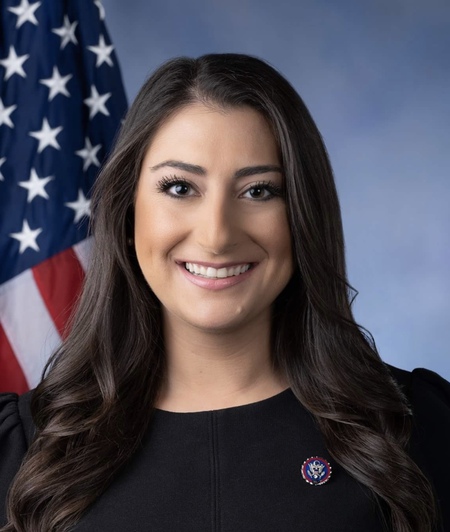
Rep. Sara Jacobs
Sponsored bills
Maddy summaryHRES 362 is a symbolic House resolution recognizing elementary and secondary school teachers' contributions to U.S. civic, cultural, and economic well-being. It specifically thanks teachers and encourages students, parents, school leaders, and officials to acknowledge National Teacher Appreciation Week (May 8-12, 2023). The resolution has no binding effect or policy changes - it solely promotes public appreciation for the teaching profession through a formal expression of gratitude. It directly affects teachers by affirming their societal value but does not alter laws, funding, or educational standards.
Maddy summaryThis resolution (HRES 359) is a symbolic House measure expressing support for designating May 2023 as "National Physical Fitness and Sports Month." It does not create new laws or programs but encourages public awareness about the importance of physical activity and healthy lifestyles. The resolution cites obesity statistics and emphasizes benefits like reduced risk of chronic diseases, supporting existing efforts to educate the public on nutrition and exercise. It directly affects no specific group but aims to promote broader public health messaging.
Maddy summaryThis bill allows states to implement a statewide program under the National School Lunch Act, enabling all schools in the state to receive federal reimbursement for free meals without needing to individually verify student poverty levels. It removes the previous requirement that schools must meet a minimum percentage of low-income students (setting the threshold to zero) and simplifies eligibility by calculating student need across the entire state instead of per school district. Schools in participating states would no longer need to conduct individual student eligibility screenings for free meal programs, streamlining access. The policy directly affects public school districts and students in states that adopt this statewide approach, ensuring all enrolled students receive free meals without administrative barriers.
Maddy summaryHR 3008, the Drug Shortage Prevention Act of 2023, requires manufacturers of critical essential medicines (like life-saving or emergency drugs) to notify the FDA earlier about potential supply disruptions. Specifically, manufacturers must report permanent production stops, interruptions, or unexpected demand spikes (not seasonal) at least six months in advance for production issues, or within 48 hours for sustained demand increases. The notification must include reasons, ingredient sources, alternative suppliers, and expected duration. The FDA will then share this information with healthcare providers and patient groups to help manage shortages. This law applies to drugs critical for life-sustaining care, excluding certain radio pharmaceuticals.
Maddy summaryThis bill protects living organ donors from insurance discrimination by prohibiting life, disability, and long-term care insurers from denying coverage, raising premiums, or altering policy terms solely because someone donated an organ while alive. It also updates the Family and Medical Leave Act to include recovery from organ donation surgery as a qualifying health condition, allowing donors to take protected leave for this purpose. Additionally, the bill requires the Health and Human Services Secretary to update public educational materials about living donation benefits, risks, and insurance protections within six months of enactment. These changes directly affect living organ donors, insurers, employers, and healthcare systems by ensuring fair access to insurance and workplace leave.
Maddy summaryHRES 335 is a symbolic resolution condemning two mass shootings in Louisville, Kentucky: one at the Old National Bank on April 10, 2023 (killing 5 people), and another at Chickasaw Park on April 15, 2023 (killing 2 people). It honors the victims' memories, expresses condolences to their families and the affected community, and reaffirms the House's commitment to supporting all gun violence victims. The resolution does not propose new laws or policies but serves as a formal statement of condemnation and solidarity. It directly affects the victims' families, Louisville residents, and the broader community impacted by these tragedies.
Maddy summaryThe Election Mail Act (HR 2987) establishes new requirements for handling mail-in ballots in federal elections to improve reliability and accessibility. It requires the Postal Service to process absentee ballots on the same day received, place postmarks indicating mailing dates on ballot envelopes, and treat election mail as first-class mail with free postage for completed ballots. The bill also mandates states to use intelligent mail barcodes on return envelopes, affix specific tags for ballot visibility, and adopt a uniform 7-day deadline for accepting mailed ballots postmarked on or before election day. These changes apply to federal elections, with most provisions taking effect for the 2024 election cycle. The bill includes additional provisions for the Postal Service to consult with Indian Tribes about voting barriers on tribal lands.
Maddy summaryThe Child Care for Working Families Act establishes a federal entitlement program providing subsidized child care for working families with children under age 6 who are not yet in kindergarten. It creates a sliding fee scale where families at or below 85% of State median income pay no copayment, while higher-income families pay up to 7% of their income based on income thresholds. The bill requires states to develop quality rating systems for child care providers and ensures providers receive sufficient funding to meet quality standards, including wages equivalent to elementary educators. It prioritizes access for underserved populations including children with disabilities, infants and toddlers, children experiencing homelessness, and families in low-income communities. The program is funded with $20 billion for fiscal year 2024 and subsequent years through 2029.
Raise the Age Act of 2023 This bill establishes new restrictions on the sale or transfer of certain semiautomatic firearms to individuals under 21 years of age. Specifically, this bill makes it unlawful for a licensed gun dealer, importer, manufacturer, or collector to sell or deliver a semiautomatic center-fire rifle or semiautomatic center-fire shotgun that has (or has the capacity to accept) an ammunition feeding device with a capacity of more than five rounds to an individual who the licensee knows or has reasonable cause to believe is under age 21. The prohibition does not apply if the individual under age 21 is a full-time law enforcement officer or active-duty member of the Armed Forces. The bill also requires the Federal Bureau of Investigation to report on the operation of its public access line, including a description of information sharing protocols and recommendations for improving such protocols.