

Maddy summaryThe SAFE Act of 2023 extends a 2018 law that prohibits slaughtering animals for human consumption to include horses, donkeys, and other equine animals, such as ponies. It amends Section 12515 of the Agriculture Improvement Act of 2018 by updating the language to replace "dog or cat" with "dog, cat, or equine" in both the section title and the main prohibition. This change directly affects the livestock industry and slaughter facilities by banning the processing of equines for food. The bill modifies existing law without adding new enforcement mechanisms, closing a gap in animal protection.
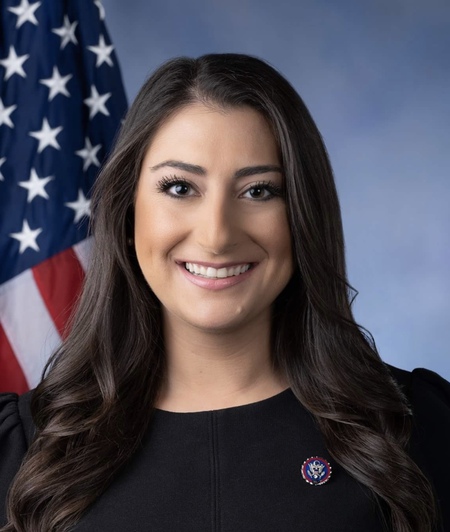
Rep. Sara Jacobs
Sponsored bills
Maddy summaryThis bill would amend House rules to allow members to vote by proxy and remotely attend committee meetings under specific health circumstances. It directly affects House members with a serious medical condition (including pregnancy-related) or those primarily caring for a spouse or dependent with such a condition. To qualify, a member must provide a doctor’s recommendation and a signed letter designating a proxy for voting or enabling remote committee participation. Remote committee attendance would count toward quorum and not be considered an absence, while proxy voting would let the designated member cast the absent member’s vote.
This resolution expresses grave concern about the worsening treatment of religious minorities in India. It condemns human rights violations and violations of international religious freedom in India, including those targeting Muslims, Christians, Sikhs, Dalits, and Adivasis.
Maddy summaryHR 4285, titled the Protect Vulnerable Immigrant Youth Act, would amend the Immigration and Nationality Act to remove numerical caps on certain employment-based visas. Specifically, it changes two sections to add a new visa category (J) to the list of categories exempt from annual numerical limits, allowing more employment-based visas to be issued without current restrictions. This change would directly affect employers and foreign workers seeking employment-based visas under the newly designated category (J), though the bill does not specify what the (J) category entails. The bill focuses solely on adjusting visa allocation rules rather than addressing youth protection or other aspects implied by its title.
Maddy summaryThe LGBTQI+ and Women's History Education Act of 2023 would provide $2 million annually for five years to develop educational resources about women's and LGBTQI+ history for K-12 classrooms. The bill directs the Smithsonian's National Museum of American History to create inclusive teaching materials that address historical gaps where women and LGBTQI+ individuals, particularly those of color and with disabilities, have been underrepresented. These resources would include digital content, print materials, and professional development for teachers to help implement more comprehensive curricula. The bill aims to address findings showing only 13% of named historical figures in textbooks are women and that LGBTQI+ history is often omitted or marginalized in school curricula. The program would require annual reports to Congress on how funds are used, with the program set to sunset in 2028.
Maddy summaryHJRES 76 proposes renaming the Robert E. Lee Memorial in Arlington National Cemetery to the "Arlington House National Historic Site." This procedural bill would replace all official references to the memorial with the new name and repeal two prior resolutions (1955 and 1972) that established the memorial. The change affects how the site is identified in federal laws, documents, and records but does not alter its management or historical significance. The bill focuses solely on the official designation, not on policy changes or historical interpretation.
Maddy summaryThe Downpayment Toward Equity Act of 2023 creates a federal program to provide down payment assistance to first-generation homebuyers, defined as individuals whose parents did not own a home. The program would provide grants to states (75% of funds) and eligible entities (25% on competitive basis) to help cover down payments, closing costs, and mortgage interest reductions, with maximum assistance of $20,000 or 10% of purchase price. To qualify, homebuyers must have household income up to 120-140% of median area income, be first-time homebuyers, and meet the "first-generation" definition. States must comply with fair housing requirements, and recipients must repay assistance if they don't occupy the home as their primary residence within five years, with exceptions for hardship.
Maddy summaryThe Equality Act (HR 15) would amend federal civil rights laws to explicitly prohibit discrimination based on sexual orientation and gender identity in public accommodations, housing, employment, credit, and jury service. It amends the Civil Rights Act of 1964 to include sexual orientation and gender identity as protected characteristics under existing sex discrimination provisions. The bill would require businesses, housing providers, employers, and government entities to provide equal access and services without regard to a person's sexual orientation or gender identity. It includes specific definitions for gender identity and sexual orientation to clarify protections across all covered areas. The law would apply to all entities covered by the Civil Rights Act of 1964, including those receiving federal funding.
Maddy summaryThis symbolic House Resolution (HRES 526) reaffirms U.S. commitment to refugee safety and well-being, introduced around World Refugee Day (June 20, 2023). It cites UNHCR data showing over 108 million displaced people globally and highlights historically low U.S. refugee admissions (11,411 in FY2021, 25,465 in FY2022). The resolution calls on U.S. officials to restore asylum protections, meet robust refugee admissions goals, support host countries, and advance refugee rights through international partnerships. It does not create new law but expresses bipartisan support for strengthening U.S. leadership in refugee protection.
This resolution supports the accession of the African Union into the Group of 20 as a permanent member. It also urges increased representation of African countries in decisionmaking roles within the U.N. and other entities of the global governance system.