

Maddy summaryHR 5641, the Pay Our Troops Act, ensures military personnel and their support staff continue receiving pay during fiscal year 2024 if Congress fails to pass regular budget appropriations. It appropriates existing Treasury funds to cover pay and allowances for active-duty troops, reserve components, and civilian employees or contractors supporting military operations. The bill automatically terminates on January 1, 2025, or earlier if Congress enacts a regular budget or continuing resolution. This provision directly affects service members, Department of Defense staff, and Coast Guard personnel (when not under the Navy) during budget implementation gaps.
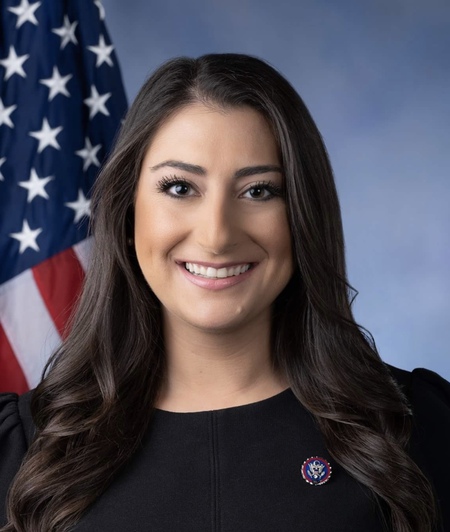
Rep. Sara Jacobs
Sponsored bills
Guaranteed Income Pilot Program Act of 2023 This bill directs the Department of Health and Human Services (HHS) to establish and implement a three-year pilot program to provide a guaranteed monthly income to individual taxpayers between the ages of 18-65. HHS must consult with the Internal Revenue Service and certain nonpartisan and nonprofit agencies or academic institutions with expertise in social science experimentation to develop and award income subsidies to eligible taxpayers and to conduct a study on the outcomes of the program.
Maddy summaryThe WIC for Kids Act expands eligibility for the Special Supplemental Nutrition Program for Women, Infants, and Children (WIC) by adding new qualifying pathways. It allows children to qualify if they live in households where someone receives Head Start, Indian reservation food assistance, or Puerto Rico/Northern Mariana Islands nutrition block grants, and streamlines documentation by permitting states to use existing records. The bill extends certification periods for children from one to two years and automatically enrolls infants born to current WIC participants. This directly affects low-income families with children who qualify for related assistance programs but previously faced barriers to WIC access.
Maddy summaryThis bill amends the Higher Education Act to require all U.S. colleges and universities receiving federal financial aid to create detailed anti-harassment policies covering physical, online, and institution-sponsored settings. It mandates policies prohibiting harassment based on race, sex (including sexual orientation and gender identity), disability, religion, and other protected characteristics, including harassment via institutional email, computers, or electronic messaging. The bill also establishes a $50 million annual grant program to fund colleges developing prevention programs, victim support services, and training for students and staff on recognizing and addressing harassment. These policies and grants must comply with existing civil rights laws like Title IX but add specific requirements for reporting and prevention.
Maddy summaryThis bill requires federal, state, and local law enforcement agencies receiving federal funding to collect and report detailed data on settlements or judgments related to officer misconduct. Agencies must track specifics like officer demographics, allegation types (e.g., use of force, racial profiling), payment amounts, funding sources, and personnel actions, then submit this annually to the Justice Department. Non-compliant state/local agencies face up to a 10% reduction in Byrne JAG program funding. The Justice Department will publish all data in a public, searchable database (excluding personal identifiers) and issue annual reports with recommendations for reducing misconduct. This aims to increase transparency about misconduct costs and inform policy improvements.
Maddy summaryHRES 710 is a ceremonial resolution honoring Thai-American garment workers who escaped a 1995 El Monte, California sweatshop where they were trafficked and held against their will. The resolution recognizes their landmark lawsuit - the first federal case against garment employers - which spurred national anti-sweatshop campaigns, influenced the creation of T and U visas for trafficking survivors, and advanced corporate accountability. It does not enact policy changes but commemorates their role in inspiring lasting labor rights reforms and their induction into the U.S. Department of Labor’s Hall of Honor.
Maddy summaryHR 5610 establishes a 15-member Commission to examine historical discrimination against LGBTQ+ service members and veterans. The Commission will document policies targeting LGBTQ+ individuals in the military since WWII, gather testimonies from affected veterans, and analyze impacts on mental health, benefits access, and financial stability. It must hold public hearings, examine how discrimination affected racial minorities and women within the military, and recommend solutions like record corrections, improved benefits for LGBTQ+ veterans, and better diversity training. The Commission will submit a final report to Congress within one year, proposing concrete steps to address past harms and improve inclusion in the military.
Maddy summaryHR 5569, the Child Care Nutrition Enhancement Act of 2023, increases funding for child care nutrition programs. It adds a 10-cent per meal reimbursement for providers participating in the Child and Adult Care Food Program (CACFP), applying to all meals and supplements served. This change directly affects child care centers, family day care homes, and group day care homes that receive CACFP funding. The additional reimbursement is calculated alongside existing payment rates and applies to all meals served after the bill's enactment. The bill modifies specific sections of the Richard B. Russell National School Lunch Act to implement this funding increase.
Maddy summaryThis bill establishes a new Office within the Department of Justice to address racial disparities in missing and murdered Black women and girls cases. The Office will collect data on case resolution times, coordinate with law enforcement, and create a public dashboard tracking these cases. It also creates grants for community organizations to provide culturally appropriate services, prevention programs, and training for law enforcement targeting violence against Black women and girls. The bill directly affects Black women and girls who are victims of violence and their communities, focusing on improving data collection and support systems rather than changing criminal laws.
Maddy summaryHR 5492, the Veteran Families Health Services Act of 2023, provides fertility treatment, counseling, and adoption assistance to military members and veterans with infertility conditions. The bill requires the Department of Defense to offer fertility preservation services like cryopreservation before deployment or hazardous assignments, and to cover fertility treatments including in vitro fertilization for current service members. For veterans, it adds fertility treatment and counseling to VA medical services, allows adoption assistance up to the cost of three adoptions, and mandates coordination between military and VA health systems. These provisions apply regardless of sex, gender identity, sexual orientation, or marital status, and are designed to support military families affected by service-related infertility.