

Maddy summaryHR 6081 amends the short title of the Lake Tahoe Restoration Act (Public Law 106-506) to honor Senator Dianne Feinstein, renaming it the "Dianne Feinstein Lake Tahoe Restoration Act." This change applies to all federal references in laws, maps, regulations, documents, or records that previously cited the original title. The bill does not alter the Act's policies or funding but updates its official name and all related references. It directly affects federal agencies and documents that reference the legislation. This is a purely procedural renaming with no substantive policy changes.
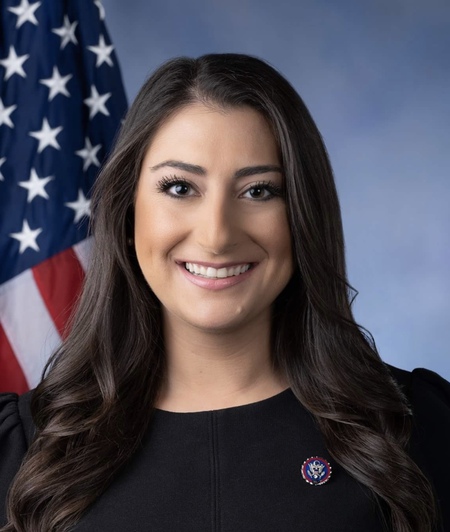
Rep. Sara Jacobs
Sponsored bills
Maddy summary# Summary of "Protecting Communities from Plastics Act" (Title II) This comprehensive legislation addresses the environmental, health, and environmental justice impacts of plastics production and use. Key provisions include: ## Environmental Justice Protections - Requires environmental justice assessments for permits of "covered facilities" (plastics manufacturing facilities) - Mandates consultation with "fenceline communities" (communities near facilities) including: * Prompt notification in multiple languages * Public hearings with translation services * Community benefit agreements - Establishes a 45-day waiting period before approving permits after public hearings ## Regulatory Requirements - Amends Clean Air Act to establish new source performance standards for plastics facilities - Requires continuous monitoring of air emissions (benzene, nitrogen oxides, etc.) - Amends Clean Water Act to prohibit discharge of plastic pellets in wastewater - Requires financial assurance for facility closure and emergency response - Prohibits new facility permits within 5 miles of community buildings (schools, hospitals, etc.) ## Research and Monitoring - Requires study of microplastics in food (including fish, meat, fruits, vegetables) - Mandates research on microplastics in human bodies (urine, breastmilk, stool) - Establishes a pilot program to test technologies for microplastic removal - Requires inventory of plastics manufacturing and distribution ## Additional Provisions - Temporary permitting moratorium on new plastics facilities (during "temporary pause period") - Requires listing of discarded polyvinyl chloride as hazardous waste - Limits National Recycling Strategy to exclude chemical recycling technologies - Creates grants to reduce single-use plastics in agricultural packaging - Requires biodegradable alternatives to plastic weed barriers The legislation aims to address the disproportionate environmental and health impacts of plastics production on vulnerable communities while establishing comprehensive regulatory frameworks for plastics manufacturing and disposal.
Maddy summaryThis bill restores visa eligibility for immigrants who had diversity visas allocated for fiscal years 2017-2022 but were denied entry due to specific travel restrictions (like Executive Orders 13769/13780 or related proclamations) or pandemic-related delays. The State Department must notify affected individuals within 90 days of the bill’s enactment, giving them one year to confirm they wish to proceed with their visa applications. Unused visas from those years can be reallocated without counting against current annual limits, and applicants who fail to respond or are denied for standard reasons (like education requirements) lose eligibility. The policy directly affects individuals impacted by these specific past barriers to immigration.
Maddy summaryHRES 967 would amend House rules to allow Members who have recently given birth to vote by proxy for up to six weeks after childbirth. Specifically, a new rule permits a Member to designate another Member as their proxy during this period to cast votes on their behalf. The proxy cannot be used to count the Member's presence for quorum purposes in the House or its committees. This change directly affects female Members during their postpartum leave, with no other proxy voting allowed under the amendment.
Maddy summaryHRES 962 is a ceremonial resolution honoring Reverend Dr. Martin Luther King, Jr.'s legacy, specifically celebrating his 95th birthday on January 15, 2024. It symbolically affirms his teachings by condemning hate, discrimination, and prejudice against Black Americans, Indigenous people, Jewish, Asian-American/Pacific Islander, Muslim, Hispanic/Latino communities, and LGBTQ+ individuals. The resolution does not create new laws or affect any policies - it solely expresses the House's support for Dr. King's values of diversity, tolerance, and equality through non-binding statements. As a symbolic gesture, it has no legal effect or direct impact on any group or individual.
Maddy summaryHRES 963 is a symbolic resolution honoring Korean American Day, which commemorates the January 13, 1903 arrival of the first large wave of Korean immigrants to the U.S. It recognizes Korean Americans' contributions to U.S. society, including their economic, cultural, and military impacts, and marks the 121st anniversary of this historic migration. The resolution urges all Americans to observe Korean American Day to appreciate these contributions. As a commemorative measure, it does not create new policies or affect specific groups beyond this ceremonial recognition.
Maddy summaryThe Affordable Connectivity Program Extension Act of 2024 allocates $7 billion in funding for the Affordable Connectivity Program (ACP) during fiscal year 2024. The ACP provides subsidies to low-income households to help cover the cost of internet service and connected devices like laptops or tablets. This funding ensures the program can continue supporting eligible households throughout the year, with the money remaining available until fully spent. The bill extends existing program funding without changing eligibility criteria or service requirements.
Maddy summaryHRES 942 is a symbolic House resolution honoring Wadee Alfayoumi, a 6-year-old Palestinian Muslim-American boy murdered in a hate crime in Illinois on October 16, 2023. The resolution recognizes that Wadee was stabbed 26 times by a perpetrator who yelled "All Muslims should die" and consumed anti-Muslim rhetoric, and it condemns hate crimes targeting Palestinian, Muslim, and other minority identities. It affirms that elected officials and media should avoid dehumanizing language, upholds freedom of speech, and declares the U.S. has "zero tolerance" for Islamophobia, antisemitism, anti-Palestinian discrimination, and hate crimes. As a non-binding resolution, it does not create new laws but formally honors Wadee’s life and addresses the broader issue of hate-driven violence against minority communities.
Maddy summaryThe Restore Honor to Service Members Act of 2023 establishes a Department of Defense "Tiger Team" to improve outreach to veterans with certain discharge statuses (specifically those discharged under "former section 654" before 2011, often related to policies like the "Don't Ask, Don't Tell" era). The team will collaborate with the VA, veterans' groups, and other stakeholders to identify eligible veterans, share contact information, and guide them through the existing review process under Section 527 of the 2020 National Defense Authorization Act. The bill requires the team to submit regular progress reports to Congress and a final report within three years, tracking how many veterans successfully changed their discharge status to "honorable" through the review process. This focuses on streamlining access to an existing review mechanism, not creating new benefits or altering discharge standards.
Maddy summaryHR 6797, the Restoring U.S. Leadership in International Organizations Act of 2023, aims to strengthen U.S. engagement in global multilateral bodies. It requires the State Department to prioritize international organization experience for Foreign Service career advancement, mandates full payment of dues to multilateral organizations, and requires annual reports tracking federal employees detailed to such bodies. The bill also establishes mandatory training for diplomats on multilateral diplomacy and negotiations, targeting State Department staff and those assigned to international organizations. It directly affects U.S. diplomatic personnel and federal employees working with international institutions. The law focuses on structural changes to increase U.S. participation and leadership in global forums.