

Maddy summaryHR 3433, the "Give Kids a Chance Act of 2024," requires pharmaceutical companies developing certain cancer drugs to conduct pediatric studies if the drugs target molecular pathways relevant to childhood cancers. It directly affects drug manufacturers submitting new applications for cancer treatments, particularly those combining previously approved adult cancer drugs or containing a single new active ingredient. The bill amends FDA regulations to mandate these pediatric investigations only when specific conditions are met, such as when a drug's molecular target is relevant to pediatric cancer growth. The FDA must issue implementing guidance within 12 months, and reports to Congress will track implementation and effectiveness starting 2 years after enactment.
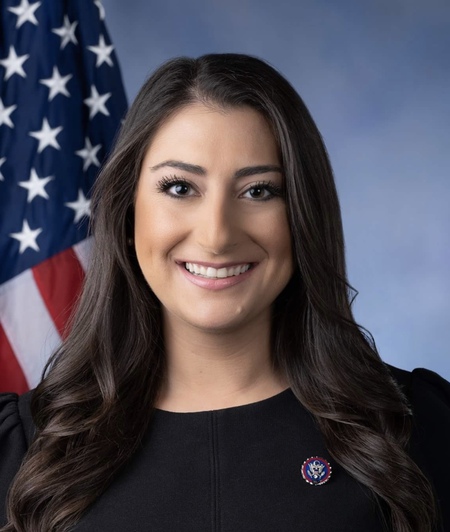
Rep. Sara Jacobs
Sponsored bills
Maddy summaryThe SERVE Act expands eligibility for Veterans Affairs benefits to former service members discharged due to sexual orientation or gender identity (including gender dysphoria). It directly affects veterans who received entry-level separations, honorable discharges, or other-than-honorable discharges for these reasons, making them eligible for VA hospital care, mental health counseling at Vet Centers, national cemetery interment, education benefits, and housing loans. The bill amends existing VA benefit statutes to include this group by adding specific language to each relevant provision. It also requires the VA to conduct outreach to inform affected veterans and submit a report tracking benefit usage by demographic categories within 15 months of enactment.
Maddy summaryThis bill requires the Department of Defense to provide clear, annual information to TRICARE beneficiaries (military members, families, and retirees) about reproductive healthcare access under the military health system. It mandates details on covered care (including abortion), when care is available at military facilities, how to request leave/travel for out-of-state care, and how to find non-DoD providers. Military healthcare providers must also receive annual training on their obligation to offer covered reproductive care (abortion, contraception, fertility) regardless of state laws, and their legal protections. The information must be shared in person, in writing (including electronically), and posted in accessible areas at military medical facilities. This focuses on improving transparency and provider knowledge, not expanding coverage.
Maddy summaryThis bill expands TRICARE coverage to allow military service members and their dependents to obtain up to a full year's supply of contraception in a single fill (365 days) at military pharmacies, retail pharmacies, or through TRICARE's mail-order program. It requires TRICARE to implement this coverage within 180 days of enactment and mandates outreach to inform beneficiaries and providers within 90 days of implementation. The policy directly affects active-duty military members and their eligible dependents enrolled in TRICARE, removing prior restrictions on supply limits for contraceptive prescriptions. This change simplifies access by eliminating the need for frequent refills while maintaining existing coverage requirements under TRICARE.
Maddy summaryHRES 1473 is a non-binding resolution passed by the U.S. House of Representatives that condemns racism, bigotry, and misinformation targeting Haitian people and their descendants. It celebrates the historical contributions of Haitian Americans to U.S. society, including founding cities (like Chicago via Jean Baptiste Point du Sable), advancing civil rights (W.E.B. Du Bois), and enriching healthcare, education, and culture. The resolution specifically calls on all Americans to reject racist tropes and misinformation, and urges elected officials to promote inclusivity and responsible communication. It was introduced in response to recent false claims that fueled threats against Haitian communities, such as the bomb threats in Springfield, Ohio.
Maddy summaryHRES 1468 is a non-binding resolution recognizing the significant pay disparity faced by disabled women in the U.S. workforce. It cites data showing disabled women earn, on average, 50 cents for every dollar earned by nondisabled men, with even starker gaps for disabled women of color (e.g., 44 cents for disabled Latinas). The resolution highlights systemic barriers like occupational segregation, the subminimum wage, and lack of support services contributing to these inequities. It does not create new laws or affect any group directly, but formally acknowledges these disparities and reaffirms the House’s commitment to addressing wage gaps. This is a symbolic recognition, not a policy change.
Maddy summaryThis bill directs the U.S. government to immediately restore funding to the United Nations Relief and Works Agency for Palestine Refugees (UNRWA), reversing a temporary funding pause. It repeals two appropriations acts that halted payments and requires the Secretary of State to resume UNRWA funding under existing authorities. The legislation specifically aims to support UNRWA’s critical humanitarian work - providing shelter, education, healthcare, and aid to Palestinian refugees across Gaza, the West Bank, Syria, Lebanon, and Jordan - during an acute famine risk in Gaza. It also mandates quarterly reports to Congress on UNRWA’s implementation of reforms from an independent review, ensuring accountability for its humanitarian mission.
Maddy summaryHR 9655 reauthorizes key provisions of the 2019 Global Fragility Act through 2029, extending existing programs and coordination mechanisms. It requires annual meetings of senior U.S. officials (including State Department, USAID, Defense, and Treasury leaders) to review alignment between U.S. foreign assistance strategies and partner country priorities. The bill also reauthorizes two funds - the Prevention and Stabilization Fund and Complex Crises Fund - through 2029 and allows Economic Support Fund resources to cover monitoring and evaluation for these programs. This directly affects U.S. government agencies managing international conflict prevention and stabilization efforts, as well as partner countries selected under the Global Fragility Strategy.
Maddy summaryThis bill establishes two programs to improve water quality in the Tijuana River and New River watersheds that flow across the US-Mexico border. It requires the EPA to develop action plans for restoration, prioritize projects to manage wastewater and stormwater, and coordinate with US and Mexican entities. The bill authorizes $50 million annually from 2025-2035 for projects including natural infrastructure, water reuse, and stormwater management. These programs directly affect communities in southern California, particularly Imperial Beach and San Diego, as well as communities in Tijuana and Mexicali, Mexico, aiming to protect public health and ecosystems.
Maddy summaryHRES 1448 is a non-binding House resolution stating that the House believes every person has the right to emergency health care, including abortion care, during medical emergencies. It specifically addresses concerns that abortion restrictions force medical providers to choose between treating patients in life-threatening situations or risking criminal charges. The resolution highlights that such restrictions disproportionately harm Black, Indigenous, people of color, immigrants, low-income individuals, and LGBTQI+ patients. It does not change existing laws but expresses congressional support for ensuring access to emergency care without legal barriers. The resolution was introduced by multiple House members and referred to the Energy and Commerce Committee.