

Commission To Study the Potential Creation of a National Museum of American LGBTQ+ History and Culture Act This bill establishes the Commission to Study the Potential Creation of a National Museum of American LGBTQ+ History and Culture. The commission shall submit reports that address the feasibility of establishing and maintaining such a museum, the availability and cost of collections to be acquired and housed in the museum, the impact of the museum on existing American LGBTQ+ history-related museums, development of criteria for evaluating possible locations for the museum, and the feasibility of the museum becoming part of the Smithsonian Institution. The commission shall develop a fundraising plan that will address the support of the museum through contributions from the public. No federal funds may be obligated to carry out this bill.
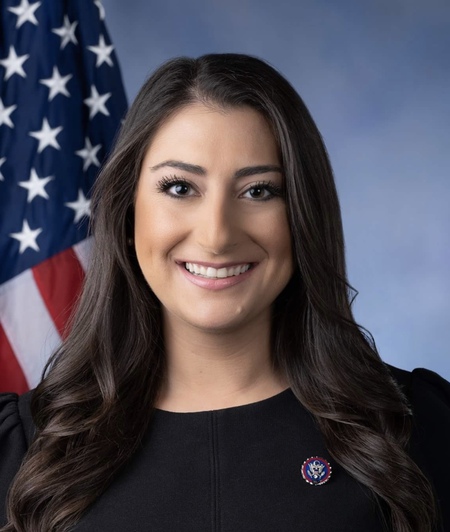
Rep. Sara Jacobs
Sponsored bills
Break the Cycle of Violence Act This bill establishes federal grant programs and related entities to support violence intervention initiatives. Specifically, the bill directs the Department of Health and Human Services (HHS) to award grants for coordinated community violence intervention initiatives in communities disproportionately impacted by homicides and community violence. HHS must also establish several related entities, including an Office of Community Violence Intervention to administer programs and activities related to violence intervention; the Community Violence Intervention Advisory Committee to advise and assist the office and HHS; and the National Community Violence Response Center to provide training and technical assistance, coordinate research, and develop data collection policies. Additionally, the bill directs the Department of Labor to award grants for job training and workforce programs in communities disproportionately affected by gun violence to connect youth ages 16 to 24 to in-demand occupations.
End Veteran Hunger Act of 2022 This bill requires the Department of Veterans Affairs to implement a five-year pilot program to make grants to eligible entities (e.g., nonprofit organizations, veterans service organizations, or government agencies) to support partnerships that address food insecurity among veterans and their family members, including veterans who utilize Vet Center services and those who have recently transitioned from serving as members of the Armed Forces to civilian life.
Veterans Infertility Treatment Act of 2021 This bill requires the Department of Veterans Affairs (VA) to furnish infertility treatments, standard fertility preservation services, or both to a covered veteran or partner of a covered veteran if the individuals jointly apply for such treatments or services. A covered veteran is a veteran who has infertility and is enrolled in the VA health care system. Under the bill, in vitro fertilization treatment may only be furnished for up to three completed cycles resulting in live birth or six attempted cycles, whichever occurs first. The VA may furnish in vitro fertilization treatment using donated gametes or embryos. During the interim period before infertility treatment regulations are in effect, the VA must ensure that (1) fertility counseling and treatment for veterans may also be furnished to the partner of a veteran regardless of whether the veteran and the partner are married, and (2) such counseling and treatment may be furnished using donated gametes or embryos.
Social Security Fairness Act of 2021 This bill repeals provisions that reduce Social Security benefits for individuals who receive other benefits, such as a pension from a state or local government. The bill eliminates the government pension offset , which in various instances reduces Social Security benefits for spouses, widows, and widowers who also receive government pensions of their own. The bill also eliminates the windfall elimination provision , which in some instances reduces Social Security benefits for individuals who also receive a pension or disability benefit from an employer that did not withhold Social Security taxes. These changes are effective for benefits payable after December 2021.
Access to Reproductive Care for Servicemembers Act This bill establishes leave policies for the military departments regarding abortion care for members of the Armed Forces, including policy elements related to privacy. Additionally, the bill requires the military departments to reimburse members for travel costs incurred if a member must travel to a different jurisdiction for an abortion. Under the bill, no member may be subject to any adverse action for requesting or taking leave in relation to abortion care.
Peace Corps Reauthorization Act of 2022 This bill reauthorizes through FY2024 and modifies operations of the Peace Corps. Changes include increasing the readjustment allowance paid to volunteers when their service terminates and providing statutory authority for an executive order that grants returned volunteers noncompetitive eligibility for federal civil-service positions. Additionally, the bill entitles returned volunteers to sixty days of health care benefits. The Peace Corps must also provide volunteers with information about enrolling in U.S. health plans before service termination and mental health care during and after service. The bill also includes provisions to address involuntary termination of Peace Corps service in emergencies, including by expediting re-enrollment of involuntarily terminated volunteers. The Peace Corps must also adequately insure volunteers' safety and must coordinate with the Department of State to periodically update agreements concerning the security of Peace Corps volunteers and staff abroad. The bill also authorizes Peace Corps to recruit domestically based volunteers to serve in the United States at the request of another agency or to provide services in a host country virtually, modifies the Peace Corps National Advisory Council's membership and functions, expands whistleblower protections for volunteers, increases the rate of pay that applies to a volunteer's workers compensation claim, requires Peace Corps to implement a zero tolerance drug use policy regarding volunteer involvement with illegal drugs, and emphasizes the use of the internet in Peace Corps programs. Furthermore, the bill requires reporting, including on the provision of mental health services to volunteers.
Improving Seniors' Timely Access to Care Act of 2022 This bill establishes several requirements and standards relating to prior authorization processes under Medicare Advantage (MA) plans. Specifically, MA plans must (1) establish an electronic prior authorization program that meets specified standards, including the ability to provide real-time decisions in response to requests for items and services that are routinely approved; (2) annually publish specified prior authorization information, including the percentage of requests approved and the average response time; and (3) meet other standards, as set by the Centers for Medicare & Medicaid Services, relating to the quality and timeliness of prior authorization determinations.
This resolution affirms the use of diplomacy with the African Union and its member countries and expresses support for implementation of the African Continental Free Trade Area.
Supporting Medicare Providers Act of 2022 This bill extends a payment increase under Medicare's physician fee schedule through the end of 2023 (currently set to expire at the end of 2022).