Fair and Equal Housing Act of 2023 This bill prohibits discrimination, in the context of various housing practices, against individuals based on their sexual orientation or gender identity.
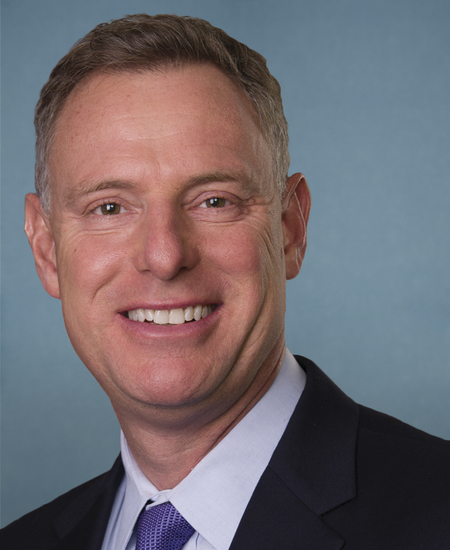
Rep. Scott H. Peters
Sponsored bills
Maddy summaryHR 4340, the Therapeutic Fraud Prevention Act of 2023, prohibits paid providers from offering conversion therapy - defined as any commercial service attempting to change a person's sexual orientation or gender identity - and bans advertising that claims such therapy is effective or harmless. It directly affects therapists, counselors, or organizations offering paid conversion therapy services, including those advertising such services. Key provisions make it unlawful to provide, advertise, or facilitate paid conversion therapy, with enforcement led by the Federal Trade Commission (FTC) under consumer protection laws and allowing states to pursue civil actions. The bill explicitly excludes supportive care for gender transition or identity exploration from its definition of prohibited therapy.
This resolution expresses support for (1) equal rights and protections for all people, regardless of actual or perceived sexual orientation, gender identity, or sex characteristics; and (2) the designation of LGBTQI+ Equality Day to commemorate Supreme Court decisions handed down on June 26 in 2003, 2013, and 2015. The resolution also acknowledges the need for further legislation to ensure that people in the United States are free from all forms of discrimination on the basis of actual or perceived sexual orientation, gender identity, or sex characteristics.
Equal Access to Reproductive Care Act This bill includes assisted reproduction as a tax deductible medical expense. It defines assisted reproduction as any methods, treatments, procedures, and services for effectuating a pregnancy and bringing it to term, and treats it as medical care of the taxpayer, the taxpayer's spouse, or a dependent to the extent that they intend to take legal custody or responsibility for any children born as a result of such assisted reproduction.
Customer Non-Discrimination Act This bill prohibits discrimination based on sex, sexual orientation, and gender identity with respect to public accommodations and facilities. Specifically, the bill defines and includes sex, sexual orientation, and gender identity among the prohibited categories of discrimination or segregation. The bill expands the definition of public accommodations to include places or establishments that provide (1) exhibitions, recreation, exercise, amusement, gatherings, or displays; (2) goods, services, or programs; and (3) transportation services. Protections against discrimination based on race, color, religion, sex, sexual orientation, gender identity, or national origin shall include protections against discrimination based on (1) an association with another person who is a member of such a protected class; or (2) a perception or belief, even if inaccurate, that an individual is a member of such a protected class. The bill prohibits the Religious Freedom Restoration Act of 1993 from providing a claim, defense, or basis for challenging such protections. The bill prohibits an individual from being denied access to a shared facility, including a restroom, a locker room, and a dressing room, that is in accordance with the individual's gender identity. The bill also prohibits the provision of less favorable treatment with respect to pregnancy, childbirth or related medical conditions as compared to other physical conditions.

Maddy summaryHRES 553 is a symbolic resolution honoring Gloria Molina, the first Latina elected to the California State Legislature, Los Angeles City Council, and Los Angeles County Board of Supervisors. It recognizes her 32-year political career and historic firsts, celebrating her legacy as a pioneer for Latinas in public office. The resolution does not create new policy or affect any specific group, as it is purely commemorative. It follows existing honors like the Gloria Molina East Los Angeles Civic Center station and the Gloria Molina Grand Park.
Maddy summaryHR 4241, the Horse Transportation Safety Act of 2023, prohibits transporting horses between states or territories in multi-level motor vehicles (like certain livestock trailers with stacked levels). This directly affects commercial horse transporters moving animals across state lines. The bill adds a civil penalty of $100-$500 per horse per violation for knowingly violating this rule, with separate penalties for each horse transported. It amends the Horse Protection Act to address safety concerns related to transporting horses in vehicles not designed for such travel.
Maddy summaryHR 4263, the ADINA Act, requires drug manufacturers to clearly label human-use drugs containing major food allergens (like peanuts or shellfish) or ingredients derived from gluten-containing grains (such as wheat or barley). This affects drug producers and pharmacies by mandating that labels state the presence of these allergens and specify the exact gluten source if applicable. The law aims to inform consumers with allergies about potential risks in medications. It applies to all drugs meeting these criteria, with implementation beginning within two years of the bill's enactment.
Maddy summaryHR 3698, the Feed Hungry Veterans Act of 2023, amends the Food and Nutrition Act of 2008 to expand eligibility for SNAP (Supplemental Nutrition Assistance Program) benefits to more veterans. It adds four new categories of veterans who can qualify: those with a "catastrophically disabled" status under military disability law, veterans under 65 receiving a pension under specific veteran benefits law, and those meeting existing high-disability rating thresholds. This change directly affects veterans who previously did not meet the program’s eligibility criteria but now qualify under these expanded definitions. The bill takes effect on October 1, 2023, making these eligibility changes operational for SNAP enrollment.
Maddy summaryThe SAFE Act of 2023 extends a 2018 law that prohibits slaughtering animals for human consumption to include horses, donkeys, and other equine animals, such as ponies. It amends Section 12515 of the Agriculture Improvement Act of 2018 by updating the language to replace "dog or cat" with "dog, cat, or equine" in both the section title and the main prohibition. This change directly affects the livestock industry and slaughter facilities by banning the processing of equines for food. The bill modifies existing law without adding new enforcement mechanisms, closing a gap in animal protection.