

Maddy summaryHR 7624, the Advancing GETs Act of 2024, creates a financial incentive for entities installing grid-enhancing technologies (GETs) on electric transmission systems. It requires the Federal Energy Regulatory Commission (FERC) to establish a "shared savings" program by July 2025, returning 10-25% of verified cost savings (minimum 4x the investment cost) to developers over three years for new GET installations that improve grid capacity, efficiency, or resilience. The bill also mandates annual congestion cost reporting from transmission operators and directs the Energy Secretary to create a public application guide for utilities, funded with $5 million in 2024 and $1 million annually through 2035. This directly affects developers of transmission infrastructure and utilities seeking to implement GETs, focusing on tangible financial mechanisms rather than speculative outcomes.
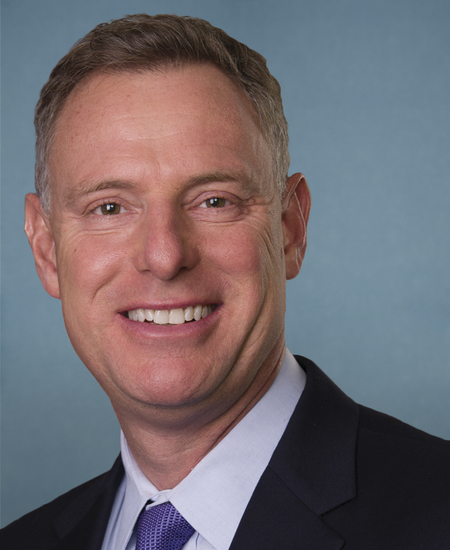
Rep. Scott H. Peters
Sponsored bills
Maddy summaryHRES 1079 is a symbolic House resolution condemning Russia's claimed suspension of the New START nuclear arms control treaty, which the U.S. considers legally invalid. It calls on Russia to immediately return to full compliance with New START, including resuming inspections and data sharing, and emphasizes the importance of arms control for global stability. The resolution urges the Biden administration to continue arms control talks with Russia and China to prevent a nuclear arms race. As a non-binding resolution, it does not change U.S. policy but expresses congressional support for maintaining the New START framework, which limits Russia's nuclear arsenal to 1,550 warheads.
Maddy summaryHR 7651, the Methane Emissions Mitigation Research and Development Act, establishes a federal program to fund research and development for better methane leak detection and mitigation technologies in the natural gas infrastructure. The bill directs the Secretary of Energy to create a Methane Emissions Measurement and Mitigation Research Consortium (including oil/gas operators, researchers, and community groups) to share data, prioritize research, and develop best practices for pipelines, wells, and storage facilities. It authorizes $36 million to $44 million annually (2025-2029) for this program and $15 million to $23 million annually for National Institute of Standards and Technology facilities to test methane measurement technologies. The effort directly affects oil and gas operators through improved leak detection tools and aims to protect public health by addressing methane emissions from infrastructure. The bill focuses solely on research, not regulatory requirements, with annual congressional reporting on progress.
Maddy summaryThis concurrent resolution (HCONRES 97) recognizes the gender wage gap, noting that women working full-time earn 84 cents for every dollar earned by men. It highlights racial disparities (e.g., Latinas earn 57 cents, Black women 69 cents) and the economic impact of the gap, including $965 billion in annual lost wages for women. As a symbolic resolution, it does not create new laws or policies but formally acknowledges the issue and reaffirms Congress’s commitment to addressing wage inequality.
Maddy summaryHRES 1074 is a symbolic House resolution reaffirming congressional support for a two-state solution to the Israel-Palestine conflict. It explicitly states the House supports Israel's right to exist as a Jewish, democratic state and recognizes Palestinians' right to sovereignty through a separate state. The resolution identifies a two-state solution as the best path to lasting peace and condemns efforts opposing this approach. As a non-binding resolution, it does not create new law or policy but formally expresses the House's position on this issue. It was introduced by multiple House members on March 12, 2024.
Maddy summaryHR 7629, the Protect Our Letter Carriers Act of 2024, allocates $1.4 billion annually (2025-2029) to the U.S. Postal Service for high-security collection boxes and replacing physical universal mailbox keys with electronic versions, directly affecting USPS operations and letter carriers. It requires the Attorney General to appoint specialized prosecutors in each district to coordinate investigations and prosecutions of postal-related crimes, such as assaults on carriers or mail theft. The bill also mandates the U.S. Sentencing Commission to adjust guidelines so that assaults or robberies against postal employees are treated with the same severity as assaults against law enforcement officers. These provisions aim to enhance safety through infrastructure upgrades, improved prosecution, and stricter sentencing for crimes targeting postal workers.
Maddy summaryThis bill establishes a 5-year pilot program to connect eligible veterans with manufacturing careers. It authorizes $10 million annually (2025-2029) to award competitive grants to three states, which will then provide funding to manufacturing employers. The program reimburses employers for training costs related to covered manufacturing-specific skills (like on-the-job training or apprenticeships), exclusively for eligible veterans. States must demonstrate sufficient veteran populations, a strong manufacturing sector, and plans for sustainable high-wage employment. The program requires quarterly reporting on participant pay rates and annual evaluations to Congress.
Military Family Leave Act of 2024 This bill entitles an employed family member of a member of the Armed Forces who receives notification of a call or order to active duty in support of a contingency operation, or who is deployed in connection with a contingency operation, to two workweeks of leave per year for each family member who is so called or deployed. Such leave may (1) be taken intermittently or on a reduced leave schedule; and (2) consist of paid or unpaid leave, as the employer considers appropriate. Additionally, the bill (1) allows an employer to require certification of entitlement to such leave within a leave request, (2) provides employment and benefits protection for employees upon their return from such leave, and (3) prohibits an employer from interfering with or otherwise denying the exercise of such leave rights.
Maddy summaryThis bill reauthorizes the Preventing Maternal Deaths program through 2028, extending existing provisions under the Public Health Service Act. It requires maternal mortality review committees to include obstetricians and gynecologists and improves death certificate accuracy by directing coordination with death certifiers. The Centers for Disease Control and Prevention must annually share evidence-based best practices for preventing maternal mortality with hospitals, state health groups, and perinatal quality collaboratives. The changes directly affect state maternal mortality review committees, healthcare providers, and hospitals receiving CDC guidance. The bill does not create new funding but extends the current program's authorization period from 2019-2023 to 2024-2028.
Maddy summaryHR 6195, the Wildland Firefighter Fair Pay Act, modifies federal pay rules for wildland firefighters and related personnel employed by the Forest Service, Department of the Interior, and National Weather Service. It establishes that premium pay earned during wildfire suppression activities (excluding prescribed fires) will be disregarded when calculating total pay for certain pay limits, preventing these employees from exceeding the Executive Schedule Level II pay cap. The bill requires the Secretaries of Agriculture, Interior, and Commerce to submit a hiring plan by March 2024 to ensure sufficient staffing without triggering pay caps. The changes take effect in January 2024 for most provisions and October 2023 for premium pay adjustments.