

Maddy summaryThe NO BAN Act (HR 9244) prohibits U.S. immigration authorities from denying visas or entry based on national origin, religion, or sex. It amends immigration law to explicitly ban such discrimination in visa decisions and tightens restrictions on the president’s power to suspend entry of certain groups under Section 212(f). The bill requires specific evidence, narrow tailoring, time limits, and congressional notification for any entry restriction, while mandating public reports on visa denials and waivers. It directly affects nonimmigrant visa applicants (e.g., students, workers) and federal agencies administering immigration policy.
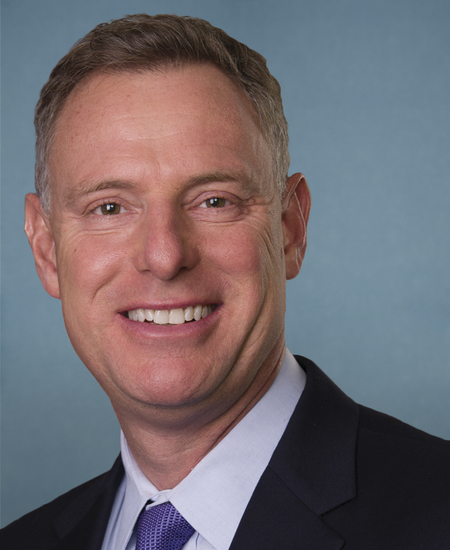
Rep. Scott H. Peters
Sponsored bills
Maddy summaryThis bill makes it a federal crime to steal packages that have been delivered by private carriers (like FedEx or UPS) but not yet received by the recipient. It directly affects package recipients, carriers, and thieves who target unclaimed deliveries left on porches or in mailboxes. The key provision amends federal law to include these delivered-but-unclaimed packages under the same legal protections as mail in transit. This changes the law to treat stolen packages at the delivery stage as a federal offense, similar to theft of postal mail. The bill does not create new penalties but expands existing theft statutes to cover this specific scenario.
Maddy summaryThe REMOVE Act of 2024 establishes a federal interagency group and four specialized working groups to coordinate research, development, and demonstration of carbon dioxide removal (CDR) technologies. It directs agencies like Energy, Agriculture, and EPA to focus on ocean-based, terrestrial, geological, and technological CDR methods through coordinated planning and annual budget reviews. The bill creates structures for evaluating cost-effective CDR approaches and monitoring environmental impacts but does not mandate emissions reductions or fund specific projects. It affects federal agencies conducting climate-related research, with mechanisms requiring 3-year reviews of group composition and annual budget integration across departments. The Act is procedural, outlining process rather than direct policy changes for the public or private sector.
Maddy summaryHR 9221, the RESTORE Patent Rights Act of 2024, would restore a traditional legal presumption that courts must grant permanent injunctions to stop ongoing patent infringement. The bill directly affects patent owners, particularly smaller entities like individual inventors, universities, startups, and small businesses, which currently struggle to obtain injunctions against large companies. It amends patent law to create a "rebuttable presumption" that an injunction is warranted after a court finds infringement, shifting the burden to defendants to prove why an injunction should not be issued. This change aims to reverse recent court practices that have made it harder for patent holders to stop ongoing or willful infringement.
Maddy summaryThis bill permanently removes a 2026 expiration date for a tax exclusion allowing employers to pay employees' student loans through educational assistance programs without those payments being counted as taxable income. It directly affects employees who receive employer-sponsored student loan repayment assistance and employers offering such programs. The key provision amends the Internal Revenue Code to make this tax exclusion permanent, applying to all future payments made after the bill's enactment. This change simplifies the tax treatment for both employers and employees participating in these student loan repayment programs.
Maddy summaryH.J. Res. 193 proposes a constitutional amendment to eliminate legal immunity for federal officials, including the President, from criminal prosecution for actions taken while performing official duties. It also prohibits the President from granting a pardon to themselves. The amendment would apply to all federal officers (such as the President, Vice President, and members of Congress) except for Congress members acting in their legislative role as defined in the Constitution. If ratified by 38 states, this change would become part of the U.S. Constitution, requiring no further congressional action.
Maddy summaryHRES 1375 is a non-binding resolution recognizing extreme weather as a critical threat to children's health and well-being, emphasizing that children face unique vulnerabilities due to their developing bodies, higher exposure to pollutants, and heightened risks during events like heatwaves, wildfires, and poor air quality. It expresses Congress's view that solutions must be developed and deployed rapidly and equitably, with specific attention to children's physical and mental health needs. The resolution suggests concrete measures such as improved air filtration in schools, accessible public alerts for extreme heat, expanded cooling centers, and better infrastructure for child-friendly emergency spaces, though it does not create new laws or mandates.
Maddy summaryHR 2971, the Veterans Claims Education Act of 2023, requires the Department of Veterans Affairs (VA) to provide veterans filing claims with clear information about free or low-cost assistance. Specifically, it mandates that veterans not represented by an accredited person receive notice about free help from veterans service organizations, an online directory of trained representatives, and how to report unaccredited representatives charging fees. The VA must also include fee warnings and links to these resources on its claim-filing websites. Additionally, the bill requires the VA to review and report on its processes for recognizing accredited representatives within 180 days of enactment.
Maddy summaryHRES 1355 is a non-binding resolution supporting the designation of July 10 as Journeyman Lineworkers Recognition Day. It honors lineworkers who maintain electrical infrastructure under hazardous conditions, including during disasters, and commemorates Henry Miller, the first president of the International Brotherhood of Electrical Workers, who died on July 10, 1896, while troubleshooting an electrical outage. The resolution encourages public recognition of these workers' contributions but does not create new laws or policies.
Maddy summaryHR 8825, the Right to Vote Act, establishes a fundamental right for all citizens of legal voting age to vote in federal elections. It directly affects voters across all states and territories by prohibiting government actions that make voting harder (like restrictive ID laws or reduced polling places) unless those actions are the least restrictive way to serve a significant government interest. The bill creates two legal standards: "retrogression" (diminishing voting access) and "substantial impairment" (making voting significantly harder), allowing voters to sue in federal court to challenge such restrictions. Courts must expedite these cases, and the law applies to all federal elections occurring on or after September 1, 2024.