

Coordination, Accountability, Research, and Equity for All Kidneys Act of 2021 or the CARE for All Kidneys Act of 2021 This bill requires multiple agencies to address kidney disease, with a focus on minority, rural, and other underserved populations that are disproportionately affected by the disease. First, the Department of Health and Human Services (HHS) must study patterns of care for kidney disease provided through certain health insurance providers. Second, HHS's Office of the Assistant Secretary for Health must (1) create a plan to address kidney disease, (2) develop a pilot program for best practices to diagnose and manage the disease, and (3) report annually on the impact of a Medicare model that encourages greater use of home dialysis and kidney transplants. Third, the National Institutes of Health must expand research on kidney disease. This includes research on the causes of lower rates of, and interventions to increase, kidney transplants among underserved populations. Fourth, the National Institute of Diabetes and Digestive and Kidney Diseases must conduct an awareness campaign and work with the Centers for Disease Control and Prevention (CDC) to evaluate data collection concerning kidney disease. Fifth, the CDC must award grants for public health interventions to reduce the burden of kidney disease and undertake activities to identify and address environmental and occupational causes of kidney disease. Last, the bill makes kidney disease specialists eligible for the National Health Service Corps (NHSC). The NHSC provides scholarships and student loan repayment awards to health care providers who agree to work in areas with shortages of primary care, mental health, and dental providers.
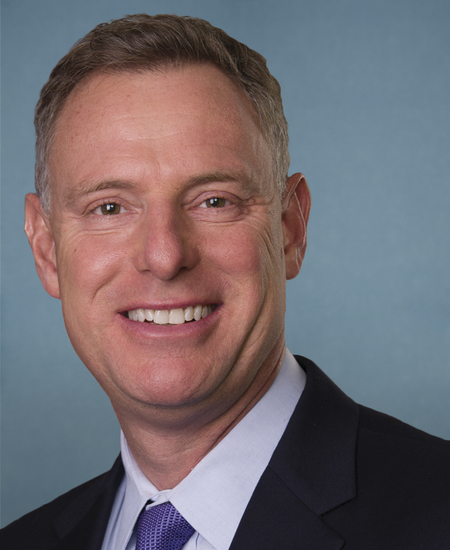
Rep. Scott H. Peters
Sponsored bills
Sustainable Skies Act This bill allows a business-related tax credit through 2031 for each gallon of sustainable aviation fuel used by a taxpayer in the production of a qualified mixture (i.e., a mixture of sustainable aviation fuel and kerosene that is sold for use in certain U.S. aircraft). The bill generally defines sustainable aviation fuel as liquid fuel that consists of synthesized hydrocarbons, meets certain recognized international standards, is derived from biomass, waste streams, renewable energy sources, or gaseous carbon oxides, is not derived from palm fatty acid distillates, and achieves at least a 50% life cycle greenhouse gas emissions reduction in comparison with petroleum-based jet fuel. To be eligible for such credit, a taxpayer must meet certification requirements showing that the sustainable aviation fuel conforms with one of the life cycle greenhouse gas emissions reduction tests set forth in this bill.
Shark Fin Sales Elimination Act of 20 21 This bill addresses the sale of shark fins and the inclusion of rays and skates in the Seafood Traceability Program. The Seafood Traceability Program has data reporting and recordkeeping requirements at the time of entry for imported fish or fish products entered into U.S. commerce. The bill makes it illegal to possess, buy, or sell shark fins or any product containing shark fins, except for certain dogfish fins. A person may possess a shark fin that was lawfully taken consistent with a license or permit under certain circumstances. Penalties are imposed for violations under the Magnuson-Stevens Fishery Conservation and Management Act. The Department of Commerce must revise its regulations to include rays and skates as species that are subject to the Seafood Traceability Program.
Michael Lecik Military Firefighters Protection Act This bill establishes a presumption of service-connection for specified diseases becoming manifest in certain veterans to a degree of disability of 10% or more within 15 years of the veteran's separation from active military, naval, or air service. Under a presumption of service-connection, specific diseases or disabilities diagnosed in certain veterans are presumed to have been caused by the circumstances of their military service. Health care benefits and disability compensation may then be awarded. Veterans addressed by this bill are those who (1) are trained in fire suppression, and (2) served on active duty in a military occupational specialty or career field with a primary responsibility of firefighting or damage control for at least five years in the aggregate.
Federal Disaster Assistance Coordination Act This bill extends the deadline by which the Federal Emergency Management Agency (FEMA) must (1) conduct a study and develop a plan under which the collection of information from disaster assistance applicants and grantees will be made less burdensome, duplicative, and time consuming for applicants and grantees; and (2) develop a plan for the regular collection and reporting of information on federal disaster assistance awarded. Not later than two years after enactment of this bill, FEMA shall convene a working group on a regular basis to identify (1) potential areas of duplication or fragmentation in preliminary damage assessments after disaster declarations; and (2) potential emerging technologies, such as Unmanned Aircraft Systems (i.e., drones), to expedite the administration of preliminary damage assessments. FEMA must submit a comprehensive report on the plans for streamlining and consolidating information collection and preliminary damage assessments and the findings and recommendations of the working group to Congress with a briefing. The report must be made available to the public and posted on FEMA's website.
Ocean Pollution Reduction Act II This bill revises requirements under the National Pollutant Discharge Elimination System (NPDES) permit program for the Point Loma Wastewater Treatment Plant in San Diego, California. Currently, the plant must meet standards established under the NPDES permit program for the primary and secondary treatment of wastewater discharged by the plant into marine waters. The city of San Diego may apply for permit modifications, which offer alternatives to certain secondary treatment standards. This bill eliminates the need for the city to obtain a separate permit for such modifications. Instead, the city may apply to obtain the permit modifications under the main NPDES permit if the plant meets certain conditions, such as the implementation of a pretreatment program.
Outdoor Restoration Partnership Act of 2021 This bill establishes and provides funding for the Restoration and Resilience Grant Program and the Restoration and Resilience Partnership Program. The bill establishes a Restoration Fund Advisory Council to provide advice to the Department of Agriculture (USDA) respecting the grant program. The grant program shall provide grants to eligible entities (e.g., a state agency, a unit of local government, or a tribal government) for purposes such as (1) increasing the capacity for planning, coordinating, and monitoring restoration and resilience projects on federal land and nonfederal land; or (2) restoration and resilience projects on nonfederal land. Under the Restoration and Resilience Partnership Program, USDA shall carry out restoration and resilience projects that reduce wildfire potential, improve community resilience in the wildland-urban interface, or restore wildlife habitat.
Aluminum Pricing Examination Act or the APEX Act This bill extends the jurisdiction of the Commodity Futures Trading Commission (CFTC) to include the markets for aluminum premiums. Specifically, the CFTC has jurisdiction over (1) the process and manner in which reference prices for such premiums are set or reported, and (2) whether the mechanism for setting such reference prices is fair and transparent. Additionally, the CFTC must consult with the Department of Justice regarding relevant information, including allegations of anticompetitive conduct.
American Dream and Promise Act of 2021 This bill provides certain aliens with a path to receive permanent resident status and contains other immigration-related provisions. The Department of Homeland Security (DHS) or the Department of Justice (DOJ) shall provide conditional permanent resident status for 10 years to a qualifying alien who entered the United States as a minor and (1) is deportable or inadmissible, (2) has deferred enforced departure (DED) status or temporary protected status (TPS), or (3) is the child of certain classes of nonimmigrants. The bill imposes various qualifying requirements, such as the alien being continuously physically present in the United States since January 1, 2021, passing a background check, and being enrolled in or having completed certain educational programs. DHS shall remove the conditions placed on permanent resident status granted under this bill if the alien applies and meets certain requirements, such as completing certain programs at an educational institution, serving in the military, or being employed. Furthermore, DHS and DOJ shall cancel the removal of certain aliens who had TPS, were eligible for TPS, or were eligible for DED status on certain dates. Such an alien shall receive permanent resident status upon meeting certain requirements and applying for such status within three years of this bill's enactment. For an alien seeking permanent resident status under this bill, DHS may (1) waive certain grounds of inadmissibility, or (2) provisionally deny the application if the alien poses a danger to public safety or has knowingly participated in certain offenses involving a criminal street gang. An alien shall have the right to administrative and judicial review of a denial or revocation of permanent resident status granted under this bill. An alien seeking judicial review of a provisional denial shall be appointed counsel upon request. An alien who appears to be prima facie eligible for relief under this bill shall receive a reasonable chance to apply for such relief and may not be removed until there is a final decision on that application for relief. DHS may not use information from applications filed under this bill or for Deferred Action for Childhood Arrivals status for immigration enforcement purposes. DHS shall establish a grant program for nonprofit organizations that assist individuals with certain immigration-related issues. This bill also repeals a restriction that bars a state from providing higher education benefits to undocumented aliens unless those benefits are available to all U.S. nationals without regard to residency in the state.
National Heritage Area Act of 2021 This bill establishes a National Heritage Areas System to recognize certain areas of the United States that tell nationally significant stories and to conserve, enhance, and interpret the areas' natural, historic, scenic, and cultural resources that illustrate significant aspects of U.S. heritage, and authorizes appropriations through FY2034 for each National Heritage Area. Through such system, the Department of the Interior may provide technical and financial assistance to local coordinating entities to support the establishment, development, and continuity of such areas. The bill extends the authority for the Erie Canalway National Heritage Corridor Commission and the Gullah/Geechee Cultural Heritage Corridor Commission until September 30, 2034. The local coordinating entity of a National Heritage Area, not later than three years after the area is included in the National Heritage Area System, shall submit to Interior a management plan for approval. Interior, not later than one year before the authorization for federal funding expires for a National Heritage Area, shall (1) conduct an evaluation of the accomplishments of that area, and (2) submit a report detailing the evaluation to specified congressional committees. Based upon the evaluation, Interior shall prepare a report with recommendations for the National Park Service's continued role, if any, with respect to the area. Interior may carry out or certify a study to assess the suitability and feasibility of designating a specific geographic area as a National Heritage Area to be included in the National Heritage Area System.