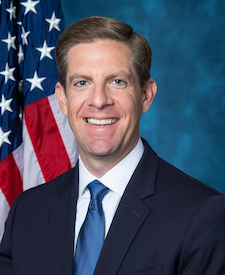
Photo of Mike Levin
D United States House · District 49 · California On the 2026 ballot

Rep. Mike Levin

Compare
Total votes
2,837
all sessions
Attendance
100%
5 missed
Higher than 82% of chamber peers
With party
97%
of cast votes
Near the chamber average
Bipartisan score
2%
crosses aisle rarely
Near the chamber average
Sponsored
1,568
bills & resolutions
Higher than 75% of chamber peers
Committees
3
assignments
1,568 bills and resolutions

Sponsored bills

Total
1,568
Primary
91
Co-sponsor
1,477
This page
1,568
matching current filters
Co-sponsor HJRES 14
In committee · United States House · Co-sponsor
Amending title 36, United States Code, to direct the President to issue an annual proclamation establishing Democracy Day.

Maddy summaryH.J.Res. 14 proposes amending the U.S. Code to require the President to issue an annual proclamation designating a day as "Democracy Day." The proclamation would call on state and local governments, educational institutions, and the public to observe the day with programs and activities promoting democratic values. It does not fix a specific date (though the preamble references January 6 as a potential day), leaving the annual designation to the President's discretion. The bill directly affects the President and state/local authorities by establishing a formal mechanism for nationwide civic observance of democracy.

In committee Jan 10, 2023 1 co-sponsor
Co-sponsor HJRES 13
In committee · United States House · Co-sponsor
Proposing an amendment to the Constitution of the United States relating to the authority of Congress and the States to regulate contributions and expenditures intended to affect elections and to enact public financing systems for political campaigns.

This joint resolution proposes a constitutional amendment authorizing Congress and the states to (1) regulate and impose reasonable viewpoint-neutral limitations on the raising and spending of money by candidates and others to influence elections; and (2) regulate and enact public campaign financing systems, including those designed to restrict the influence of private wealth by offsetting the raising and spending of money by candidates and others with increased public funding. The amendment grants Congress and the states the power to implement and enforce this amendment by legislation. They are allowed to distinguish between natural persons and corporations or other artificial entities created by law, including by prohibiting such entities from spending money to influence elections.

In committee Jan 9, 2023 1 co-sponsor
Co-sponsor HR 51
In committee · United States House · Co-sponsor
Washington, D.C. Admission Act

Maddy summaryHR 51, the Washington, D.C. Admission Act, would admit Washington, D.C. as the 51st state, named "Washington, Douglass Commonwealth," granting its residents full representation in Congress with two Senators and one Representative. The bill establishes procedures for admission, including elections for state officials, with the state initially having one Representative until the next congressional apportionment. It would create a "Capital" area (including the White House, Capitol, and other key federal buildings) that remains under federal jurisdiction as the seat of the U.S. government, while the rest of the District becomes the new state. The bill also includes provisions to ensure continuity of federal services, property management, and legal procedures during the transition to statehood.

In committee Jan 9, 2023 1 co-sponsor
Co-sponsor HR 40
In committee · United States House · Co-sponsor
Commission to Study and Develop Reparation Proposals for African Americans Act

Commission to Study and Develop Reparation Proposals for African Americans Act This bill establishes the Commission to Study and Develop Reparation Proposals for African Americans. The commission must (1) compile documentary evidence of slavery in the United States; (2) study the role of the federal and state governments in supporting the institution of slavery; (3) analyze discriminatory laws and policies against freed African slaves and their descendants; and (4) recommend ways the United States may recognize and remedy the effects of slavery and discrimination on African Americans, including through a formal apology and compensation (i.e., reparations). The commission consists of individuals from civil society and reparations organizations and individuals appointed by the President and congressional leadership; Members of Congress and governmental employees may not serve on the commission. The commission may hold hearings, subpoena witnesses and records, and contract with other entities to conduct its work. The commission must submit its final report within 18 months of its first meeting.

In committee Jan 9, 2023 1 co-sponsor
Primary HR 7939
Signed into law · United States House · Lead sponsor
Veterans Auto and Education Improvement Act of 2022

Veterans Auto and Education Improvement Act of 2022 This act modifies provisions related to programs and benefits for veterans, including by providing permanent authority for the application of certain flexibilities to assist veterans with their educational assistance benefits during emergency situations. An emergency situation is defined as a situation that the President declares as an emergency and the Department of Veterans Affairs (VA) determines is an emergency for purposes of the laws it administers. Specifically, the act extends certain program adjustments that were implemented during the COVID-19 emergency (including adjustments made in the Student Veteran Coronavirus Response Act of 2020) to other emergency situations that may arise and have an effect on veterans and their educational assistance benefits. Among other flexibilities, the act (1) authorizes the VA to continue to provide educational assistance, including monthly housing stipends or subsistence allowances, for programs of education that have been converted to distance learning due to an emergency or health-related situation; and (2) extends the time limitation for using educational assistance under the Montgomery GI Bill, Post-9/11 GI Bill, or vocational rehabilitation program when institutions are closed due to an emergency situation or executive order. Due to an emergency situation, the VA is authorized to extend by two months the payment of vocational rehabilitation subsistence allowances, continue paying work-study allowances and extend work-study agreements, and continue paying educational assistance and subsistence allowances for a specified amount of time for programs of education that are suspended or closed. This act also adjusts the administration of certain benefits for veterans participating in an apprenticeship or other on-job training during an emergency situation, including by proportionately reducing the 120-hour monthly training requirement to reflect an individual's period of unemployment without a reduction in training assistance. An educational assistance payment shall not be charged against an individual's entitlement to educational assistance if an individual was unable to complete a course or program due to the temporary closure of an educational institution or the temporary termination of a program by reason of an emergency situation. The act provides the requirements that must be met for a study-abroad course to be approved for purposes of VA educational assistance. The act provides eligibility for Post-9/11 GI Bill educational assistance for individuals, including officers, who are discharged or released from active duty with a sole survivorship discharge following at least 30 continuous days on qualifying active duty after September 10, 2001. The VA must partner with state approving agencies, educational institutions, and training establishments to require the use of a uniform application for the VA's course approval process. The uniform application must be developed by October 1, 2023, and be required for the approval of any new course of education proposed on or after that day. The act provides notice requirements for VA education surveys. Specifically, the VA or a state approving agency must provide not more than one business day of notice to an educational institution before conducting a targeted risk-based survey. The VA or state approving agency must provide not more than 10 business days of notice to an educational institution or training establishment before conducting a compliance survey. Under the act, educational institutions are excepted from the requirement to verify the enrollment of certain individuals who are receiving VA educational assistance (e.g., individuals who are enrolled in a program on at least a full-time basis before they are able to withdraw from the course without penalty). The act expands eligibility for self-employment assistance under the Veteran Readiness and Employment Program to include certain veterans who have a service-connected disability or employment handicap in addition to those with the most severe service-connected disabilities. The VA must report on possible definitions for student services , marketing , and classroom instruction for purposes of VA educational assistance. The act extends through November 30, 2031, certain limitations on pension payments to veterans who have no dependents and are being furnished domiciliary care by the VA. The act authorizes a servicemember to terminate specified contracts (e.g., contracts for commercial mobile service or internet service) that are entered into in relation to military orders for a permanent change of station if the member then receives a stop movement order in response to a local, national, or global emergency which prevents the member from using the services provided under the contract. The act provides that a spouse of a servicemember may retain their personal residence or domicile for purposes of taxation. Under the act, a servicemember and the spouse of the member are authorized to elect to use the following locations for purposes of taxation: the residence or domicile of the member, the residence or domicile of the spouse, or the permanent duty station of the member. The act provides for the portability of professional licenses of servicemembers and their spouses who are relocated, because of military orders, outside of the jurisdiction that issued the license. The act authorizes the VA to provide non-articulating trailers (adaptive equipment) to veterans with specified disabilities or diseases incurred or aggravated due to their military service. The act authorizes the VA to provide (or assist in providing) an eligible veteran or servicemember with an additional automobile or other conveyance under the VA automobile allowance and adaptive equipment program if (1) more than 30 years have elapsed since the person last received such benefit; or (2) beginning 10 years after the date of this act, if more than 10 years have elapsed since the person last received such benefit. Finally, the act includes certain vehicle modifications (e.g., van lifts) under the definition of medical services for VA health care purposes.


Signed into law Jan 5, 2023 0 co-sponsors
Co-sponsor HR 6720
In committee · United States House · Co-sponsor
To authorize the Thomas Paine Memorial Association to establish a commemorative work in the District of Columbia and its environs, and for other purposes.

This bill authorizes the Thomas Paine Memorial Association to establish a commemorative work on federal land in the District of Columbia in honor of the philosopher and patriot, Thomas Paine. Thomas Paine is best known for writing Common Sense , a pamphlet that helped to inspire the Revolutionary War. The establishment of the commemorative work shall be in accordance with the Commemorative Works Act. Federal funds may not be used to pay any expense to establish the commemorative work.

In committee Dec 30, 2022 1 co-sponsor
Co-sponsor HR 3764
In committee · United States House · Co-sponsor
Ocean-Based Climate Solutions Act of 2022

Ocean-Based Climate Solutions Act of 2022 This bill establishes a variety of requirements to reduce carbon emissions and protect oceans, coastal habitats, marine mammals, and fish populations from climate change and other threats.

In committee Dec 30, 2022 1 co-sponsor
Co-sponsor HR 2021
In committee · United States House · Co-sponsor
Environmental Justice For All Act

Environmental Justice For All Act This bill establishes several environmental justice requirements, advisory bodies, and programs and modifies the scope of environmental review under the National Environmental Policy Act of 1969. The bill sets forth provisions to address the disproportionate adverse human health or environmental effects of federal laws or programs on communities of color, low-income communities, or tribal and indigenous communities. It also prohibits disparate impacts on the basis of race, color, or national origin as discrimination. Aggrieved persons may seek legal remedy when faced with such discrimination. In addition, the bill directs agencies to follow certain requirements concerning environmental justice. For example, agencies must prepare community impact reports that assess the potential impacts of their actions on environmental justice communities under certain circumstances. It also raises coal, oil, and gas royalty rates to create a funding source to support fossil fuel-dependent communities and displaced workers as they transition away from fossil fuel industries. Additionally, the bill creates a variety of advisory bodies and positions, such as the White House Environmental Justice Interagency Council. Among other things, the council must issue an environmental justice strategy. It also establishes requirements and programs concerning chemicals or toxic ingredients in certain products. For example, the bill (1) requires certain products (e.g., cosmetics) to include a list of ingredients or warnings; and (2) provides grants for research on designing safer alternatives to chemicals in certain consumer, cleaning, toy, or baby products that have an inherent toxicity or that are associated with chronic adverse health effects. Finally, it creates a variety of funding programs, such as a grant program to enhance access to park and recreational opportunities in urban areas.

In committee Dec 30, 2022 1 co-sponsor
Co-sponsor HR 1492
In committee · United States House · Co-sponsor
Methane Waste Prevention Act of 2021

Methane Waste Prevention Act of 2021 This bill establishes requirements to reduce methane emissions from the oil and natural gas sector. Methane is emitted during the production and transport of coal, natural gas, and oil. Specifically, the Environmental Protection Agency (EPA) must issue regulations that require the sector to reduce methane emissions over time. By 2025, methane emissions must be at least 65% below 2012 emissions. By 2030, the emissions must be at least 90% below 2012 emissions. The Department of the Interior must also establish regulations to reduce and prevent the waste of natural gas on federal land and Indian lands, including waste from venting, flaring, and fugitive releases. The regulations must include consistent enforcement mechanisms for any oil or gas operations that are not in compliance.

In committee Dec 30, 2022 1 co-sponsor
Showing 971 to 980 of 1,568 bills
Previous 1 … 97 98 99 … 157 Next