

Maddy summaryThe Better Care Better Jobs Act (HR 547) aims to improve access to home and community-based services (HCBS) for Medicaid beneficiaries by providing states with planning grants and enhanced federal funding. States that develop approved HCBS infrastructure improvement plans will receive a 10 percentage point increase in federal Medicaid funding for HCBS services, with additional incentives for self-directed care programs. The bill requires states to address barriers to access, expand workforce development, improve payment rates for direct care workers, and track demographic data on service utilization. It also establishes quality measurement requirements and mandates regular reporting on progress toward improving HCBS access and quality.
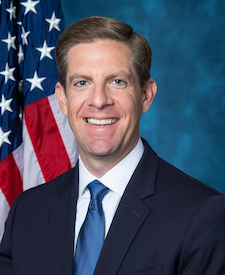
Rep. Mike Levin
Sponsored bills
Save Americans from the Fentanyl Emergency Act or the SAFE Act This bill permanently places fentanyl-related substances as a class into schedule I of the Controlled Substances Act. A schedule I controlled substance is a drug, substance, or chemical that has a high potential for abuse; has no currently accepted medical value; and is subject to regulatory controls and administrative, civil, and criminal penalties under the Controlled Substances Act. The temporary scheduling order issued by the Drug Enforcement Administration to place fentanyl-related substances into schedule I of the Controlled Substances Act expires on December 31, 2024. It limits the application of mandatory minimum penalties for certain offenses involving fentanyl-related substances, establishes a process to deschedule or remove certain fentanyl-related substances that have a low potential for abuse, and allows a federal court to vacate or reduce the sentence for convictions of offenses involving a fentanyl-related substance that is descheduled or moved to a schedule other than schedule I or II. The bill establishes a new, alternative registration process for schedule I research. It also makes other changes to registration requirements for conducting research with controlled substances, including permitting a single registration for related research sites in certain circumstances, waiving the requirement for a new inspection in certain situations, and allowing a registered researcher to perform certain manufacturing activities with small quantities of a substance without obtaining a manufacturing registration. Finally, the bill requires the Government Accountability Office to analyze the implementation and impact of permanently placing fentanyl-related substances into schedule I of the Controlled Substances Act.
Maddy summaryHR 789, the Caring for All Families Act, expands the Family and Medical Leave Act to allow employees to take leave for a wider range of family members, including domestic partners, son-in-law, daughter-in-law, parent-in-law, adult children, grandparents, grandchildren, siblings, and others with "close association equivalent to family." The bill adds new provisions for employees to take up to 4 hours of leave per 30 days (24 hours annually) for school activities, routine medical appointments for family members, or visiting nursing homes for elderly individuals considered family. This legislation directly affects private sector workers covered by FMLA and federal employees, broadening who qualifies for leave and what types of family care can be accommodated. The bill amends existing FMLA definitions and requirements to include these expanded family relationships and care needs.
Maddy summaryHR 715, the Bipartisan Background Checks Act of 2023, requires background checks for all firearm transfers between private individuals, not just those through licensed dealers. It mandates that unlicensed sellers must involve a licensed dealer to conduct a background check before transferring a firearm, with exceptions for family transfers (like spouses or parents/children), law enforcement, temporary safety transfers, and certain hunting or range activities. The bill also requires licensed dealers to provide a notice and certification form in both English and Spanish to buyers. It explicitly states it won't create a national gun registry or override state laws on the same topic. The law would take effect 180 days after enactment.
Repatriate Our Patriots Act This bill protects certain veterans of the Armed Forces from removal from the United States and provides such veterans with an expedited procedure for naturalization. The bill applies to special veterans , defined as persons who served in the active Armed Forces who were (1) honorably discharged or released; (2) not convicted of various crimes, including voluntary manslaughter, murder, rape, or terrorism; and (3) not a child abuser or pedophile. Special veterans may not be removed from the United States, and the Department of Homeland Security (DHS) must cancel any pending removal proceedings or orders against any such veterans. DHS must also establish a program to permit such veterans who were already removed from the United States to return to as lawful permanent residents. Special veterans shall be naturalized upon filing an application, paying the relevant fees, and taking an oath of allegiance. DHS must take steps to ensure such naturalization applications are pending for no longer than 90 days.
Maddy summaryHR 694, the Job Protection Act, expands access to family and medical leave under the FMLA by reducing eligibility requirements. It lowers the required employment period from 12 months to 90 days for most workers and removes the 50-employee threshold, requiring all employers (including small businesses with one or more employees) to provide leave. Federal, presidential, and congressional employees also see their eligibility thresholds reduced to 90 days. The bill directly affects millions of private-sector workers and small businesses nationwide by making existing leave protections more widely available. It makes no changes to leave duration or pay, only to who qualifies and which employers must comply.
Maddy summaryHR 660, "Ethan's Law," requires gun owners in homes where minors (under 18) or individuals prohibited from owning firearms under federal/state law reside to store firearms securely. It makes unsecured storage unlawful if a minor or prohibited person could access the firearm, with fines of $500 per violation and enhanced penalties (up to 5 years in prison) if injury or death occurs. The bill also establishes a federal grant program to help states implement similar secure storage laws and provides funding incentives for states that already have such laws in place.
Tax Relief for Middle Class Families Act of 2023 This bill increases from $10,000 to $100,000 the maximum amount of the tax deduction for state and local taxes in taxable years 2018 through 2025.
Maddy summaryHR 582, the Credit Union Board Modernization Act, changes the required meeting frequency for boards of directors at federal credit unions. It replaces a simple "monthly" requirement with tiered schedules based on each credit union's performance rating under the Uniform Financial Institutions Rating System. Top-rated credit unions (ratings 1 or 2) must meet at least six times yearly, with one meeting per fiscal quarter. Lower-rated credit unions (ratings 3, 4, or 5) must meet monthly, and new credit unions must meet monthly for their first five years. This directly affects all federal credit unions by adjusting their board meeting obligations based on their regulatory rating.
Maddy summaryThis bill prohibits the possession, sale, or transfer of most large-capacity ammunition magazines (holding more than 15 rounds) for the general public, while exempting law enforcement officers (including campus security officers), retired officers, and certain licensed entities like nuclear facility security. It requires new magazines manufactured after enactment to have serial numbers and manufacturing dates, and allows federal grant funds to support buy-back programs for these devices. Existing owners of such magazines lawfully possessed before the law's enactment are exempt from the prohibition. The law applies to devices not already covered under current exemptions for law enforcement, nuclear security, and retired officers.