

Maddy summaryThe Junk Fee Prevention Act requires businesses to clearly display total prices including all mandatory fees at the point of sale, preventing hidden or excessive charges. It applies to ticketing services (for events like sports and theater), short-term lodging providers, and communications services (internet, mobile), prohibiting deceptive fees and requiring full refunds if tickets can't be delivered. The bill also mandates that airlines seat young children (13 or younger) adjacent to an accompanying adult without additional cost, with specific options for refunds or rebooking if this isn't possible. The Federal Trade Commission and Federal Communications Commission will enforce these provisions with penalties for violations. The bill aims to increase price transparency and protect consumers from unexpected fees across multiple industries.
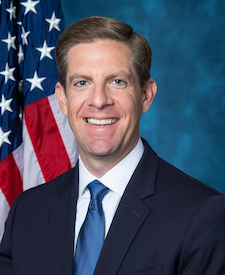
Rep. Mike Levin
Sponsored bills
Maddy summaryHR 2413, the Dental Care for Veterans Act, reclassifies dental care as standard medical services under the VA's existing benefits structure, eliminating prior restrictions that treated dental care separately. It modifies how dental appliances are procured and establishes a phased eligibility timeline: veterans already eligible for dental benefits gain immediate access, while others qualify over 1-4 years based on their current benefit status. The bill affects all veterans currently covered under VA dental programs, changing their access to care without creating new funding. Key provisions streamline dental service delivery under Title 38, aligning it with other medical benefits.
Maddy summaryHR 2414 extends CHAMPVA health coverage for children of veterans from age 21 to 26, regardless of marital status. This change directly affects children of veterans enrolled in the CHAMPVA program who would otherwise lose coverage upon turning 21. The bill amends Section 1781(c) of Title 38, U.S. Code, to update eligibility rules for medical care provided after the law's enactment. It does not impact existing coverage for children under a specific subsection (section 101(4)(A)(ii)).
Maddy summaryThis bill establishes a four-year pilot program providing free dental care to 1,500 veterans with type 2 diabetes who are enrolled in VA care but lack access to VA dental coverage, are aged 40-70, and have gum disease (periodontitis). It requires enrollment at five VA facilities, with one-third of participants having mild gum disease and two-thirds having moderate to severe cases, and mandates annual dental evaluations and health outcome tracking. The program aims to determine if timely dental treatment correlates with reduced complications from chronic conditions, collecting data for a congressional report. It does not change existing VA dental benefits but tests whether improved periodontal care lowers long-term healthcare costs for this specific veteran group.
Maddy summaryHR 1351, the "Save Oak Flat From Foreign Mining Act," repeals Section 3003 of the 2015 National Defense Authorization Act, which had mandated transferring 2,422 acres of Oak Flat in Arizona’s Tonto National Forest to foreign-owned Resolution Copper for mining. The bill withdraws this land from all mining activities, preventing Resolution Copper from using destructive block cave mining that would destroy the sacred site and harm water resources. Oak Flat, a National Register-listed Traditional Cultural Property sacred to Indigenous tribes, would be protected from a mine projected to deplete 775,000 acre-feet of groundwater over 40 years and create a 4,000-acre toxic waste dump. The legislation directly affects Resolution Copper (owned by Rio Tinto and BHP) and aims to halt the project that would obliterate cultural resources and exacerbate regional water shortages.
Freedom to Decide Act This concurrent resolution expresses the sense of Congress to (1) affirm that federal law authorizes the distribution of medication abortion, including by mail, as stated in a 2022 Department of Justice memorandum; and (2) condemn restrictions on the access and coverage of reproductive health care, including medication abortion.
Maddy summaryThis bill requires all active-duty military members' base pay to be at least $31,200 annually, effective within 30 days of enactment. It directly affects every active-duty service member by establishing a new minimum pay floor. The key mechanism mandates the Department of Defense to adjust pay rates under Title 37, U.S. Code, to meet or exceed this amount by the deadline. The change applies uniformly across all military branches without exceptions.
Maddy summaryHR 2584, the SAVE Act, creates a new federal criminal offense for assaulting or intimidating hospital employees while they're performing their duties, punishable by up to 10 years in prison, with enhanced penalties for using weapons, causing injury, or during public emergencies. The bill authorizes $25 million annually in federal grants to hospitals for violence prevention programs, including staff training, security technologies like panic buttons and video surveillance, and coordination with law enforcement. It defines "hospital" broadly to include various medical facilities such as long-term care hospitals, rehabilitation facilities, and critical access hospitals. The legislation directly affects hospital workers and medical facilities by establishing federal criminal penalties for violence against employees and providing funding to improve workplace safety. The law aims to address the rising problem of workplace violence against healthcare workers, which the bill states has increased since 2011.
Maddy summaryHR 2630, the Safe Step Act, requires group health plans and health insurance issuers to establish a clear, transparent process for patients or their doctors to request exceptions to medication step therapy protocols. These protocols typically force patients to try cheaper drugs first before covering more expensive alternatives. The bill mandates that plans must approve exceptions when prior treatments failed, delay would cause serious harm, a treatment is unsafe, or a patient is stable on a previously approved drug, with strict 72-hour (or 24-hour in emergencies) decision timelines. It also requires plans to publish the exception process online and limit documentation requests to only necessary medical information. This law directly affects health insurers, employers offering health plans, and patients using step therapy for prescription drugs.
Tax Fairness for Disaster Victims Act This bill allows individual taxpayers living in a disaster area to use earned income from a preceding taxable year for purposes of calculating the earned income tax credit. The bill applies if current year income is disrupted by a disaster and is less than the income of the preceding taxable year.