

Maddy summaryThe PRIDE Act of 2023 amends the Internal Revenue Code to replace gender-specific terms like "husband and wife" with gender-neutral language such as "married couple" or "spouses" across numerous tax code sections. This bill affects all legally married couples who file federal tax returns by updating language in over 30 sections of the tax code related to filing status, deductions, credits, and other tax matters. The bill is a language update that makes the tax code more inclusive without changing existing tax treatment for married couples. It does not alter tax rates, benefits, or policies, but ensures all provisions apply equally regardless of gender.
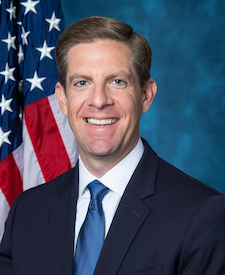
Rep. Mike Levin
Sponsored bills
Maddy summaryThe HERO Act establishes a national data system to track suicides among public safety officers, including firefighters, EMTs, police, and telecommunicators, collecting detailed statistics by age, gender, occupation, and employment status (career, volunteer, or retired). It mandates annual reports to Congress and public availability of findings to identify suicide trends and effective interventions. The bill also funds peer-support wellness programs for fire/EMS departments, behavioral health programs for healthcare providers, and resources to train mental health professionals on treating public safety personnel. All data collection and program provisions include strict privacy safeguards to protect confidentiality and prohibit using suicide data to deny survivor benefits.
Maddy summaryHR 3698, the Feed Hungry Veterans Act of 2023, amends the Food and Nutrition Act of 2008 to expand eligibility for SNAP (Supplemental Nutrition Assistance Program) benefits to more veterans. It adds four new categories of veterans who can qualify: those with a "catastrophically disabled" status under military disability law, veterans under 65 receiving a pension under specific veteran benefits law, and those meeting existing high-disability rating thresholds. This change directly affects veterans who previously did not meet the program’s eligibility criteria but now qualify under these expanded definitions. The bill takes effect on October 1, 2023, making these eligibility changes operational for SNAP enrollment.
Maddy summaryHR 3519, the Hot Foods Act of 2023, amends the Food and Nutrition Act of 2008 to allow Supplemental Nutrition Assistance Program (SNAP) benefits to be used for hot foods or hot food products ready for immediate consumption at participating retailers. This change directly affects SNAP recipients who purchase such hot foods and retailers that sell them. The key provision removes the previous exclusion of hot foods from SNAP eligibility, while adding a limit that no more than 50% of a retailer's total gross sales from SNAP can come from hot foods. The bill clarifies that hot foods can be purchased for home or immediate consumption, aligning SNAP rules with current retail practices for prepared foods.
Maddy summaryThe SAFE Act of 2023 extends a 2018 law that prohibits slaughtering animals for human consumption to include horses, donkeys, and other equine animals, such as ponies. It amends Section 12515 of the Agriculture Improvement Act of 2018 by updating the language to replace "dog or cat" with "dog, cat, or equine" in both the section title and the main prohibition. This change directly affects the livestock industry and slaughter facilities by banning the processing of equines for food. The bill modifies existing law without adding new enforcement mechanisms, closing a gap in animal protection.
Maddy summaryTim's Act establishes pay parity for federal wildland firefighters by creating special base pay rates that are higher than standard General Schedule rates, with specific percentage increases (ranging from 1.5% to 27%) for different grades. It also creates incident standby premium pay (50% of basic pay) for designated sleep/rest periods during wildfire incidents and requires rest and recuperation leave after qualifying incidents. The bill includes provisions for tracking chronic diseases through a new database, mental health support programs, and retirement benefits specifically for wildland firefighters. It directly affects federal wildland firefighters employed by the Department of Agriculture, Department of the Interior, and Tribal Firefighters who maintain specific qualifications for wildland fire management.
Maddy summaryHR 4285, titled the Protect Vulnerable Immigrant Youth Act, would amend the Immigration and Nationality Act to remove numerical caps on certain employment-based visas. Specifically, it changes two sections to add a new visa category (J) to the list of categories exempt from annual numerical limits, allowing more employment-based visas to be issued without current restrictions. This change would directly affect employers and foreign workers seeking employment-based visas under the newly designated category (J), though the bill does not specify what the (J) category entails. The bill focuses solely on adjusting visa allocation rules rather than addressing youth protection or other aspects implied by its title.
Maddy summaryThe Bonding Reform and Taxpayer Protection Act of 2023 requires oil and gas operators on federal lands and National Wildlife Refuge System lands to provide financial assurances (bonds) before starting surface-disturbing activities to cover reclamation costs. It sets minimum bond amounts of $150,000 per activity or $500,000 per state (adjusted for inflation), and mandates both interim and final reclamation plans for all operations. The bill also establishes a $0.10 per barrel fee on oil and gas production from federal lands to fund orphaned well plugging and reclamation, and creates annual inspection fees based on the number of wells (ranging from $700 to $9,800 annually). These provisions aim to ensure taxpayers aren't left bearing the cost of reclamation when operators fail to meet their obligations.
Veterans Healthcare Improvement Act This bill requires the Government Accountability Office to review and report on the budget requests for Department of Veterans Affairs medical care accounts in the President's submitted budgets for FY2024-FY2026. Medical care accounts are the following accounts of the Veterans Health Administration: Medical Services, Medical Support and Compliance, Medical Facilities, and Medical Community Care.
Maddy summaryHJRES 76 proposes renaming the Robert E. Lee Memorial in Arlington National Cemetery to the "Arlington House National Historic Site." This procedural bill would replace all official references to the memorial with the new name and repeal two prior resolutions (1955 and 1972) that established the memorial. The change affects how the site is identified in federal laws, documents, and records but does not alter its management or historical significance. The bill focuses solely on the official designation, not on policy changes or historical interpretation.