

Maddy summaryThe INSURE Act creates a federal reinsurance program to replace the National Flood Insurance Program, requiring property insurers to offer "all-perils" policies covering specific catastrophe risks like flood, wind, hurricane, wildfire, and eventually earthquake. Insurers participating in the program must implement loss prevention partnerships that encourage investments to reduce catastrophe losses, and will pay quarterly premiums to a Federal Catastrophe Reinsurance Fund. The program will phase in coverage for different perils over eight years, starting with flood coverage (beginning four years after enactment), followed by wind/hurricane (five years), severe storms/wildfire (six years), and earthquake (eight years or when feasibility reports are submitted). The bill also establishes grant programs for states to promote loss prevention investments and provide financial assistance to low-income homeowners struggling with insurance costs.
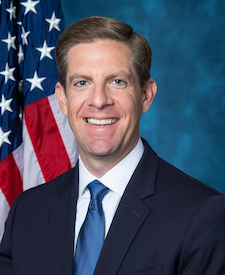
Rep. Mike Levin
Sponsored bills
Maddy summaryThe Affordable Connectivity Program Extension Act of 2024 allocates $7 billion in funding for the Affordable Connectivity Program (ACP) during fiscal year 2024. The ACP provides subsidies to low-income households to help cover the cost of internet service and connected devices like laptops or tablets. This funding ensures the program can continue supporting eligible households throughout the year, with the money remaining available until fully spent. The bill extends existing program funding without changing eligibility criteria or service requirements.
Maddy summaryThis bill clarifies when accidental radiation exposure during nuclear medicine procedures must be reported. It requires the Nuclear Regulatory Commission to revise regulations to specify that unintended irradiation from extravasation (leakage of radioactive material) must be reported if it exceeds 0.5 Sv (50 rem) to either 5 cubic centimeters of tissue or 10 square centimeters of skin. This directly affects hospitals and clinics performing nuclear medicine treatments using radioactive materials. The change sets clear, measurable thresholds for mandatory reporting, replacing ambiguous prior standards. The revised rule takes effect 18 months after the bill's enactment.
Maddy summaryThis resolution urges the Biden administration to facilitate the safe, timely, and sufficient delivery of humanitarian aid to civilians in Gaza. It specifically calls for expanding aid convoys, opening additional border crossings, providing fuel to aid organizations, establishing safe shelters, and renewing humanitarian pauses to address the severe crisis. The resolution directly affects civilians in Gaza, where infrastructure damage, contaminated water, and shortages of medical supplies have created a dire humanitarian situation. It does not create new laws but expresses Congress's position on improving aid access.
Maddy summaryThis bill designates the Elk River Trail in California's Headwaters Forest Reserve as the "Senator Dianne Feinstein Memorial Trail." It updates all official federal references - such as laws, maps, and documents - to reflect this new name. The bill directly affects the Elk River Trail and federal records mentioning it. No substantive policy changes or funding are involved; it solely honors Senator Feinstein through a trail naming designation.
Maddy summaryHR 6725, the TIER Act, amends the Transition Assistance Program (TAP) under Title 10 of the U.S. Code to improve counseling for service members separating from military service. It directly affects transitioning service members and their families by requiring counselors to assess new factors, including child care needs (like Exceptional Family Member Program enrollment), household employment status, duty station location impacts, operational tempo effects, and whether the member is an Indian or urban Indian. Key provisions update existing counseling requirements - replacing terms like "Disability" with "Potential or confirmed disability" - and add five new assessment points (subparagraphs M through Q). The bill aims to make transition planning more comprehensive by incorporating these specific household and personal circumstances. This is a policy change focused on refining the TAP counseling process, not on funding or new benefits.
Maddy summaryHR 6654, the Farewell to Foam Act of 2023, bans the sale and distribution of expanded polystyrene foam food containers, packaging peanuts ("loose fill"), and coolers starting January 1, 2026. It directly affects food service providers (like restaurants and schools), manufacturers, distributors, and retailers who sell these foam products. The bill prohibits selling these items, with enforcement starting with a written warning for first violations, followed by escalating civil penalties ($250 for a second violation, up to $1,000 for fourth+ violations), while exempting small businesses with low annual revenue from repeated penalties within a 7-day period.
Maddy summaryThis bill amends military workplace surveys to require data collection on unwanted sexual contact and indicators that victims were targeted or discriminated against due to their group status (e.g., gender, race). It directly affects military personnel by expanding the scope of information gathered in annual workplace and gender relations surveys. The key provision adds new survey questions asking about assault indicators beyond basic incidents, specifically focusing on whether victims faced targeting or discrimination. This change aims to improve data accuracy for addressing military sexual assault, without altering legal penalties or victim support services.
Maddy summaryThe Elizabeth Dole Home Care Act of 2023 increases the expenditure cap for home- and community-based care for veterans from 65% to 100% of costs, with exceptions for certain cases based on clinical need and geographic factors. It establishes new programs including Veteran-Directed Care, which allows veterans to select and manage their own in-home care services, and Home-Based Primary Care, which provides in-home health care overseen by VA providers. The bill requires improved coordination with existing programs like the Program of All-Inclusive Care for the Elderly (PACE) and mandates a centralized website with information about available services. It specifically targets veterans who would otherwise require nursing home care or face increased risk of hospitalization, and includes provisions to address home health aide shortages through pilot programs.
Maddy summaryThis bill would impose a tax on hedge funds and large real estate investors who own more single-family homes than a gradually decreasing threshold (starting at 90% of their previous year's holdings and phasing down to 0% after 9 years). The tax would be $50,000 per excess property for each year they exceed their limit. Revenue from the tax would fund a down payment assistance program that prioritizes families buying homes from these investors. The bill aims to limit large-scale investment in single-family homes by these entities while providing financial assistance to homebuyers.