

Maddy summaryThe Stand with Ukraine Act of 2024 establishes a framework for sustained U.S. security assistance to Ukraine in response to Russia's invasion. It endorses a 10-year bilateral security agreement and directs the U.S. government to provide military equipment, training, and security assistance to strengthen Ukraine's defense capabilities against Russian aggression. Key provisions include treating Ukraine as a major non-NATO ally for defense transfers, fast-tracking military sales through the Foreign Military Sales program, and creating mechanisms to prioritize defense article transfers. The bill also includes specific support for Ukraine's recovery, reconstruction, and demining efforts following the conflict. This legislation directly affects U.S. foreign policy implementation, military assistance programs, and Ukraine's ability to build a credible defense against Russian threats.
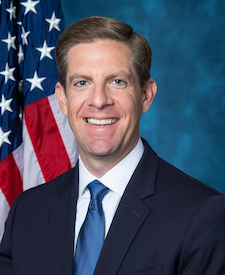
Rep. Mike Levin
Sponsored bills
Maddy summaryThe Public Land Renewable Energy Development Act of 2024 sets new national goals to increase renewable energy production on federal lands to 60% by 2030, up from 25%. The bill establishes "priority areas" for wind and solar development on federal lands with streamlined permitting processes, while requiring coordination with states and tribes to minimize impacts on wildlife, cultural resources, and recreational areas. It creates a Renewable Energy Resource Conservation Fund that will distribute 35% of revenues from renewable energy projects on federal land to conservation efforts, with 25% going to states and 25% to counties where projects are located. The legislation also updates environmental review processes and requires that new land use plans for renewable energy projects consider existing conservation needs and economic viability.
Maddy summaryThis bill temporarily expands SNAP (food assistance) eligibility for households including recently separated veterans. For 100 days after a veteran receives their discharge paperwork (DD-214), only the veteran's income is counted toward household eligibility under SNAP rules, ignoring other household members' income. It directly affects veteran households transitioning from military service during this 100-day period. The provision takes effect 90 days after the bill is enacted.
Maddy summaryHR 7490, the Hire Veterans Act, establishes a 5-year pilot program to help veterans secure jobs with federal land management agencies (like the National Park Service and Forest Service). It requires agencies to administer skills tests for veterans in 20 specific career fields (such as firefighting, ecology, and land management) and refer qualified veterans for noncompetitive hiring. Veterans who don’t initially qualify may receive agency training and retake tests until they meet requirements. The program directly affects veterans seeking federal employment in these fields, with agencies managing referrals and appointments through the Office of Personnel Management.
Maddy summaryHR 6916 requires the Government Accountability Office (GAO) to study how states outreach to veterans about SNAP benefits. Specifically, it directs the GAO to examine state efforts in high and low food insecurity areas, including coordination with Veterans Health Administration facilities and veteran service organizations (VSOs), to identify challenges and best practices for connecting eligible veterans to SNAP. The report, due within 18 months of enactment, will focus on increasing enrollment among veterans who qualify but are not currently participating. This bill directly affects veterans who may be eligible for SNAP but face barriers to accessing benefits.
Maddy summaryThis bill (HR 8896) allows veterans awarded the Purple Heart for service after September 11, 2001, to transfer unused portions of their Post-9/11 GI Bill educational benefits to family members. Eligible veterans can transfer up to 36 months of unused benefits to a spouse or child, with children needing to complete high school or turn 18 before using the benefits. The transfer can be modified or revoked at any time, and transferred benefits cannot be treated as marital property in divorce. This expands existing transfer options, which previously excluded Purple Heart recipients, to include them under the same rules as other veterans.
Maddy summaryHR 6531, the TRAIN VA Employees Act, requires the Department of Veterans Affairs (VA) to create mandatory training for all VA supervisors and certain other designated employees. The training program, to be developed within one year of enactment, covers key supervisor duties like performance appraisals, addressing workplace issues (including hostile environments), and managing employee conduct. All affected employees must complete the initial training within 18 months and refresher sessions every two years. The bill directly impacts VA supervisors and specific leadership roles, focusing on improving management practices through structured, adult-learning-based instruction.
Maddy summaryHRES 1409 is a symbolic House resolution condemning Nicolás Maduro's regime for alleged election fraud in Venezuela's July 28, 2024 presidential election. It recognizes opposition candidate Edmundo González Urrutia as the president-elect based on observed vote tallies showing his decisive victory, and condemns the regime's refusal to release transparent results. The resolution calls for new sanctions against Maduro and his allies, demands respect for the election outcome, and urges diplomatic pressure to support Venezuela's democratic transition. This resolution directly addresses the Maduro regime's actions and expresses U.S. solidarity with Venezuelan voters and the opposition.
Maddy summaryHR 9299, the IRAN Act, requires the U.S. Secretary of State to lead federal efforts promoting internet freedom and access to information in Iran. It amends a 2012 law to mandate specific strategy updates, including evaluating how activists use virtual private networks (VPNs) and satellite tech, developing guidance to prevent sanctions from blocking internet tools for Iranians, and planning to bypass government internet blackouts. The bill directs the State Department to coordinate with Treasury, Commerce, USAID, and intelligence agencies to implement these updates. This affects U.S. government agencies' coordination and aims to improve internet access for Iranian civil society activists.
Maddy summaryHR 9253, the National Gun Violence Research Act, repeals longstanding restrictions that blocked federal funding for gun violence research, including the 1996 Dickey Amendment. It establishes a National Gun Violence Research Program to support scientific studies on gun-related injury and death, with $200 million authorized over six years (2025-2030). The program directs agencies like the CDC, NIH, and National Institute of Justice to fund research, train researchers, develop safety standards, and share gun trace data with researchers through new protocols. This bill directly affects federal research institutions and public health agencies by enabling evidence-based study of gun violence causes and prevention strategies.