

Maddy summaryThe Aquatic Biodiversity Preservation Act of 2025 directs the Secretary of Commerce to establish a program mapping the genetic code (genome) of priority aquatic species, including endangered fish, species linked to harmful algal blooms, and culturally significant species identified by tribes or Native Hawaiian organizations. Covered entities like federal agencies, states, tribes, universities, and nonprofits will collect samples, sequence genomes to high standards, and catalog data. All sequenced genomes must be made publicly available within 360 days (except for tribal-led projects, which retain control over data sharing), with $2 million annually allocated for 2025-2031 to fund this effort. The law aims to support conservation, management, and enforcement by creating a shared genetic database for scientists and policymakers.
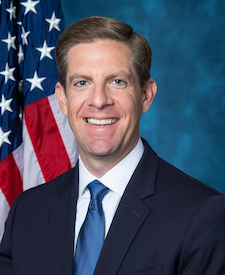
Rep. Mike Levin
Sponsored bills
Maddy summaryHR 1330 establishes the Smithsonian National Museum of the American Latino, authorizing its location within the National Mall's "Reserve" area. The bill requires the Smithsonian Board to coordinate with federal agencies managing potential museum sites, including notifying relevant congressional committees before land transfers. It mandates that the museum's exhibits and programs accurately represent the diverse cultures, histories, and viewpoints of Hispanic and Latino communities in the U.S., seeking input from a broad range of community experts. The Smithsonian must also submit regular reports to Congress detailing compliance with these representation requirements.
More Homes on the Market Act This bill increases the amount of gain from the sale of a principal residence that an individual may exclude from gross income (for federal tax purposes). Under the bill, an individual may exclude from gross income gain from the sale of a principal residence of up to $500,000 (currently $250,000), and taxpayers who are married and file a joint federal income tax return may exclude up to $1 million (currently $500.000). The bill also requires these amounts to be adjusted annually for inflation.
Maddy summaryThe Office of Gun Violence Prevention Act of 2025 would create a new office within the Department of Justice to coordinate federal efforts on reducing gun violence. The office, led by a Director appointed by the Attorney General, would integrate existing DOJ programs, evaluate data gaps, and develop evidence-based recommendations for Congress and the President. It would also establish an advisory council including survivors of gun violence, public health officials, and community representatives to guide its work. The office would produce annual reports detailing gun violence trends and policy proposals, while collaborating with agencies like Health and Human Services and the FBI.
Maddy summaryThis bill proposes a constitutional amendment stating that only "natural persons" (living humans) have rights protected by the U.S. Constitution, explicitly denying constitutional rights to corporations, LLCs, and other artificial entities. It would require governments to regulate campaign contributions and spending to prevent money from influencing elections, banning the view that spending to influence elections constitutes protected speech under the First Amendment. The amendment would not affect the constitutional right to a free press. This change would directly impact how corporations and other non-human entities can legally challenge laws or regulations in court.
United States-Israel Defense Partnership Act of 2025 This bill requires or authorizes certain actions to increase defense-related cooperation between the United States and Israel. Specifically, the bill requires the Department of Defense (DOD) to establish a cooperative program, with the concurrence of Israel's Ministry of Defense (MOD), to develop and deploy advanced technologies for countering unmanned systems that threaten the United States and Israel; establish in Israel an office of the Defense Innovation Unit (an organization that focuses on rapidly fielding and scaling commercial technology across the U.S. military); and seek to engage Israel's MOD on the ascension of Israel into the national technology and industrial base (currently defined in law as the persons and organizations engaged in research, development, production, integration, services, or information technology activities conducted within the United States, the United Kingdom, Australia, New Zealand, and Canada). The bill authorizes DOD, upon request of Israel's MOD, to jointly conduct research, development, test, and evaluation (RDT&E) of emerging technologies such as artificial intelligence and robotics to meet defense challenges. Additionally, the bill extends the authority for DOD to (1) carry out RDT&E on a joint basis with Israel to establish anti-tunnel and counter unmanned aerial systems capabilities through 2028, and (2) transfer defense articles intended for use as reserve stocks for Israel through January 1, 2029.
Maddy summaryHR 1269, the Honoring Our Fallen Heroes Act of 2025, expands benefits for public safety officers (like police and firefighters) who develop certain cancers linked to their work. It adds 22 specific cancers - including lung, mesothelioma, and breast cancer - to the list of conditions presumed to be "exposure-related" and sustained in the line of duty. This presumption applies if the officer served at least 5 years, was diagnosed with the cancer within 15 years after last active duty, and the cancer directly caused death or permanent disability. The bill also establishes a process for adding new cancers every 3 years based on medical evidence from agencies like NIOSH, and allows claims to be filed within 3 years of the law's enactment.
Maddy summaryHR 1268 updates the legal definition of U.S. customs waters in two key laws (the Tariff Act of 1930 and the Anti-Smuggling Act) to align with current international maritime standards. It replaces the outdated "four leagues from the coast" language with specific references to the U.S. territorial sea (per Presidential Proclamation 5928, 1988) and contiguous zone (per Presidential Proclamation 7219, 1999). This change directly affects U.S. Customs and Border Protection enforcement activities in coastal waters. The bill makes no new policy or tax changes - it only clarifies existing legal boundaries for customs jurisdiction. The update takes effect upon the bill's enactment.
Maddy summaryHR 1242, the "Hire Veterans Act," creates a 5-year pilot program to help veterans secure jobs with five federal land management agencies: the Forest Service, National Park Service, Fish and Wildlife Service, Bureau of Land Management, and Bureau of Reclamation. The bill requires these agencies to administer tests assessing veterans' strengths in 20 specific career fields (like firefighting, ecology, land management, and engineering) and refer qualified veterans for noncompetitive appointments. Veterans who don't initially qualify must complete agency training and retake the test until they meet requirements. The program aims to streamline hiring for veterans with relevant skills while providing pathways for those needing additional preparation.
Maddy summaryHR 1196 prohibits using federal funds to eliminate the U.S. Agency for International Development (USAID) as an independent agency, as defined by law. It requires the Secretary of State to certify annual compliance with this restriction to the House Foreign Affairs and Senate Foreign Relations committees. The bill directly affects USAID's operational status and U.S. foreign aid programs by preventing congressional or executive actions that would dismantle or merge the agency, maintaining its role in U.S. international development efforts.