Veteran Eligibility for Necessities To Undertake Rewarding Entrepreneurship Act or the VENTURE Act This bill expands eligibility for self-employment assistance under the Veteran Readiness and Employment Program to include certain veterans who have a service-connected disability or employment handicap in addition to those with the most severe service-connected disabilities.
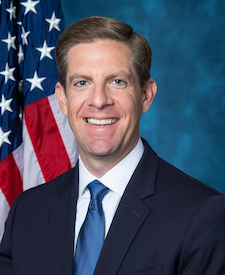
Rep. Mike Levin
Sponsored bills
Federal Contracting for Peace and Security Act This bill requires executive agencies to terminate their contracts with companies conducting business operations in Russia. This requirement ends when Russia takes steps to restore the safety, sovereignty, and condition of Ukraine. The bill shall not apply to the procurement of products or services for (1) the benefit, either directly or through the efforts of regional allies, of Ukraine; or (2) humanitarian purposes to meet basic human needs. The bill provides for a waiver where in the national interest of the United States.
Reporting Efficiently to Proper Officials in Response to Terrorism Act of 2021 or the REPORT Act This bill requires specified federal agencies to report to Congress concerning any act of terrorism that occurs in the United States. Whenever an act of terrorism occurs, the Department of Homeland Security (DHS), the Department of Justice (DOJ), the Federal Bureau of Investigation (FBI), and, as appropriate, the National Counterterrorism Center (NCC), must submit to the appropriate congressional committees, as specified by this bill, an unclassified report not later than one year after the completion of the investigation by the primary agency conducting the investigation concerning the terrorist act. Such report shall (1) include a statement of the facts of the act of terrorism that are known at the time of such report; (2) identify any gaps in homeland or national security that could be addressed to prevent future acts of terrorism; and (3) include any recommendations for additional measures that could be taken to improve homeland or national security, such as changes in law enforcement practices or changes in law. If DHS, DOJ, and the FBI or, as appropriate, the NCC, determines any information required to be reported could jeopardize an ongoing investigation or prosecution, such entities (1) may withhold from reporting such information, and (2) shall notify the appropriate congressional committees of that determination.

Ensuring Lasting Smiles Act This bill requires private health insurance plans to cover diagnosis and treatment of congenital anomalies and birth defects, such as reconstructive services and items. Coverage must include services and items that functionally improve, repair, or restore any body part that is medically necessary for normal bodily functions or appearance, as determined by the treating physician. Coverage limits and cost-sharing requirements for such services and items may not be more restrictive than those applicable to all medical and surgical benefits under the plan.
Marijuana Opportunity Reinvestment and Expungement Act or the MORE Act This bill decriminalizes marijuana. Specifically, it removes marijuana from the list of scheduled substances under the Controlled Substances Act and eliminates criminal penalties for an individual who manufactures, distributes, or possesses marijuana. The bill also makes other changes, including the following: replaces statutory references to marijuana and marihuana with cannabis , requires the Bureau of Labor Statistics to regularly publish demographic data on cannabis business owners and employees, establishes a trust fund to support various programs and services for individuals and businesses in communities impacted by the war on drugs, imposes an excise tax on cannabis products produced in or imported into the United States and an occupational tax on cannabis production facilities and export warehouses, makes Small Business Administration loans and services available to entities that are cannabis-related legitimate businesses or service providers, prohibits the denial of federal public benefits to a person on the basis of certain cannabis-related conduct or convictions, prohibits the denial of benefits and protections under immigration laws on the basis of a cannabis-related event (e.g., conduct or a conviction), establishes a process to expunge convictions and conduct sentencing review hearings related to federal cannabis offenses, directs the Government Accountability Office to study the societal impact of state legalization of recreational cannabis, directs the National Highway Traffic Safety Administration to study methods for determining whether a driver is impaired by marijuana, directs the National Institute for Occupational Safety and Health to study the impact of state legalization of recreational cannabis on the workplace, and directs the Department of Education to study the impact of state legalization of recreational cannabis on schools and school-aged children.
This bill allows a deduction from gross income (above the line deduction) for attorney fees and court costs awarded with respect to a qualifying wildfire disaster (i.e., any forest or range fire that is a federally declared disaster, occurs in a disaster area, and occurs in 2015 or later). The bill excludes from the gross income of a taxpayer, for income tax purposes, amounts paid to compensate victims for losses or damages in connection with a qualifying wildfire disaster.
Veteran Deportation Prevention and Reform Act This bill provides protections from deportation for noncitizen veterans and contains other related provisions. U.S. Immigration and Customs Enforcement (ICE) must identify each individual in removal proceedings who is a member of the Armed Forces, a veteran, or a noncitizen spouse or minor child of such an individual. That individual may not be removed until (1) ICE has transferred that individual's case files to an advisory committee created under this bill, and (2) that committee has provided recommendations as to the outcome of the case. The Department of Homeland Security (DHS) shall create a system to share information across various agencies about noncitizen veterans who may be subject to removal to ensure that such a veteran's military service is taken into consideration in immigration-related cases. DHS shall also create a system for (1) identifying noncitizens who are or may be veterans, and (2) collecting data relating to such noncitizens who are in removal proceedings or may have been removed. DHS and the Department of Defense must jointly carry out a program to naturalize a noncitizen (and the noncitizen's spouse and minor children) who serves on active duty in the Armed Forces and is not otherwise ineligible for citizenship if that noncitizen submits an application. DHS shall also establish a program for eligible noncitizen veterans (generally those not convicted for certain serious crimes) to obtain permanent resident status. Similarly, the Department of Justice shall provide permanent resident status to such an eligible veteran in removal proceedings or subject to a final order of removal.
Forced Arbitration Injustice Repeal Act of 2022 or the FAIR Act of 2022 This bill prohibits a predispute arbitration agreement from being valid or enforceable if it requires arbitration of an employment, consumer, antitrust, or civil rights dispute.
Dr. Lorna Breen Health Care Provider Protection Act This bill establishes grants and requires other activities to improve mental and behavioral health among health care providers. Specifically, the Department of Health and Human Services (HHS) must award grants to hospitals, medical professional associations, and other health care entities for programs to promote mental health and resiliency among health care providers. In addition, HHS may award grants for relevant mental and behavioral health training for health care students, residents, or professionals. Additionally, HHS must conduct a campaign to (1) encourage health care providers to seek support and treatment for mental and behavioral health concerns, and (2) disseminate best practices to prevent suicide and improve mental health and resiliency among health care providers. HHS must also study and develop policy recommendations on improving mental and behavioral health among health care providers, removing barriers to accessing care and treatment, and identifying strategies to promote resiliency. Furthermore, the Government Accountability Office must report on the extent to which relevant federal grant programs address the prevalence and severity of mental health conditions and substance use disorders among health care providers.
This bill requires the Department of Defense (DOD) to develop a feedback tool through which members of the Armed Forces and their spouses may anonymously identify, rate, and compare housing under the jurisdiction of DOD, including privatized military housing.