Transition Improvement by Estimating Risk Act or the TIER Act This bill adds additional factors for the design of the counseling pathways to address the needs of members of the Armed Forces under the Transition Assistance Program.
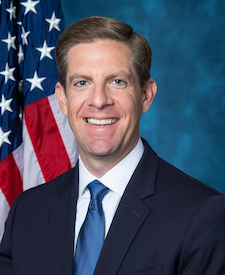
Rep. Mike Levin
Sponsored bills
Domestic Terrorism Prevention Act of 2022 This bill establishes new requirements to expand the availability of information on domestic terrorism, as well as the relationship between domestic terrorism and hate crimes. It authorizes domestic terrorism components within the Department of Homeland Security (DHS), the Department of Justice (DOJ), and the Federal Bureau of Investigation (FBI) to monitor, analyze, investigate, and prosecute domestic terrorism. The domestic terrorism components of DHS, DOJ, and the FBI must jointly report on domestic terrorism, including white-supremacist-related incidents or attempted incidents. DHS, DOJ, and the FBI must review the anti-terrorism training and resource programs of their agencies that are provided to federal, state, local, and tribal law enforcement agencies. Additionally, DOJ must make training on prosecuting domestic terrorism available to its prosecutors and to assistant U.S. attorneys. It creates an interagency task force to analyze and combat white supremacist and neo-Nazi infiltration of the uniformed services and federal law enforcement agencies. Finally, it directs the FBI to assign a special agent or hate crimes liaison to each field office to investigate hate crimes incidents with a nexus to domestic terrorism.
Relief for Restaurants and other Hard Hit Small Businesses Act of 2022 This bill addresses support for restaurants, arts and entertainment venues, and small businesses impacted by the COVID-19 pandemic. The bill provides an additional $42 billion in FY2021 for the Restaurant Revitalization Fund and gives priority to previous applicants who have not received a grant. The Small Business Administration (SBA) must provide to applicants an explanation for denied applications, establish a reconsideration process for denied applications, and institute an audit and oversight plan with respect to grant recipients. Additionally, the bill establishes the Hard Hit Industries Award Program for small businesses that suffered a pandemic-related revenue loss of 40% or more. Aggregate grant amounts are capped at $1 million. Funds may be used for expenses including mortgage, rent, and utility payments and payroll. SBA must prioritize entities that have experienced significant pandemic-related revenue loss, with first priority going to those that experienced a loss of at least 80%, and second priority going to those that experienced a loss of at least 60%. Finally, the bill extends to March 11, 2023 (or a later date as determined by the SBA), the time frame during which Shuttered Venue Operators Grant recipients may use grant funds to cover their expenses.
Bipartisan Background Checks Act of 2021 This bill establishes new background check requirements for firearm transfers between private parties (i.e., unlicensed individuals). Specifically, it prohibits a firearm transfer between private parties unless a licensed gun dealer, manufacturer, or importer first takes possession of the firearm to conduct a background check. The prohibition does not apply to certain firearm transfers or exchanges, such as a gift between spouses in good faith.
Enhanced Background Checks Act of 2021 (Sec. 2) This bill revises background check requirements applicable to proposed firearm transfers from a federal firearms licensee (e.g., a licensed gun dealer) to an unlicensed person. Specifically, it increases the amount of time, from 3 business days to a minimum of 10 business days, that a federal firearms licensee must wait to receive a completed background check prior to transferring a firearm to an unlicensed person. (This type of transaction is often referred to as a default proceed transaction.) If a submitted background check remains incomplete after 10 business days, then the prospective purchaser may submit a petition for a final firearms eligibility determination. If an additional 10 days elapse without a final determination, then the federal firearms licensee may transfer the firearm to the prospective purchaser. (Sec. 3) The Government Accountability Office must report on the extent to which the changes have prevented firearms transfers to prohibited persons. (Sec. 4) The Federal Bureau of Investigation must report on the number of petitions it receives for final federal firearms determinations. (Sec. 5) The Department of Justice, in consultation with the National Resource Center on Domestic Violence and Firearms, must report on further amendments to the background check process that would likely reduce the risk of death or great bodily harm to victims of domestic violence, domestic abuse, dating partner violence, sexual assault, and stalking.

People Over Petroleum Act This bill repeals or limits certain fossil fuel subsidies for large oil companies. It also allows individual taxpayers a 2022 gas prices rebate for the first taxable year beginning in 2022. The bill defines 2022 gas prices rebate as the sum of $500 ($1,000 for joint returns), plus $500 times the number of taxpayer dependents who had attained the age of 16 as of the end of the taxable year. The bill allows advance payments of the rebate and requires taxpayers to provide a Social Security account number on their tax returns.
Plastic Pellet Free Waters Act This bill requires the Environmental Protection Agency to issue a final rule that prohibits certain discharges of plastic pellets and other preproduction plastic into waters of the United States.
Aviation-Impacted Communities Act This bill addresses noise mitigation for aviation-impacted communities. ( Aviation-impacted community is defined as a community that is located not more than one mile from any point at which a commercial or cargo jet route is 3,000 feet or less above ground level.) Specifically, the bill expands Airport Improvement Program noise mitigation program funding for aviation-impacted communities that are not currently within the 65 day-night average sound level (DNL) standard; requires the Federal Aviation Administration (FAA) to enter into an agreement with the National Academy of Sciences to conduct a study that summarizes the relevant literature and studies done on aviation impacts worldwide and focuses on large hub commercial airports and surrounding communities, including communities currently outside of the 65 DNL contour; directs the FAA to conduct outreach to aviation-impacted communities to inform them of the opportunity to be a designated community; requires the FAA to devise an action plan that alleviates or addresses the concerns of a designated community; and provides grants for necessary noise mitigation in a designated community for residences, hospitals, nursing homes, adult or child day care centers, schools, and places of worship.
Water Efficiency, Conservation, and Sustainability Act of 2022 This bill establishes multiple grants that support activities to incentivize efficient water use by customers of public water systems, reduce water losses and leaks in water systems, and promote the adoption of water-efficient plumbing codes.
Cattle Price Discovery and Transparency Act of 2022 This bill requires the Department of Agriculture (USDA) to take various actions to address transparency in contract terms and pricing in the cattle industry. Among these requirements, USDA must maintain a publicly available library or catalog of contracts entered into between meat packers and livestock producers for the purchase of cattle, including any schedules of premiums or discounts associated with the contracts and other specific details. USDA must make this information available to producers and other interested parties in a monthly report. The bill further requires USDA to establish five to seven regions encompassing the entire continental United States that reasonably reflect similar fed cattle purchase practices for processing plants and establish mandatory minimums for each region (i.e., the minimum percentage of cattle purchases that are required to be made through approved pricing mechanisms from producers that are not packers). Under the bill, approved pricing mechanisms are generally purchases of fed cattle made through a negotiated purchase, through a negotiated grid purchase, at a stockyard, or through trading systems or platforms where multiple buyers and sellers can regularly make and accept bids and offers. The bill also establishes a maximum penalty for mandatory minimum violations by covered packers. Under the bill, a covered packer is a packer that has slaughtered an average of 5% or more of the number of fed cattle slaughtered nationally during the immediately preceding five calendar years.