

Zero-Emission Vehicles Act of 2022 or the ZEVs Act of 2022 This bill requires the Environmental Protection Agency (EPA) to establish a zero-emission passenger vehicle standard. Specifically, the bill sets a schedule for increasing the percentage of zero-emission vehicles a vehicle manufacturer delivers for sale, culminating in a requirement to sell only zero-emission vehicles from 2035 on. The bill also requires the EPA to establish a zero-emission vehicle credit program that approves one zero-emission vehicle credit for each zero-emission vehicle delivered for sale in the United States and partial credits for qualified electric vehicles based on the estimated proportion of the mileage driven on the battery. Manufacturers that fail to meet the minimum required percentage of zero-emission vehicle sales must submit to the EPA a quantity of zero-emission vehicle credits sufficient to offset the excess. Credits may also be sold, transferred, exchanged, or retired in certain circumstances. The bill imposes civil penalties for the failure to comply with zero-emission vehicle credit standards, with collected penalties being deposited into the Highway Trust Fund. After 2035, the EPA must issue injunctions on the manufacture of passenger vehicles other than zero-emission vehicles.
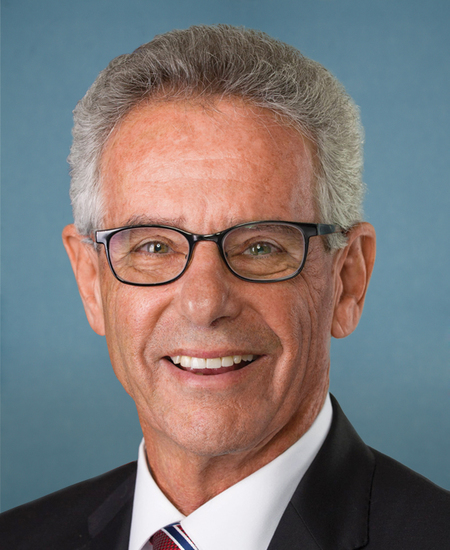
Rep. Alan S. Lowenthal
Sponsored bills
Stamp Out Invasive Species Act This bill directs the U.S. Postal Service to issue and sell a Combating Invasive Species Semipostal Stamp. Proceeds from the sale of the stamp must be transferred in equal proportion to the Department of the Interior and the Department of Agriculture for combating invasive species. (Invasive species are nonnative species whose introduction poses a serious threat to natural ecosystems and causes detrimental economic damage to local communities.) The stamp must be made available to the public for two years.
Equal Access to Green cards for Legal Employment Act of 2022 or the EAGLE Act of 2022 This bill modifies requirements related to employment-based visas and addresses related issues. The bill increases the per-country cap on family-based immigrant visas from 7% of the total number of such visas available that year to 15% and eliminates the per-country cap for employment-based immigrant visas. The bill establishes transition rules for employment-based visas such as (1) reserving a percentage of EB-2 (workers with advanced degrees or exceptional ability) and EB-3 (skilled and other workers) visas for individuals not from the two countries with the largest number of recipients of such visas, and (2) allotting a number of visas for professional nurses and physical therapists. The bill imposes additional requirements on an employer seeking an H-1B visa, such as prohibiting (1) an employer from advertising that a position is only open to H-1B applicants or that H-1B applicants are preferred, and (2) certain employers from having more than half of their employees as nonimmigrant visa workers. The Department of Labor shall create a publicly available website where an employer seeking an H-1B visa must post certain information about the open position. The bill also expands Labor's authority to review and investigate H-1B applications for fraud or misrepresentations. The bill also allows certain aliens to obtain lawful permanent resident status if the alien (1) is in the United States as a nonimmigrant, (2) has an approved immigrant visa petition, and (3) has waited at least two years for a visa.
Boundary Waters Wilderness Protection and Pollution Prevention Act This bill withdraws certain federal lands and waters in Minnesota from mining and related activities. Specifically, the bill withdraws approximately 234,328 acres of federal land and waters in a specified area in the Rainy River Watershed of Superior National Forest from entry, appropriation, and disposal under the public land laws; location, entry, and patent under the mining laws; and operation of the mineral leasing, mineral materials, and geothermal leasing laws. The area is adjacent to the Boundary Waters Canoe Area Wilderness and the Boundary Waters Canoe Area Wilderness Mining Protection Area. Land or interest in land within such area that is acquired by the United States shall be immediately withdrawn in accordance with this bill. The Forest Service is authorized to permit the removal of sand, granite, iron ore, and taconite from national forest system lands within such area if the removal is not detrimental to the water quality, air quality, and health of forest habitat within the Rainy River Watershed.
Offshore Pipeline Safety Act This bill establishes requirements to address the environmental risks of decommissioned oil and gas pipelines on the seafloor. Specifically, the bill requires the Bureau of Safety and Environmental Enforcement (BSEE) to finalize regulations proposed in 2007 related to offshore pipelines. The regulations must require owners of oil and gas pipelines to provide for biannual, third-party inspections of pipelines and to equip pipelines with leak detection systems or devices. Further, the BSEE must issue regulations to charge an annual fee on such owners for the purpose of providing the BSEE with funds to decommission or remove offshore pipelines in the event the owner files for bankruptcy. When determining whether to permit an owner to decommission such pipelines, the BSEE must consider the navigational hazards, any interferences with other uses of the Outer Continental Shelf, and the environmental impacts of the pipelines. In addition, the BSEE must continually monitor the condition and location of all oil and gas pipelines that have been decommissioned and remain in place. If the BSEE identifies an exposed segment of any active or decommissioned pipeline, then it must either remove the pipeline from the ocean or ensure it is properly decommissioned and does not pose a threat. If a segment of any active pipeline is exposed or shifts, then the BSEE must resecure the segment to the sea floor.
Transparency in Energy Production Act of 2021 This bill requires certain disclosures by entities seeking a lease or holding a lease to develop renewable energy operations or fossil fuel operations on public lands or Indian lands or any operation using any right-of-way or special use permit that would cross public lands, Indian lands, or national forests that would facilitate fossil fuel development. The disclosures are those described in the Sustainability Accounting Standard for the Renewable Resources and Alternative Energy Sector or the Extractives and Mineral Processing Sector. Every two years, the Department of the Interior and the Department of Agriculture must report to Congress on such operations, including greenhouse gas emissions, air quality, water management, biodiversity impacts, production, and the number of sites. For renewable energy operations on public lands or Indian lands, the report must include greenhouse gas emissions that would result from the production of the same amount of energy using fossil fuels.
Bonding Reform and Taxpayer Protection Act of 2021 This bill revises bonding requirements for oil and gas development on public land leased from the federal government. Such bonds are required to ensure oil and gas developers have adequate financial resources for implementing reclamation plans to restore public land after oil and gas development (e.g., drilling operations) ceases. Specifically, the bill increases the bond amounts that oil and gas developers must provide prior to conducting surface-disturbing activities and requires such amounts to adjust at least once every three years for inflation. In addition, the bill sets fees to cover the cost for inspection and enforcement with respect to such leases. The bill also requires the Bureau of Land Management (BLM) and the U.S. Forest Service (USFS) to establish uniform standards for all interim and final reclamation plans. BLM and USFS may not release any bond amounts until the standards have been met by oil and gas developers and the inspection fees have been paid. Finally, the bill gives the U.S. Fish and Wildlife Service the authority to obtain and retain adequate financial assurances (e.g., bonds) from nonfederal entities to repair potential damages to resources of the National Wildlife Refuge System prior to the commencement of activities related to mineral development, such as oil and gas operations.
Ending Taxpayer Welfare for Oil and Gas Companies Act of 2021 This bill addresses royalties related to the development of federal energy resources. Among other requirements, the bill increases the onshore royalty rates for new oil, gas, and coal leases; increases onshore rental rates for oil and gas leasing; modifies the current onshore oil and gas minimum bid from $2 to $10 and requires it to be adjusted every four years for inflation; and increases inspection fees and penalties on oil and gas operators.
Restoring Community Input and Public Protections in Oil and Gas Leasing Act of 2021 This bill modifies several provisions related to oil and gas leasing on public lands. Among other requirements, the bill replaces the competitive auction process with a competitive-sealed bidding process. It also eliminates non-competitive bidding. Additionally, the bill increases royalty rates, rental rates, and the minimum bid amount. Further, the bill creates a fee for nominating lands for leasing. Lease sales must be held in each state no more than three times per year instead of quarterly. The bill also decreases lease term durations from 10 to 5 years. Certain lease information must be made available on public websites, including the names of all current and former lessees and operators. The bill also adds a number of new provisions related to protection of private surface estate owners. Finally, the bill establishes requirements to protect water resources, including by requiring oil or gas operators to replace certain water supplies affected by drilling, hydraulic fracturing (i.e., fracking), or production operations. In addition, the Bureau of Land Management must issue regulations governing the use of fracking under oil and gas leases for federal lands. The regulations must require (1) baseline water testing, and (2) public disclosure of each chemical used for fracking.
This resolution expresses that the House of Representatives is committed to building upon the 20 years of success of the George McGovern-Robert Dole International Food for Education and Child Nutrition Program, complementing humanitarian assistance efforts and development programs through the continued implementation of the McGovern-Dole Program to address global food insecurity and create conditions for peace and stability, and supporting U.S. farmers, millers, shippers, and commodity groups that provide agricultural commodities for use in the McGovern-Dole Program to help combat global malnutrition and food insecurity and advance global education.