

State, Local, Tribal, and Territorial Fiscal Recovery, Infrastructure, and Disaster Relief Flexibility Act This bill allows states, tribes, territories, and localities to use certain COVID-19 relief funds for new categories of spending, including for natural disasters and infrastructure projects. It also makes changes to expenditure deadlines and other aspects of this funding. Specifically, recipients may use funds for emergency relief from natural disasters and associated negative economic impacts of natural disasters. In addition, recipients may use a portion of their COVID-19 relief funds for designated infrastructure projects, such as nationally significant freight and highway projects. Furthermore, the bill allows recipients to expend COVID-19 relief funds on these types of infrastructure projects until September 30, 2026. Under current law, recipients must expend the funds by December 31, 2024. Other changes in the bill include (1) modifying eligibility and allocation requirements for funding set aside for counties and Indian tribes that are near public lands, (2) allowing Indian tribes an additional year to expend their COVID-19 relief funds, and (3) establishing a process for government entities to decline COVID-19 relief funds and requiring any declined funds to be used to reduce the federal deficit.
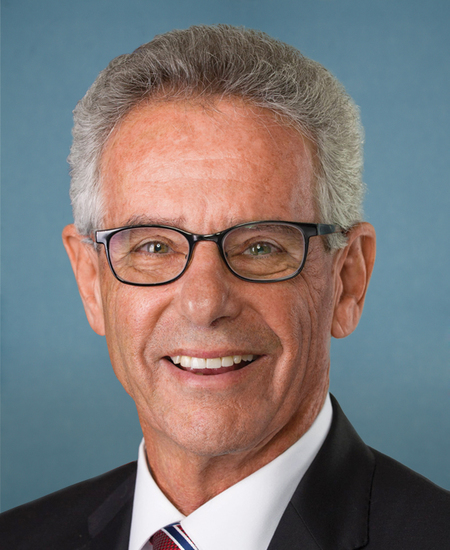
Rep. Alan S. Lowenthal
Sponsored bills
Caring for Survivors Act of 2021 This bill increases the monthly rate of dependency and indemnity compensation payable to surviving spouses through the Department of Veterans Affairs. The bill also adjusts the amount payable to surviving spouses and children of veterans who were rated as totally disabled for a period of less than 10 years before their death.
This concurrent resolution supports the goals and ideals of the National Day of Silence (during which students vow to remain silent to bring attention to the harassment and discrimination faced by lesbian, gay, bisexual, transgender, queer and questioning individuals in schools).
This resolution calls for the creation of a Green New Deal with the goals of achieving greenhouse gas and toxic emissions reductions needed to stay under 1.5 degrees Celsius of warming; establishing millions of high-wage union jobs and ensuring economic security for all; investing in infrastructure and industry; securing clean air and water, climate and community resiliency, healthy food, access to nature, and a sustainable environment for all; and promoting justice and equality. The resolution calls for accomplishment of these goals through a 10-year national mobilization effort. The resolution also enumerates the goals and projects of the mobilization effort, including building smart power grids (i.e., power grids that enable customers to reduce their power use during peak demand periods); upgrading all existing buildings and constructing new buildings to achieve maximum energy and water efficiency; removing pollution and greenhouse gas emissions from the transportation and agricultural sectors; cleaning up existing hazardous waste and abandoned sites; ensuring businesspersons are free from unfair competition; and providing higher education, high-quality health care, and affordable, safe, and adequate housing to all.
Honduras Human Rights and Anti-Corruption Act of 2021 This bill temporarily imposes sanctions and other penalties on Honduran president Juan Orlando Hernandez and the government of Honduras for systemic corruption and human rights violations, with particular focus on the Honduran police and military. Specifically, the President must impose asset- and visa-blocking sanctions on Juan Orlando Hernandez due to his corrupt practices, including the use of the state apparatus to protect and facilitate drug trafficking. Additionally, the President must prohibit, within 30 days, the issuance of licenses to export defense articles and services and specified munitions to the Honduran police or military. The bill also (1) makes Honduras ineligible for security assistance to equip and train police and military, and (2) requires U.S. representatives at multilateral development banks to oppose any loans for Honduran police or military. Furthermore, the Department of the Treasury must instruct U.S. leadership of international financial institutions and the U.S. International Development Finance Corporation to promote human rights due diligence and risk management in any loan, grant, policy, or strategy related to Honduras. The sanctions and other penalties put in place under this bill terminate in five years but may be lifted earlier if specified conditions are met.
Green New Deals for Cities Act of 2021 This bill authorizes the Department of Housing and Urban Development to provide funding to states, local governments, or Native American nations to carry out Green New Deal projects, such as projects to clean up pollution, climate adaptation measures, or conservation projects on family farms. In order to receive such funding, a state, local government, or Native American nation must have a local Green New Deal program proposal and meet other requirements as specified by the bill. A proposal must contain certain commitments, including a commitment to zero greenhouse gas emissions by 2030 through a fair and just transition for all communities and workers.
Gay and Trans Panic Defense Prohibition Act of 2021 This bill generally prohibits a federal criminal defendant from asserting, as a defense, that the nonviolent sexual advance of an individual or a perception or belief of the gender, gender identify or expression, or sexual orientation of an individual excuses or justifies conduct or mitigates the severity of an offense.
Maddy summaryHR 2584, the Judiciary Act of 2021, would change the structure of the U.S. Supreme Court by increasing the number of associate justices from eight to twelve. This bill directly affects the Supreme Court's composition and operations, requiring a quorum of eight justices instead of six to conduct business. The key provision amends Title 28 of the U.S. Code to reflect these numerical changes to the Court's membership and quorum requirements. This is a procedural change to the Court's statutory structure, not a policy affecting the public.
Khalid Jabara and Heather Heyer National Opposition to Hate, Assault, and Threats to Equality Act of 2021 or the Jabara-Heyer NO HATE Act of 2021 This bill creates grants for state and local governments to combat hate crimes. It also authorizes additional penalties for hate crime offenses. Specifically, it establishes grants for states to create state-run hate crimes reporting hotlines. It also authorizes grants for states and local governments to implement the National Incident-Based Reporting System and to conduct law enforcement activities or crime reduction programs to prevent, address, or respond to hate crimes. Finally, in the case of an individual convicted of a hate crime offense and placed on supervised release, the bill allows a court to order that the individual participate in educational classes or community service as a condition of supervised release.
Prevent Gun Trafficking Act This bill establishes new federal criminal offenses for gun trafficking and related conduct. First, the bill establishes a stand-alone federal criminal offense for gun trafficking. A violation is punishable by a fine, a prison term of up to 10 years, or both. The bill also authorizes the seizure and forfeiture of the firearms and ammunition involved in the offense, the property involved in the offense, and the proceeds (or property traceable to the proceeds) derived from the offense. Second, the bill makes it unlawful to sell or dispose of a firearm or ammunition to any person knowing or having reason to believe that the person intends to sell or dispose of the firearm in violation of a federal law, or to sell or dispose of the firearm to a person in another state in violation of that state's law. A violation is subject to existing penalties under current law—a fine, a prison term of up to 10 years, or both. Current law already authorizes the seizure and forfeiture of firearms and ammunition involved in the offense. This bill also authorizes the seizure and forfeiture of the property involved in the offense and the proceeds (or property traceable to the proceeds) derived from the offense.