

Mental Health Workforce and Language Access Act of 2021 This bill establishes within the Department of Health and Human Services (HHS) two demonstration programs to increase access to mental health services provided in languages other than English at federally qualified health centers (FQHCs). In carrying out the programs, HHS must give preference to FQHCs at which at least 20% of the patients are best served in a language other than English. First, HHS must provide National Health Service Corps (NHSC) loan repayments to mental health care providers who agree to serve their period of obligated service in an FQHC. HHS may provide enhanced payments to those who serve in an FQHC with non-English language needs. (The NHSC is a scholarship and student loan repayment program for eligible health care providers who agree to work in areas with a shortage of primary care, dental care, and mental health care providers.) Second, HHS must award grants to FQHCs for recruiting and retaining mental health care providers who are fluent in a language other than English.
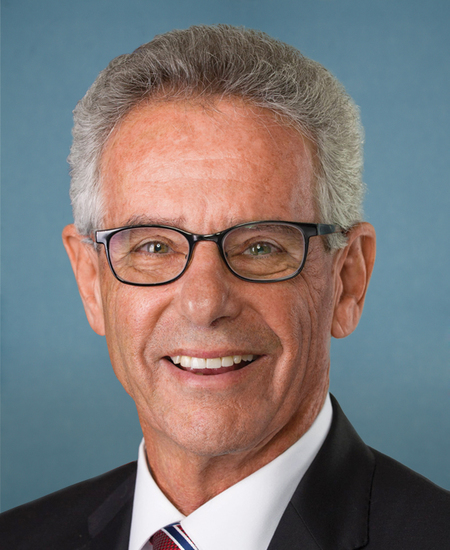
Rep. Alan S. Lowenthal
Sponsored bills
Maddy summaryHRES 785 is a symbolic resolution designating November 8, 2021, as "National First-Generation College Celebration Day." It urges all Americans to celebrate this day, recognize the contributions of first-generation college students (those whose parents did not earn bachelor's degrees), and honor the Higher Education Act of 1965. The resolution highlights existing federal programs like TRIO and Pell Grants that support underrepresented students but does not create new laws or funding. As a non-binding resolution, it has no direct policy impact but aims to raise awareness about first-generation students' challenges and achievements.
This resolution expresses support for the goals and values of the 53rd anniversary of the Fair Housing Act and for efforts to strengthen housing protections, particularly during the COVID-19 public health emergency.
Partner with Korea Act This bill creates an E-4 treaty trader visa category for up to 15,000 nationals of South Korea each fiscal year who are coming to the United States solely to perform specialty occupation services, subject to various requirements. The 15,000 limit shall only apply to principal aliens and not the spouses or children of such aliens. (A specialty occupation is one that requires the theoretical and practical application of highly specialized knowledge and a bachelor's degree or higher.)
Greyhound Protection Act of 2021 This bill modifies the federal criminal statute commonly known as the Wire Act. Currently, the Wire Act contains four prohibitions on the use of a wire transmission facility (e.g., the telephone or internet) for certain gambling activities. All four prohibitions apply to sports gambling. However, there have been conflicting interpretations of the applicability of the prohibitions to nonsports gambling (e.g., state lotteries). This bill amends the Wire Act to expressly state that the statute does not authorize the use of wire communications to gamble on commercial greyhound racing or permit the transport of animals for commercial dog racing or related activities.
Filipino Veterans Family Reunification Act of 2021 This bill exempts from worldwide or numerical limitations certain family-sponsored immigrant visas for the sons and daughters of Filipino World War II veterans who were naturalized under certain laws providing for naturalization for service during World War II.
Untraceable Firearms Act of 2021 This bill establishes a federal statutory framework to regulate the manufacture, sale, offer to sell, transfer, purchase, and receipt of ghost guns (i.e., guns without serial numbers). Additionally, the bill revises the federal statutory framework regulating the manufacture, possession, sale, import, shipment, delivery, receipt, and transfer of undetectable firearms. Among the revisions, the bill defines undetectable firearm as a firearm without a major component wholly made of detectable material.
Raise the Age Act This bill establishes new restrictions on the sale or transfer of certain semiautomatic firearms to individuals under 21 years of age. Specifically, this bill makes it unlawful for a licensed gun dealer, importer, manufacturer, or collector to sell or deliver a semiautomatic center-fire rifle that has (or has the capacity to accept) an ammunition feeding device with a capacity of more than five rounds to an individual who the licensee knows or has reasonable cause to believe is under age 21. The prohibition does not apply if the individual under age 21 is a full-time law enforcement officer or active-duty member of the Armed Forces. The bill also requires the Federal Bureau of Investigation to report on the operation of its public access line, including a description of information sharing protocols and recommendations for improving such protocols.
Vietnam Human Rights Act This bill requires actions related to human rights in Vietnam and addresses related issues. The Department of State must assist eligible individuals and entities working to secure the release of political and religious prisoners in Vietnam. The Office of Internet Freedom within the U.S. Agency for Global Media and the Bureau of Democracy, Human Rights, and Labor within the State Department shall prioritize (1) the immediate distribution of censorship circumvention tools for computers and smartphones in Vietnam; and (2) projects to ensure the safety and privacy of bloggers, journalists, and human rights defenders in Vietnam. Foreign assistance may not be used to assist any unit of the Vietnamese government engaged in cyberespionage activities. The State Department may establish programs to (1) monitor and halt sex trafficking of women from Vietnam and other Asian countries, and (2) address Vietnam's growing sex-ratio disparity. The bill also requires various reports to Congress, including reports on (1) persons subject to U.S. sanctions for human rights violations in Vietnam, (2) a strategy to promote internet freedom in Vietnam, and (3) cyberespionage activities sanctioned by the Vietnamese government targeting Vietnamese dissidents and human rights advocates living outside of Vietnam.
Student Loan Borrower Safety Net Act of 2021 This bill requires the Department of Education (ED) to carry out a program to notify borrowers that normal payment obligations on their federal student loans will resume. Not later than 60 days before payment obligations are no longer suspended (as determined by ED), ED must provide at least six notices to borrowers indicating that their payment obligations will resume. These notices must also indicate the options for (1) enrolling in income-driven repayment plans, and (2) rehabilitating or consolidating loans. ED must provide priority notification to certain borrowers, including those who missed a payment in the first three months of entering repayment on a loan. The bill allows borrowers to (1) submit an application or reapplication for an income-contingent or income-based repayment plan and self-certify their income and family size, (2) change their repayment plan without a fee, and (3) apply for an economic hardship deferment. If a borrower misses a payment or payments on a loan during the 60 days after the payment suspension ends, then the loan must be held in administrative forbearance for 90 days.