

Maddy summaryThe SERVICE Act of 2024 establishes a 5-year pilot program to create specialized veterans response teams within law enforcement agencies. These teams, funded through federal grants, directly assist veterans in crisis by connecting law enforcement with VA resources, providing mental health training for officers, and organizing 24/7 volunteer response teams. Key provisions include identifying veteran officers to wear service pins, coordinating with VA and community agencies, and developing crisis response plans. The program requires participating agencies to track outcomes and report grant data to Congress annually.
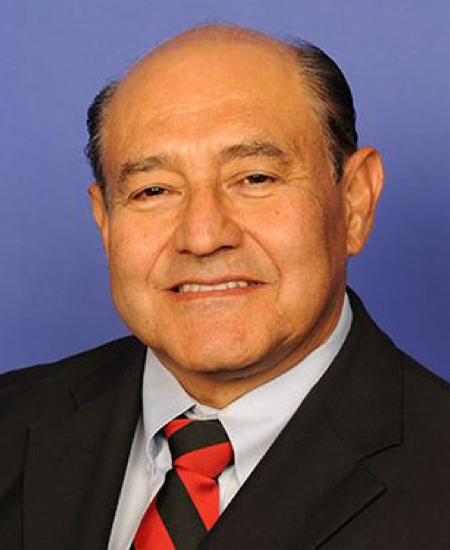
Rep. J. Luis Correa
Sponsored bills
Maddy summaryThis resolution (HRES 288) urges the European Union to formally designate Iran's Islamic Revolutionary Guard Corps (IRGC) as a terrorist organization under EU legal framework Common Position 931. It does not create new laws but requests the EU take this specific action, noting the EU has previously sanctioned IRGC individuals but not the organization as a whole. The resolution cites the IRGC's role in human rights abuses, support for proxy groups, and involvement in conflicts like Ukraine as context for the request. Introduced in April 2023 by 20+ House members, it is a non-binding expression of congressional preference.
Maddy summaryHR 7944, the Water Systems PFAS Liability Protection Act, exempts public water systems, wastewater treatment facilities, and related entities from liability under federal environmental law for PFAS releases, provided they follow all applicable laws during water treatment and disposal. The bill protects these "protected entities" from lawsuits seeking cleanup costs or damages related to PFAS, as long as their actions were consistent with current regulations during water management. However, entities remain liable if they acted with gross negligence or willful misconduct in handling PFAS.
Maddy summaryHR 7849, the Disaster Resiliency and Coverage Act of 2024, establishes a federal grant program to help homeowners in high-risk disaster areas make their homes more resilient. The program provides up to $10,000 per household (adjusted annually for inflation) for specific qualifying mitigation activities, such as reinforcing roofs, installing flood barriers, or creating fire-resistant landscaping. Homeowners must have an adjusted gross income under $250,000 ($500,000 for joint filers) and the work must meet FEMA-established standards. States and tribal governments administer the program, with funds intended to incentivize insurance companies to offer or increase coverage in vulnerable areas.
Maddy summaryHR 7812, the National Parent and Youth Helpline Act, creates a federal grant program to establish a 24/7 national toll-free helpline for parents, caregivers, and youth facing personal challenges like emotional distress, substance abuse, or educational concerns. The grant, worth $20 million annually from 2025-2030, will fund one nonprofit to operate the helpline (via phone, text, and chat), host weekly evidence-based support groups, and maintain a resource website. It specifically prioritizes serving diverse groups, including LGBTQ+ individuals, and requires annual performance reports to the Secretary and a congressional report after three years. The bill directly affects millions of parents and youth by providing accessible, trauma-informed support to strengthen families and prevent issues like child maltreatment.
Maddy summaryHR 7770, the Rosie the Riveter Commemorative Coin Act, authorizes the U.S. Mint to produce and sell three commemorative coins honoring women who worked on the U.S. home front during World War II. It specifies $5 gold coins (max 50,000), $1 silver coins (max 400,000), and half-dollar coins (max 750,000), all to be issued between January 1, 2025, and December 31, 2025. Each coin sale includes a surcharge ($35 for gold, $10 for silver, $5 for half-dollar), with all surcharge funds directed to the Rosie the Riveter Trust for maintaining the Rosie the Riveter WWII Home Front National Historical Park and educational programs. The coins will feature designs reflecting the legacy of diverse women workers and must meet specific weight, diameter, and composition standards.
Maddy summaryHR 7747, the Federal Judiciary Stabilization Act of 2024, reclassifies existing federal district court judgeships in specific jurisdictions under a new section of law (28 U.S.C. § 133). It directly affects the courts in Hawaii, Kansas, Missouri, Alabama, Arizona, California, Florida, New Mexico, North Carolina, and Texas by updating their authorized judge counts, such as adding 4 judgeships for Hawaii and increasing California's Central District to 28. The bill modifies the official table in federal law to reflect these new numbers without creating new permanent positions. It authorizes necessary funding to implement these changes. This is a procedural adjustment to judgeship authorizations, not a policy change affecting the public.
Maddy summaryThis non-binding resolution designates "National Zoroastrian Day" to be observed annually on the vernal equinox. It recognizes Zoroastrianism's historical contributions to human rights and multicultural governance, specifically honoring the Zoroastrian New Year festival (Nowruz). The resolution directly affects the estimated 14,000 Zoroastrians in the United States by providing symbolic federal acknowledgment of their religious tradition. It has no legal effect or policy changes beyond ceremonial recognition.
Maddy summaryHR 7668, the ADA 30 Days to Comply Act, amends the Americans with Disabilities Act to require a 30-day notice period before lawsuits can be filed over inaccessible public accommodations. It mandates that individuals seeking access must first provide businesses with a written notice detailing the specific barrier (including address and type), giving owners 30 days to either outline repair plans or make progress on fixing it. This applies directly to businesses operating public accommodations (like restaurants or stores) and people with disabilities facing access barriers. The bill changes the process for filing lawsuits about architectural barriers by adding this mandatory notice and cure period, without altering the core ADA requirements for accessibility.
Maddy summaryThe Federal Judgeship Act of 2024 adds new federal district judgeships across multiple courts, primarily in California, Florida, Texas, and other states with growing caseloads. It authorizes specific numbers of additional judges for districts including the Central and Northern Districts of California, the Middle District of Florida, and the Western District of Texas, with appointments to take effect in 2025, 2027, 2029, and 2031. The bill also permanently converts certain temporary judgeships to permanent positions and adds circuit judges to the Ninth Circuit Court of Appeals in 2027 and 2031. These changes directly affect federal court operations by increasing judicial capacity in specific geographic regions. The legislation focuses on adjusting court staffing levels to address case volume without altering substantive legal procedures or policies.