

Maddy summaryThis bill extends funding for the Gabriella Miller Kids First Pediatric Research Program at the National Institutes of Health (NIH) through 2028, replacing the previous 2014-2023 authorization. It directs NIH to administer pediatric research funds through its Division of Program Coordination (instead of the "Common Fund") and requires NIH to coordinate pediatric cancer and disease research while prioritizing projects that avoid duplicating existing NIH work. The bill also mandates a report to Congress within five years detailing funded pediatric research projects and their advancements. This directly affects NIH's pediatric research funding structure and oversight, focusing on cancer and other childhood diseases.
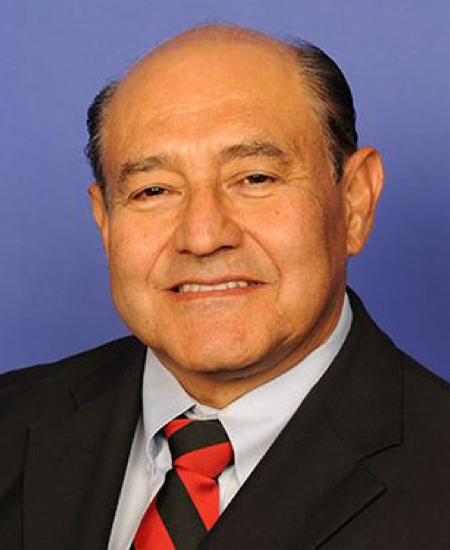
Rep. J. Luis Correa
Sponsored bills
Washington, D.C. Admission Act This bill provides for the establishment of the State of Washington, Douglass Commonwealth, and its admission into the United States. The state is composed of most of the territory of the District of Columbia (DC), excluding a specified area that encompasses the U.S. Capitol, the White House, the U.S. Supreme Court building, federal monuments, and federal office buildings adjacent to the National Mall and the U.S. Capitol. The excluded territory shall be known as the Capital and serve as the seat of the government of the United States, as provided for in Article I of the Constitution. The state may not impose taxes on federal property except as Congress permits. The bill provides for the DC Mayor to issue a proclamation for the first elections to Congress of two Senators and one Representative of the state. The bill eliminates the office of Delegate to the House of Representatives. The bill applies current DC laws to the state. DC judicial proceedings and contractual obligations shall continue under the state’s authority. The bill also provides for specified federal obligations to transfer to the state upon its certification that it has funds and laws in place to assume the obligations. These include maintaining a retirement fund for judges and operating public defender services. The bill establishes a commission that is generally comprised of members who are appointed by DC and federal government officials to advise on an orderly transition to statehood.
Maddy summaryThis bill (HR 1555, Public Law 118-211) designates the U.S. Postal Service facility at 2300 Sylvan Avenue in Modesto, California, as the "Corporal Michael D. Anderson Jr. Post Office Building." It directly affects the postal facility and all official references to it, requiring future documents to use the new name. The bill has no policy provisions - its sole purpose is to honor Corporal Michael D. Anderson Jr. through this commemorative naming. It was passed by Congress and signed into law on January 2, 2025.
Maddy summaryThis bill creates a 4-year transitional coverage period for Medicare to automatically cover "breakthrough medical devices" - new FDA-prioritized devices approved after March 2021 - as "reasonable and necessary" for treatment. During this period, these devices qualify for additional payments under Medicare's hospital and outpatient payment systems without requiring separate approval. After the 4-year period, Medicare must develop regular coverage based on additional data, with automatic coverage for all approved uses if no action is taken within two years. The bill requires Medicare to assign unique codes for these devices within three months of FDA approval and to update payment systems regularly. It also includes special provisions for "specified breakthrough devices" that lack existing Medicare benefit categories, requiring reports on their impact and cost to Congress.
Maddy summaryHR 8663, the DETECT Fentanyl and Xylazine Act of 2024, requires the Department of Homeland Security’s Science and Technology Directorate to develop improved detection tools for low-concentration drugs like fentanyl and xylazine. It mandates research into portable equipment for field use, technology to separate complex drug mixtures, and machine learning tools to identify new synthetic substances. These advancements aim to help federal, state, local, tribal, and territorial law enforcement agencies more accurately detect dangerous drugs during investigations. The bill specifically targets enhancing safety and effectiveness for agencies already handling drug evidence, without changing drug laws or regulations.
Maddy summaryThis bill, HR 1097 (Everett Alvarez, Jr. Congressional Gold Medal Act of 2023), authorizes the award of a Congressional Gold Medal to Everett Alvarez, Jr., in recognition of his service as a U.S. Navy pilot and Vietnam War prisoner of war. It directly honors Alvarez, who was the first U.S. pilot shot down in the Vietnam War, spent over 8.5 years in captivity, and later served in the Peace Corps and Veterans Administration. The bill’s key mechanism is directing the U.S. Mint to strike a gold medal bearing his name and image, with bronze duplicates available for sale to cover costs. It does not create new policies or affect any group beyond the honoree.
Maddy summaryThis bill would strengthen protections for employees and retirees during business bankruptcies by increasing wage priority from $10,000 to $20,000, ensuring severance pay is deemed earned upon layoff, and creating new claims for pension losses. It also restricts how bankrupt companies can modify collective bargaining agreements, requiring court approval for such changes and mandating that purchasers of business assets maintain employee benefits. Additionally, the bill limits executive compensation in bankruptcy by restricting special payments and requiring court approval for certain compensation plans. These changes directly affect employees, retirees, and their representatives in bankruptcy cases, aiming to prevent them from bearing the brunt of business failures while in bankruptcy proceedings.
Maddy summaryThis bill requires the Department of Homeland Security (DHS) to create a detailed plan within 180 days of enactment to identify, integrate, and deploy emerging technologies - including AI, advanced sensors, drones, and communication systems - to enhance U.S. border security operations. The plan must assess current CBP Innovation Teams, evaluate privacy impacts on border communities, identify outdated legacy systems for replacement, and outline coordination with private companies, universities, and federal labs. It also mandates annual reports on pilot projects, transition progress for successful technologies, and metrics to measure effectiveness. The direct effect is on CBP and DHS leadership, who must implement these requirements to address border security gaps using new technologies.
Maddy summaryHR 4406, the DHS Basic Training Accreditation Improvement Act of 2023, requires the Department of Homeland Security (DHS) to annually report to Congress on the accreditation status of its basic law enforcement training programs. The reports must detail when programs achieved accreditation, reasons for lack of accreditation, accreditation managers, and timelines for future accreditation, with reporting ending once all programs are accredited. If a program loses accreditation, DHS must notify the Secretary within 30 days and the Secretary must inform Congress within another 30 days about the reason and plans to regain accreditation. The bill also directs DHS to research ways to improve access to federal training for state, local, tribal, and territorial law enforcement, especially in rural areas. This bill focuses on transparency and accountability for DHS training standards, not direct policy changes for the public.
Maddy summaryHR 10476, the "End Airline Extortion Act," prohibits airlines from giving financial incentives to employees or contractors for requiring passengers to pay extra fees (like for baggage, seating, or in-flight services) as a condition of boarding. It also bans airlines from charging different prices or fees for the same service based on protected characteristics, such as disability status or family situation. The bill defines "covered characteristics" using existing law and clarifies that policies allowing free or discounted travel for children do not violate these rules. This law directly affects airlines operating under U.S. Code Title 49 and passengers purchasing add-on services.