

Maddy summaryThe VA Same-Day Scheduling Act of 2023 requires the Department of Veterans Affairs to schedule appointments for enrolled veterans during the same phone call when they request care. This applies to veterans enrolled in the VA healthcare system who contact the VA by phone to request appointments. The law mandates that the VA must complete the scheduling during the call - without delay or future scheduling - regardless of the appointment date. The requirement takes effect 120 days after the bill is enacted.
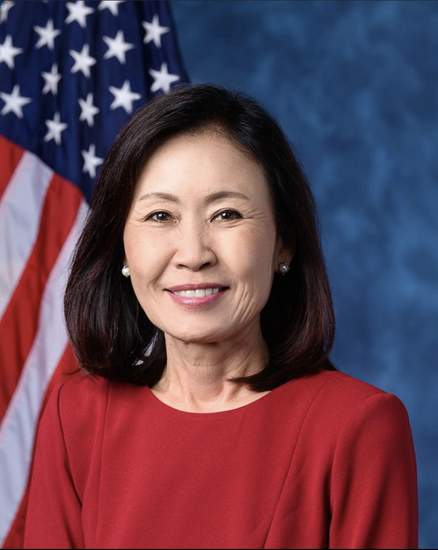
Rep. Michelle Steel
Sponsored bills
Maddy summaryHR 872, the FISH Act, transfers federal responsibility for managing anadromous fish (like salmon that spawn in fresh water and migrate to the ocean) and catadromous fish (like eels that spawn in the ocean and migrate to fresh water) from the Department of Commerce to the Department of the Interior. It amends the Endangered Species Act to update definitions and ensure all references to the managing agency now point to the Secretary of the Interior. The bill includes provisions to maintain continuity for existing permits, ongoing legal cases, and agency actions related to these fish species after the transfer. This change affects conservation programs, permits, and regulatory processes for these specific fish populations under federal law.
Maddy summaryHRES 280 is a non-binding House resolution expressing support for designating November 22, 2023, as "Kimchi Day." It acknowledges kimchi's cultural significance as a traditional Korean dish with a 2,000-year history, its recognition by UNESCO as intangible cultural heritage, and its health benefits. The resolution highlights Korean American contributions to U.S. society and growing popularity of kimchi in American cuisine. This symbolic gesture does not create new law or policy but formally supports a cultural observance.
Maddy summaryHR 2539 permanently extends the New Markets Tax Credit (NMTC) program, which incentivizes private investment in low-income communities. The bill directly affects community development financial institutions (CDFIs) and investors who fund projects in designated low-income areas by ensuring the credit remains available beyond 2025. Key provisions include automatically adjusting the credit amount annually for inflation starting in 2024 and clarifying that the credit can be used to offset alternative minimum tax liability. This maintains the program’s effectiveness in channeling capital to underserved neighborhoods without changing eligibility or funding levels.
Maddy summaryThe MODERN WIC Act of 2023 modernizes the Women, Infants, and Children (WIC) program by expanding remote participation options for eligible individuals. It allows certification, recertification, and nutritional risk evaluations via phone, video, or other interactive technology (ensuring ADA accessibility), with states required to collect health data within 30-90 days for remote cases. The bill also permits remote delivery of food benefits (e.g., electronic transfers or mail) without in-person pickup and allocates $60 million for technology upgrades to improve program access and secure data sharing. A report to Congress on remote technology use must be submitted within one year, detailing impacts on participation, satisfaction, and best practices.
Maddy summaryThe ALIGN Act (HR 2406) permanently allows businesses to deduct the full cost of qualified equipment and machinery in the year of purchase, rather than spreading the deduction over multiple years. This applies to property placed in service after September 27, 2017, directly affecting businesses that make capital investments in eligible assets like manufacturing equipment or commercial facilities. The bill eliminates the previous requirement to depreciate these costs over time, reducing taxable income in the purchase year. It makes a temporary 2017 tax provision permanent, impacting businesses across various industries that purchase qualifying property.
Maddy summaryHR 2427, the Hmong Congressional Gold Medal Act, authorizes Congress to award a gold medal to honor Hmong veterans who served with U.S. forces during the Vietnam War. The bill directs the Treasury Secretary to strike the medal and present it to the Smithsonian Institution for display, recognizing their combat service, heavy casualties, and displacement after the war. Duplicate bronze medals may be sold to cover costs. This procedural bill commemorates the Hmong people's military contributions and their refugee resettlement in the U.S., affecting the Hmong community as a whole.
This resolution commemorates the 190 th anniversary of diplomatic relations between the United States and Thailand. It also looks forward to enhancing the ties of friendship between the peoples of Thailand and the United States.
Maddy summaryHR 1831 would award Billie Jean King a Congressional Gold Medal to honor her lifelong advocacy for equal rights in sports and society. The bill directs the Secretary of the Treasury to strike the medal and have it presented by congressional leaders, recognizing her pivotal role in advancing women's equality through tennis (including founding the Women’s Tennis Association and securing equal prize money) and her broader impact on society through initiatives like Title IX advocacy.
Maddy summaryHR 5, the Parents Bill of Rights Act, would require public schools receiving federal funding to provide parents with greater access to educational information. The bill mandates that schools post curricula online or widely distribute it to parents, include school budgets in report cards, and provide specific information about school activities including violent incidents and plans to eliminate gifted programs. It also guarantees parents the right to meet with teachers twice a year, review library materials, and address school boards. These requirements would apply to all local educational agencies and schools covered by the Elementary and Secondary Education Act. The bill amends existing education laws to strengthen parental transparency and involvement in their children's education.