

Maddy summaryThe Protecting Veteran Community Care Act expands access to mental health and substance-use services through the Veterans Community Care Program for veterans who cannot get timely care in VA residential treatment facilities. It requires community providers to meet state licensing and accreditation standards and prohibits the VA from denying community care solely because community providers cannot meet the same wait time standards as VA facilities. The bill also mandates the VA to track and report on requests for mental health care, including approvals, denials, and appeals. This applies directly to veterans facing delays in accessing VA residential mental health programs.
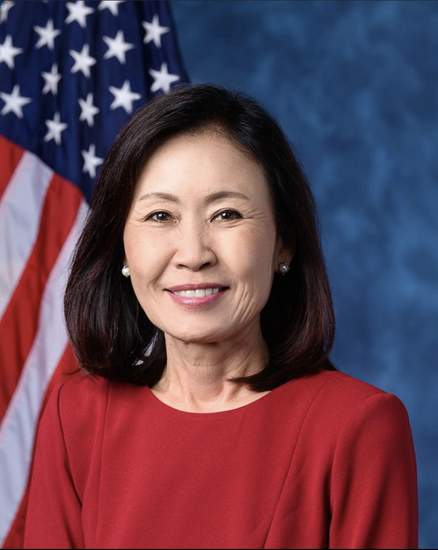
Rep. Michelle Steel
Sponsored bills
Maddy summaryThe Trauma Support and Mental Health in Schools Reauthorization Act of 2023 extends federal funding for school-based mental health and trauma support services from fiscal years 2024 through 2028, replacing the previous 2019-2023 period. This reauthorization amends the SUPPORT for Patients and Communities Act to continue grants enabling schools to improve mental health care for students. The bill directly affects schools and educational settings eligible for these grants, allowing them to maintain and expand trauma support programs. It does not change program requirements but ensures uninterrupted funding for existing services addressing student mental health needs.
Maddy summaryThe Telehealth Expansion Act of 2023 modifies the Internal Revenue Code to require health insurance plans to cover telehealth services without applying deductibles. It directly affects high deductible health plans (HDHPs) and their enrollees, ensuring telehealth visits aren’t counted toward annual deductibles. The key provision creates a "safe harbor" (Section 223(c)(2)(E)) so plans won’t lose HDHP status for excluding telehealth deductibles. This change applies immediately upon enactment and affects all plans offering telehealth services. It does not create new funding or services but adjusts tax code requirements for existing coverage.
Maddy summaryThe Spent Fuel Prioritization Act of 2023 amends federal law to change how the U.S. government prioritizes accepting spent nuclear fuel and high-level radioactive waste for disposal or storage. It requires the Secretary to prioritize waste based on four specific factors: whether the reactor is decommissioned, the population size of the reactor's area, the earthquake hazard level of the area, and national security risks related to continued on-site storage. This directly affects nuclear power plant operators and communities near reactors, particularly those with decommissioned plants, large populations, high earthquake risk, or significant security concerns. The bill establishes a clear, factor-based system for determining acceptance order, with highest priority given to decommissioned reactors and areas facing the most severe risks.
Maddy summaryThis bill renames the "standard deduction" as the "guaranteed deduction" throughout the tax code (Section 2), primarily changing terminology without altering the deduction's structure. It then adds a temporary "bonus guaranteed deduction" for 2024-2025, increasing the deduction by $4,000 for joint filers/surviving spouses, $3,000 for heads of household, and $2,000 for others (Section 3). The bonus phases out for higher earners, reducing by 5% of modified AGI above $200,000 (singles), $300,000 (heads of household), or $400,000 (joint filers). These changes directly affect taxpayers who itemize or claim the standard deduction, with the bonus applying only to 2024-2025 taxable years.
This resolution condemns all manifestations of expressions of racism and anti-Asian, Native Hawaiian, and Pacific Islander or ethnic intolerance. The resolution calls on federal law enforcement officials, working with state and local officials, to expeditiously and vigorously investigate all reports of hate crimes and threats against Asian Americans, Native Hawaiians, and Pacific Islanders in the United States; work to improve the reporting of such hate crimes; and hold the perpetrators of those crimes, incidents, or threats accountable and bring the perpetrators to justice.
Maddy summaryThis bill requires the Treasury Secretary to report quarterly on foreign countries imposing "extraterritorial" or "discriminatory" taxes targeting U.S. businesses. It mandates progressively higher tax rates (starting at 5% and increasing to 20% over time) on income and payments from foreign individuals and corporations in those countries. The U.S. government can also restrict federal procurement from such entities and consider these taxes in trade negotiations. These measures directly affect foreign businesses operating in the U.S. or conducting transactions with U.S. entities. The policy aims to counter foreign tax policies that the U.S. views as unfair under international tax norms.
Small Business Growth Act This bill increases from $1 million to $2 million to the limitation on expensing of depreciable business assets. It also increases the asset threshold amount used to reduce the expensing limitation.
Maddy summaryThis bill requires U.S. government agencies to develop strategies to combat "transnational repression" - actions by foreign governments or their agents to intimidate, coerce, or harm diaspora and exile communities outside their home countries. It mandates the State Department to create an interagency strategy, amend annual country reports to include information on transnational repression tactics, and provide training for diplomatic and law enforcement personnel. The bill also establishes sanctions against foreign governments or individuals responsible for transnational repression, including blocking property and denying visas. These provisions directly affect diaspora communities facing foreign government harassment and U.S. agencies tasked with protecting them.
Maddy summaryHR 3588 authorizes a posthumous Congressional Gold Medal for Dr. John Cheng, a Laguna Niguel, California physician who died protecting 40 parishioners during a 2022 church shooting. The bill directs the Treasury Secretary to design and strike the medal, which will be presented to Dr. Cheng's wife. It also permits the minting of bronze duplicates for sale, with proceeds covering production costs, and includes a non-binding request for expedited production. This commemorative measure honors Dr. Cheng's sacrifice and service, with no direct policy impact on current laws or regulations.