

Maddy summaryHRES 1419 is a symbolic resolution recognizing Overdose Awareness Day and committing the House to strengthen efforts against the opioid crisis. It does not create new law but formally: (1) recognizes Overdose Awareness Day, (2) pledges to advance bipartisan policies reducing stigma around substance use disorders, and (3) commits to collaborating with states, communities, and organizations to support prevention, treatment, harm reduction, and recovery services. The resolution highlights the crisis' severity - including 932,000 overdose deaths since 1999 and a $1 trillion annual economic burden - but focuses on shared goals rather than specific policy changes. It directly affects congressional action and public messaging, not individual citizens or programs.
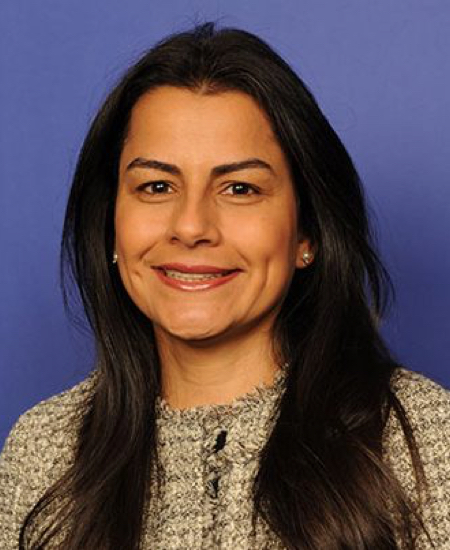
Rep. Nanette Diaz Barragán
Sponsored bills
Maddy summaryThe Equal Pay for Equal Work Act establishes a National Equal Pay Enforcement Task Force to strengthen enforcement of existing equal pay laws. The task force, made up of representatives from the Equal Employment Opportunity Commission, Department of Justice, Department of Labor, and Office of Personnel Management, will coordinate efforts to investigate pay disparities and develop solutions. It will create action plans to address enforcement gaps and improve public education about pay equity. This bill directly affects federal agencies and workers facing wage discrimination by enhancing how equal pay laws are enforced across government.
Maddy summaryThe Summer Meals Act of 2024 amends the National School Lunch Act to improve access to summer meals for children, primarily affecting public schools, community organizations, and low-income families. Key changes include reducing the required integration of summer education and meals from 50% to 40%, expanding meal service to include after-school hours, weekends, and school holidays for non-school sites, and creating a $10 million annual grant program to support mobile meal trucks and transportation in underserved areas. The bill authorizes grants for service institutions that serve both breakfast and lunch or offer educational programs, with priority given to those increasing participation at congregate feeding sites. These provisions aim to simplify program administration and reach more children during summer breaks in hard-to-access communities.
Maddy summaryThis bill amends the Older Americans Act to explicitly address loneliness among seniors by adding it to existing provisions about social isolation. It requires the federal government to prepare a report within five years, examining how current programs tackle loneliness's health impacts, geographic prevalence, and preventive services. The report must also analyze multigenerational family connections' role in reducing loneliness and recommend policy improvements. The bill directly affects older individuals served by programs under the Older Americans Act, focusing on health outcomes linked to social isolation. It does not create new funding but directs existing programs to coordinate services addressing loneliness.
Maddy summaryHRES 1414 is a non-binding resolution expressing congressional support for "Warehouse Worker Recognition Week" (August 18-24, 2024), which celebrates workers in the logistics industry. It does not create new laws or funding but symbolically acknowledges warehouse workers’ contributions to the economy, noting they number over 9 million and face challenging conditions like extreme heat. The resolution encourages public awareness of their role in supply chains and commits to addressing workplace safety concerns. It directly affects warehouse workers by formally recognizing their labor, though it has no legal force.
Maddy summaryThis bill creates a new program to provide emergency grants to farm worker organizations during covered disasters. It directly affects migrant and seasonal farm workers who lose income or cannot work due to events like hurricanes, wildfires, pandemics, or extreme weather. The grants fund immediate relief (including direct cash or aid), building community resilience, infrastructure support, and emergency services. Funds remain available until spent, and the program requires consultation with eligible organizations, defined as farm worker groups or qualified nonprofits with relevant experience.
Maddy summaryThis bill would allow states to skip in-person interviews for SNAP (food stamp) benefit renewals if applicants agree to waive the interview and have already proven they qualify for continued benefits. It also requires states to offer phone or virtual interview options when interviews are still needed for renewal. The change directly affects SNAP recipients who may face fewer in-person requirements and state agencies administering the program. The policy aims to reduce paperwork burdens without altering eligibility rules for food assistance.
Maddy summaryHR 9238, the Marine Energy Technologies Acceleration Act, establishes a $1 billion Marine Energy Acceleration Fund to advance marine energy projects. It allocates $600 million for 20+ demonstration projects connecting to microgrids, community grids, or utility-scale grids, prioritizing projects supporting rural, Tribal, and disadvantaged communities, energy resilience, and environmental monitoring. Additional funding includes $230 million for research and development, $50 million for site assessments, $15 million for streamlining permitting processes across federal agencies, and $85 million for workforce development programs focused on communities near project sites. The bill directly affects marine energy developers, coastal communities, and federal agencies like the Department of Energy and Bureau of Ocean Energy Management.
Maddy summaryHR 9274, the SHAWL Act, establishes two new Smithsonian museums: the National Museum of the American Latino and the American Women’s History Museum. It authorizes both museums to be located within the National Mall’s "Reserve" area, overriding prior restrictions, and requires federal agencies managing potential sites to transfer jurisdiction to the Smithsonian after notifying congressional committees. The bill mandates that both museums accurately represent diverse cultures, histories, and viewpoints within Latino and women’s communities through exhibits and programs, requiring input from a broad range of community experts. It also requires the Smithsonian to submit biennial reports to Congress detailing compliance with these representation requirements.
Maddy summaryThe NO BAN Act (HR 9244) prohibits U.S. immigration authorities from denying visas or entry based on national origin, religion, or sex. It amends immigration law to explicitly ban such discrimination in visa decisions and tightens restrictions on the president’s power to suspend entry of certain groups under Section 212(f). The bill requires specific evidence, narrow tailoring, time limits, and congressional notification for any entry restriction, while mandating public reports on visa denials and waivers. It directly affects nonimmigrant visa applicants (e.g., students, workers) and federal agencies administering immigration policy.