Language Access for Medicare Beneficiaries Act of 2021 This bill requires the Centers for Medicare & Medicaid Services (CMS) to translate the annual explanation of Medicare benefits for enrollees into multiple languages, besides English and Spanish. The CMS must prioritize languages into which Social Security documents are translated or that are most frequently requested for purposes of Social Security benefits applications.
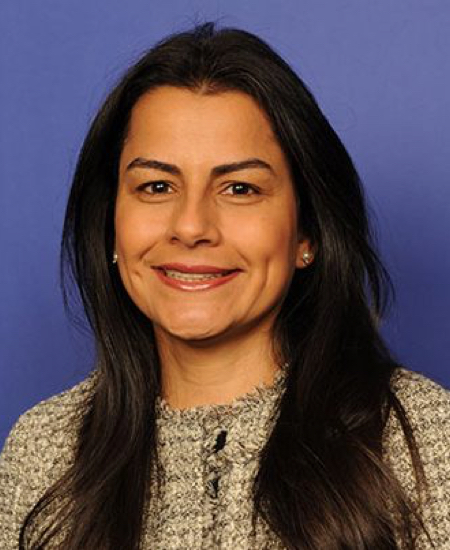
Rep. Nanette Diaz Barragán
Sponsored bills
Migratory Bird Protection Act of 2021 This bill prohibits the incidental taking (e.g., capturing or killing) of migratory birds by commercial activities unless the activity is authorized under a permit or is identified as posing de minimis risk to migratory birds. The U.S. Fish and Wildlife Service (USFWS) must regulate such incidental taking, including by (1) issuing general permits for certain industries, (2) creating a mitigation fee for any incidental taking of migratory birds, and (3) identifying categories of de minimis risk activities that are exempt from liability for the taking of migratory birds. In addition, the USFWS must establish and maintain a research program (1) to evaluate the impacts of commercial activities on birds, (2) to evaluate the effectiveness of best management practices and technologies to avoid or minimize such impacts, and (3) to develop new or improved best management practices and technologies.
This resolution supports (1) fair and equitable access to COVID-19 vaccines, and (2) investments in the vaccine supply chain and other efforts to meet global needs for vaccines.
This resolution urges the United States to protect the human rights of unhoused individuals, to establish regulations and enforcement tools to protect unhoused individuals from violations of civil and human rights, and to establish blanket legal protections for third parties providing goods or services to unhoused individuals. The resolution also urges the United States to establish a process to award appropriate damages, attorney's fees, and costs to a prevailing plaintiff in an action alleging a violation of the human and civil rights of unhoused individuals. Relatedly, the resolution urges the United States to allow the court in such an action to consider housing status and apply leniency in compiling records, receipts, and documentation from those plaintiffs. The resolution also expresses the intention of the House of Representatives to address the unhoused crisis in the United States by providing funding and imposing requirements on the Department of Housing and Urban Development and the Department of Health and Human Services.
Farm System Reform Act of 2021 This bill places a moratorium on large concentrated animal feeding operations; requires country-of-origin labeling for beef, pork, and dairy products; and otherwise revises provisions related to the marketing of livestock, poultry, and meat.
Twenty-First Century Dams Act This bill addresses dam infrastructure and safety. First, the bill provides resources for programs related to state dam safety, the rehabilitation of high hazard potential dams, and the inspection of dams. In particular, the bill reauthorizes through FY2026 the National Dam Safety Program. In addition, the bill reauthorizes through FY2026 a program related to the rehabilitation of structural measures and a program related to water infrastructure. Next, the bill allows a new tax credit for maintaining and enhancing hydroelectric dams that is equal to 30% of the basis of any qualified dam safety, environmental, and grid resilience enhancement property placed in service in a taxable year. It also allows a 30% credit for qualified obsolete river obstruction removal expenditures for demolishing and removing certain nonpowered or hydroelectric dams. The bill directs the Department of the Army to establish a program to carry out dam removal projects. Further, the bill establishes the Dam Removal Council to (1) coordinate with participating federal agencies to annually notify all known dam owners of the availability of dam removal funding and provide guidance on the existing programs of participating agencies; (2) evaluate and submit to Army recommendations for dam removal projects, technical assistance programs, and funding allocations; and (3) develop a dam removal strategy. The bill requires certain dam assessments, including a joint assessment by the U.S. Geological Survey and the Department of Energy. The bill also authorizes specified federal agencies to undertake certain activities related to federal dam infrastructure.

This resolution establishes a House Permanent Select Committee on Aging.
9/11 Responder and Survivor Health Funding Correction Act This bill increases funding for and otherwise modifies a federal program that provides medical monitoring and treatment to responders and survivors who suffer from health conditions related to the September 11, 2001, attacks on the World Trade Center. Among the changes, the bill allows certain health care providers other than physicians to determine whether an individual's health condition is related to the attacks, and it establishes a research program to study the impacts of the attacks on health and educational outcomes of individuals who were 21 years of age or younger when the attacks occurred.
Children's Mental Health Infrastructure Act of 2021 This bill provides funding through FY2026 to the Health Resources and Services Administration for grants to improve the capacity of children's hospitals to provide pediatric behavioral health services, including by modernizing sites of care and enhancing telehealth capabilities.
Helping Kids Cope Act of 2021 This bill provides funding through FY2026 to the Health Resources and Services Administration (HRSA) for grants to enhance access to and provider training in pediatric behavioral health care. Specifically, HRSA must award grants to pediatricians, children's hospitals, and other providers to support pediatric behavioral health integration and coordination within communities. Grant-funded activities may include hiring community navigators to assist families in accessing appropriate services, incorporating behavioral health services in pediatric practices, and delivering services via telehealth. In addition, HRSA must award grants to children's hospitals to expand training for providers in the pediatric behavioral health workforce.