Consent is Key Act This bill directs the Department of Justice to increase a state's allocation of funds under the Sexual Assault Services Program if the state has in effect a law that authorizes civil damages and equitable relief against a person who engages in the nonconsensual removal of a sexual protection barrier (e.g., a condom).
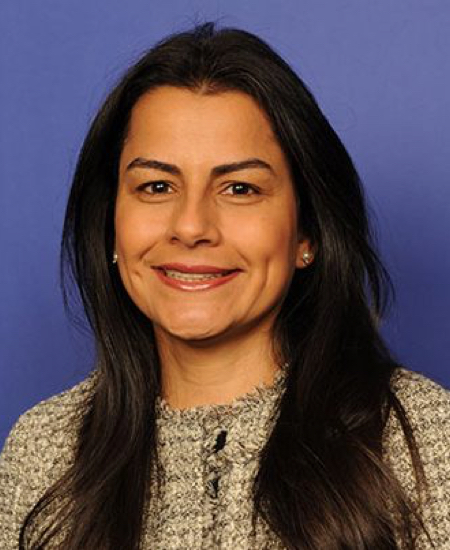
Rep. Nanette Diaz Barragán
Sponsored bills
Multiple Firearm Sales Reporting Modernization Act of 2022 This bill expands reporting requirements with respect to sales or dispositions of multiple firearms. Currently, a federal firearms licensee (e.g., a gun dealer) must report multiple sales or dispositions of pistols or revolvers to the same person within five business days. This bill requires a federal firearms licensee to report multiple sales or dispositions of any firearms to the same person within five business days.
Seasonal Worker Solidarity Act of 2022 This bill modifies the H-2B (temporary nonagricultural workers) visa program and expands protections for aliens who report workplace violations. Changes to the H-2B program include requiring the Department of Labor to establish a centralized national electronic platform for U.S. workers to find and apply for positions that employers are seeking to fill with H-2B workers; requiring employers to recruit U.S. workers nationwide, including by posting the openings on the platform, before applying for H-2B visas; requiring employers to guarantee at least 40 hours of paid work per week for each H-2B worker (currently employers may guarantee fewer paid hours in certain instances); requiring employers to pay for housing for H-2B workers and transportation to and from the work site (currently employers are allowed to deduct fees for lodgings from an H-2B worker's pay); modifying the requirements for determining the minimum wage for H-2B workers; and prioritizing H-2B visas for certain employers, such as those that pay higher wages. Furthermore, an alien who has worked a certain amount of time as an H-2B worker may obtain permanent resident status, subject to various requirements. In addition, an alien who is likely helpful in an investigation of a workplace claim (i.e., an alleged violation of law or workplace-related injury) may qualify for a U visa for victims of criminal activity. The bill also removes statutory numerical limitations on U visas. The bill also provides protections for certain aliens who file or assist in the investigation of workplace claims.
Stopping Harmful Image Exploitation and Limiting Distribution Act of 2022 or the SHIELD Act of 2022 This bill establishes a new criminal offense related to the distribution of intimate visual depictions. Specifically, it makes it a crime to knowingly distribute (or intentionally threaten to distribute) an intimate visual depiction of an individual (1) with knowledge of or reckless disregard for the individual's lack of consent and reasonable expectation of privacy, and (2) without a reasonable belief that distributing the depiction touches a matter of public concern. A violator is subject to criminal penalties—a fine, a prison term of up to two years for each individual victim depicted, or both.
Housing for All Act of 2022 This bill modifies existing, and creates new, grants and programs concerning affordable housing and homelessness. In particular, the bill authorizes federal funding of the Housing Trust Fund, which supports affordable housing activities. Currently, contributions to the fund come from the earnings of Fannie Mae and Freddie Mac. Additionally, the bill (1) expands eligibility for housing choice vouchers, which provide rental assistance to low-income individuals; and (2) entitles certain individuals to the vouchers. Other matters addressed in the bill include permanently authorizing the U.S. Interagency Council on Homelessness (which terminates on October 1, 2028) and modifying existing programs that support housing for the elderly, individuals with disabilities, and individuals experiencing homelessness or at risk of homelessness. The bill also creates various housing-related grant programs to, for example, support overnight parking for individuals who live in vehicles and no-cost legal assistance with evictions for low-income individuals. The bill also incorporates housing into certain transportation grants and programs.
Latonya Reeves Freedom Act of 2022 This bill prohibits government entities and insurance providers from denying community-based services to individuals with disabilities that require long-term service or support that would enable such individuals to live in the community and lead an independent life. Specifically, these entities may not discriminate against such individuals in the provision of community-based services by such actions as imposing prohibited eligibility criteria, cost caps, or waiting lists or failing to provide a specific community-based service. Additionally, community-based services must be offered to individuals with such disabilities prior to institutionalization. Institutionalized individuals must be notified regularly of community-based alternatives. The bill requires the Department of Justice to issue regulations requiring government entities and insurance providers to offer community-based long-term services to individuals with such disabilities who would otherwise qualify for institutional placement. Government entities must ensure sufficient availability of affordable, accessible, and integrated housing that is not a disability-specific residential setting or a setting where services are tied to tenancy. Regulations shall also (1) require government entities and insurance providers to perform self-evaluation on current services, policies, and practices and concerning compliance with requirements of this bill; and (2) require government entities to submit a transition plan. The bill provides funds for FY2022 for the Department of Health and Human Services to provide technical assistance with respect to transition plans. The bill allows civil actions by individuals subjected to, or about to be subjected to, a violation of its requirements.
Countering Human Trafficking Act of 2022 This bill provides statutory authority for the Center for Countering Human Trafficking (CCHT) within the Department of Homeland Security (DHS). The CCHT coordinates DHS efforts to combat human trafficking and the importation of goods produced with forced labor. The bill requires the CCHT to develop a strategy to improve the systems and processes used throughout DHS to combat human trafficking and the importation of goods produced with forced labor. The bill transfers the functions and resources of the Blue Campaign (i.e., the national public awareness effort to combat human trafficking) to the CCHT. DHS may also transfer to the CCHT any other component, directorate, or office of the department related to combating human trafficking.
Climate Resilience Workforce Act This bill sets forth provisions to establish a climate resilience workforce, a national climate resilience action plan, an Office of Climate Resilience within the White House, and related efforts and entities.
Comprehensive Addiction Resources Emergency Act of 2021 This bill establishes programs, grants, and other activities to address substance use disorders. Specifically, the Department of Health and Human Services (HHS) must establish a program for purchasing and distributing opioid overdose reversal drugs for states and Indian tribes. HHS must also award grants for and otherwise support addressing substance use, particularly in states, tribes, territories, and localities with disproportionately high drug overdose rates; increasing access to preventive, medical, recovery, and related services; developing innovative models of delivering treatment and harm reduction services; and expanding the treatment capacity of Medicaid providers. In addition, HHS must issue model standards of care for treatment services and recovery residences and may award grants for training health care professionals. The bill also supports prevention and treatment services for workers, addiction and pain management research, and data collection on substance use disorders. Further, dispensers, distributors, and manufacturers of schedule II controlled substances (e.g., oxycodone), with the exception of opioid treatment programs, must certify that they maintain effective drug diversion controls. Violators are subject to specified civil and criminal penalties. Collected penalties shall be used for the grant programs and other substance use disorder activities established under the bill.

Federal Firearm Licensee Act This bill makes various changes related to federal firearms licensees, including by establishing physical security requirements and increasing licensing fees. It also amends several appropriations laws to remove limitations on the authority of the Bureau of Alcohol, Tobacco, Firearms and Explosives to conduct activities related to the administration of federal firearms laws.