

Maddy summaryHR 1637 establishes a Medicare pilot program called the Dementia Care Management Model to improve care for beneficiaries with Alzheimer's disease or related dementia. It requires participating providers to offer comprehensive services - including continuous monitoring, personalized care plans, medication management, and caregiver support - while excluding hospice care. Payments are made monthly based on patient needs (with pathways for uncomplicated vs. complex cases) and include quality-based bonuses, with no cost-sharing for beneficiaries. The model tests whether this approach improves health outcomes, care quality, and caregiver support while reducing Medicare spending, targeting Medicare beneficiaries not in nursing homes or hospice who meet specific diagnosis and enrollment criteria.
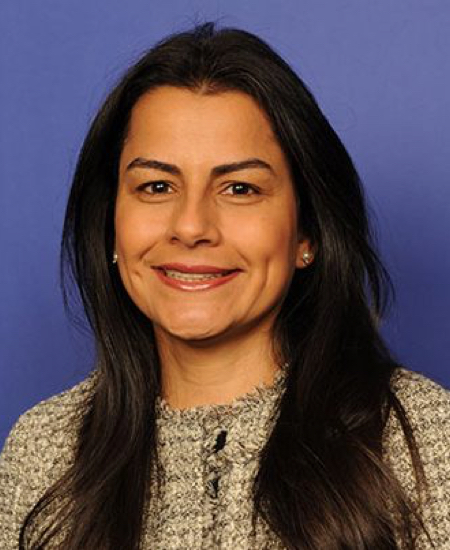
Rep. Nanette Diaz Barragán
Sponsored bills
Hemp and Hemp-Derived CBD Consumer Protection and Market Stabilization Act of 2023 This bill allows the use of hemp, cannabidiol (i.e., CBD) derived from hemp, or any other ingredient derived from hemp in a dietary supplement, provided that the supplement meets other applicable requirements. (Currently, the Food and Drug Administration's position is that CBD products may not be sold as dietary supplements.)
Transparency in Government Contracts Act This bill expands the Small Business Administration's (SBA) reporting requirements to include certain disaggregated demographic data about federal contracts (and subcontracts to the extent practicable) awarded to small businesses owned by socially and economically disadvantaged individuals. The SBA also must include whether such a small business participates in the 8(a) business development program.
Maddy summaryHR 1716, the Global Aircraft Maintenance Safety Improvement Act, requires U.S. airlines to annually report detailed information about heavy maintenance work performed outside the U.S. on their aircraft, including locations, work descriptions, and any safety issues identified after maintenance. It prohibits U.S. airlines from entering new contracts for such maintenance with repair stations in countries classified by the FAA as "Category 2" due to safety deficiencies. The bill also mandates that mechanics and supervisors at foreign repair stations performing heavy maintenance on U.S. aircraft must hold appropriate FAA certifications. Additionally, it establishes a working group with international aviation authorities to review and recommend improvements for overseeing foreign repair stations.
Maddy summaryThis bill restores access to VA housing loans and educational benefits for Black World War II veterans who were denied GI Bill benefits due to racial discrimination, as well as for their living spouses, children, grandchildren, or direct descendants. It defines eligibility by requiring applicants to certify that their veteran relative was denied GI Bill benefits on racial grounds, with a five-year application window starting from the bill's enactment date. The VA must process these applications within 90 days and report to Congress on the number of recipients and total benefit value within one year. This addresses historical discrimination by creating new pathways to benefits for affected individuals and their families.
Maddy summaryThis resolution (HRES 242) is a non-binding congressional recognition honoring Roberto Clemente's legacy as a baseball legend and human rights advocate. It specifically acknowledges his historic achievements as the first Latino MLB star to win a World Series as a starter, MVP, and Hall of Fame inductee, while highlighting his activism against racial discrimination and humanitarian work, including aid efforts in Nicaragua after an earthquake. The resolution urges Major League Baseball to permanently retire his jersey number 21 and expand Roberto Clemente Day to require all players and staff to wear number 21 annually. As a symbolic resolution, it does not create new law or policy but formally commemorates Clemente's impact on baseball and social justice.
Maddy summaryThis bill prohibits colleges receiving federal funds from discriminating against "Dreamer students" in admissions, enrollment, or tuition rates. It requires institutions to treat eligible Dreamers (those meeting specific immigration criteria, like DACA recipients or long-term residents) the same as in-state students for tuition and admissions, and strictly protects their immigration information from disclosure. The bill also allows Dreamers to access federal financial aid for higher education, reversing a 1996 prohibition. These changes apply to all institutions of higher education receiving federal funding.
American Families United Act This bill authorizes the Department of Homeland Security (DHS) or the Department of Justice (DOJ) to exercise discretion in certain immigration cases. Under this bill, DOJ or DHS may, on a case-by-case basis, exercise discretion by declining to remove a non-U.S. national ( alien under federal law) or bar an alien from entering the United States to prevent hardship for the alien's U.S. citizen spouse, parent, or child. This discretion may also be exercised if the alien is the spouse or child of a deceased U.S. citizen. For the purposes of this bill, it shall be presumed that family separation constitutes hardship. However, DOJ or DHS may not exercise this discretion if the alien is removable or inadmissible due to certain grounds, including specified crime- and security-related grounds. This exercise of discretion may be applied to an alien who was ordered removed or denied entry prior to this bill's enactment if the alien files a motion to reopen or reconsider within two years of this bill's enactment.
Maddy summaryHR 1723, the Abortion is Health Care Everywhere Act of 2023, amends the Foreign Assistance Act to remove restrictions on using U.S. foreign aid funds for abortion services. It explicitly allows U.S. foreign assistance programs to fund comprehensive reproductive health care, including abortion services, training, and equipment. This change directly affects U.S. international health programs and recipient countries, enabling them to integrate safe abortion care into broader reproductive health services. The bill aims to align U.S. policy with global health guidelines by making abortion services a standard part of reproductive health care funded through foreign assistance.
Maddy summaryThis bill modifies federal highway funding rules to prioritize safety for cyclists and pedestrians. It allows states and local governments to receive 100% federal funding for projects that connect existing bike/pedestrian infrastructure or reduce safety risks for these users, instead of the usual lower federal share. The bill also requires projects to align with state safety plans focusing on vulnerable road users and includes specific "Proven Safety Countermeasures" for cyclists/pedestrians. These changes directly affect states administering federal highway funds and local governments seeking to improve non-motorized transportation infrastructure.