

Maddy summaryThis bill creates a new federal grant program to help nursing schools address faculty and clinical preceptor shortages. Schools of nursing with documented shortages can apply for funds to recruit and retain faculty/preceptors through hiring, improved pay, partnerships with healthcare facilities, or diversity-focused initiatives. Priority is given to schools that can't accept all qualified applicants due to shortages, serve underserved areas, or prioritize diverse faculty. Grantees must report annually on outcomes like faculty hired, student enrollment changes, and demographic data. The program aims to expand nursing education capacity by supporting schools directly affected by staffing gaps.
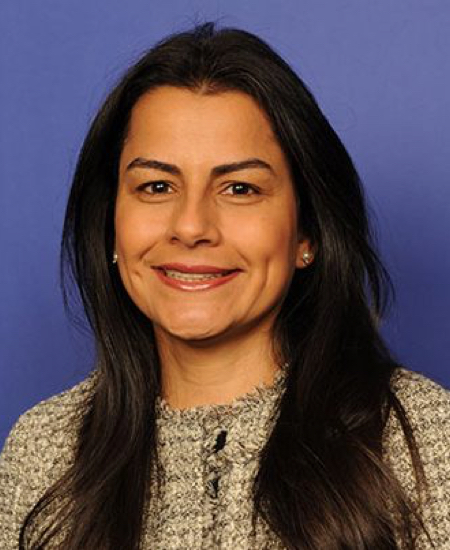
Rep. Nanette Diaz Barragán
Sponsored bills
Health Center Service Expansion and Provider Shortage Reduction Act This bill provides funding through FY2028 for certain services under the Community Health Center Program, which supports outpatient health care facilities that provide comprehensive primary care to medically underserved populations. It also provides funding through FY2028 to expand the National Health Services Corps, which provides scholarships and student loan repayment awards to health care providers who agree to work in areas with health care provider shortages. In particular, the bill requires that health centers provide behavioral health, mental health, and substance use disorder services and provides funding for those services. (Currently, centers may provide those as additional services.) Furthermore, the bill provides funding for (1) expanding the operating hours of community health centers; and (2) New Access Point Grants, which assist centers to establish new delivery sites for care.
Maddy summaryThe PAST Act of 2023 amends the Horse Protection Act to ban specific devices used to cause pain (soring) in horses at shows, particularly affecting Tennessee Walking Horses, Racking Horses, and Spotted Saddle Horses. It defines prohibited "action devices" (like boots or chains causing friction) and requires licensed, conflict-free inspectors at events to enforce rules. The bill increases penalties for violations to up to $5,000 fines or 3 years in jail, and mandates longer disqualifications for repeat offenses (180 days → 1 year → 3 years). Horse show organizers, exhibitors, and participants must comply with these new inspection and penalty requirements.
Maddy summaryHRES 390 is a resolution recognizing May as Asian American, Native Hawaiian, and Pacific Islander (AANHPI) Heritage Month. It formally honors the historical contributions of AANHPI communities to the United States, highlighting their diverse cultural impact and achievements across U.S. history. The resolution emphasizes celebrating these contributions while acknowledging ongoing challenges, such as anti-Asian hate crimes, and references key milestones like the 125th anniversary of *United States v. Wong Kim Ark*. As a symbolic recognition resolution, it does not create new policies or affect specific groups through legislation.
Maddy summaryHR 3276 establishes two pilot programs under the National School Lunch Act. First, it creates a $10 million, 3-year grant program to help schools serve 100% plant-based meals (no animal products) to students, prioritizing schools serving high proportions of low-income students and supporting culturally appropriate meal planning. Second, it creates a $2 million pilot to reimburse schools for costs of providing nondairy milk substitutes for students with dietary needs, targeting schools with high lactose intolerance rates. Both pilots require annual reporting on participation and outcomes, with the dairy substitute program ending after 3 years. The bill directly affects public school food authorities serving eligible students.
Maddy summaryHR 3239 establishes the Advancing Equity Through the Arts and Humanities Program under the National Endowment for the Arts (NEA) and National Endowment for the Humanities (NEH). It creates a competitive grant program prioritizing BIPOC-led arts and humanities organizations working to dismantle systemic racism, with requirements including majority BIPOC grant panelists and mandatory reporting on racial demographics and program impact. The bill mandates that grantees must directly combat systemic racism through arts/humanities initiatives like community programming, artist development, and arts education in underserved communities. It also requires an advisory task force to develop equitable grant guidelines and annual reports to Congress detailing funding distribution, barriers faced by BIPOC communities, and program outcomes. This program directly affects BIPOC-led arts organizations and communities experiencing racial inequity in arts access.
Maddy summaryHR 3238, the Affordable Housing Credit Improvement Act of 2023, updates the Low-Income Housing Tax Credit (LIHTC) program to increase the availability of affordable housing across the United States. The bill makes several key changes including increasing state funding formulas, modifying tenant eligibility rules to better serve vulnerable populations (such as domestic violence victims and students), and expanding credit eligibility for projects in rural and Native American communities. Specific provisions raise the credit for properties serving extremely low-income households, clarify rules around tenant income increases, and require housing providers to protect victims of domestic violence. The bill also updates terminology from "low-income" to "affordable" throughout the tax code and enhances program transparency through data sharing requirements. These changes aim to make the LIHTC program more effective at creating and preserving affordable housing units for low-income households nationwide.
Direct Capital Access Act of 2023 or the DCA Act of 2023 This bill increases the number of daily round-trip flights allowed at Ronald Reagan Washington National Airport (DCA). Specifically, this bill adds 56 new slots at DCA to allow for 28 additional daily round-trip flights. (Airlines flying to and from DCA are subject to slot and perimeter rules set by federal law and regulation. The slot rules determine the total number of flight slots that can be handled in a given time period. In addition, a statutory perimeter rule limits nonstop flights to a 1,250-mile radius unless they are granted an exemption in law.) Current law limits DCA to a maximum of 67 hourly slots for flights both within- and beyond-perimeter; a round-trip flight serving DCA requires two slots (or a slot pair). Of those slots, 40 daily slots are exempt from the perimeter rule. Under the bill's slot increase, operations at DCA may not increase by more than eight flights per hour.
Maddy summaryThis bill requires U.S. public schools to include Asian Pacific American history in all K-12 American history and civics education. It amends the Elementary and Secondary Education Act to mandate that curriculum standards, teacher training, and national assessments explicitly cover this history as part of American history. The policy directly affects students and teachers nationwide by changing how history is taught in public schools. The key mechanism is requiring specific curriculum updates to address gaps in current Eurocentric teaching, ensuring students learn about APA contributions, experiences, and challenges as integral to U.S. history.
Maddy summaryHRES 376 is a non-binding resolution expressing the House of Representatives' view that the U.S. Postal Service (USPS) must maintain door-to-door delivery for all residential and business customers. It cites concerns that ending this service would disproportionately affect elderly and disabled individuals who rely on secure, convenient mail access for essential items like medications. The resolution notes that voluntary shifts to centralized pickup in 2013 affected only 0.8% of businesses, highlighting dependence on in-person delivery for security and revenue. It urges USPS to avoid reducing door delivery or requiring customers to pay for it.